


How to Vet and Choose a Rehab for Alcoholics Near Me
Learn how to evaluate a rehab for alcoholics near me by checking licensure, accreditation, therapies, medication use, and long-term care quality.
Read More
Explore 3 examples of ways you could actively recover in Nashville with Trifecta, using combat sports, outdoor therapy, and unique biohacking methods.
Start Your Journey NowWritten and reviewed by the clinical team at Trifecta Healthcare Institute, a men’s-only treatment center in Tennessee specializing in substance use, mental health, and dual diagnosis care.
Movement isn't just a supplement to recovery—it's a core driver of transformation for men navigating substance use disorder and co-occurring mental health challenges. As a professional guiding this process, if you are looking for 3 examples of ways you could actively recover, you will find that physical activity provides a practical channel for emotional release, neurochemical restoration, and the kind of brotherhood that drives real accountability.
For those seeking more than traditional talk therapy, integrating movement into a Nashville rehab or Knoxville facility offers a dynamic alternative. Trifecta Healthcare Institute champions this approach, utilizing physical exertion to support men in rebuilding their lives.
1. Movement Rewires the Brain for Healing
Engaging the body through structured activity directly activates neural pathways damaged by substance use. Regular exercise has been shown to increase brain-derived neurotrophic factor (BDNF), restore dopamine function, and support executive control—all of which are vital for long-term recovery success.
"Physical activity can produce neuroplastic changes comparable to early-phase pharmacological interventions, giving men an additional route to regulate mood and manage cravings."
In fact, research confirms this neuroplasticity provides a critical foundation for healing.2
2. Active Recovery Boosts Engagement and Outcomes
Programs that integrate movement—whether it's martial arts, outdoor adventure, or group sports—consistently report higher engagement and retention rates among men. According to SAMHSA's 2025 National Survey, men participating in addiction treatment with a built-in physical activity component experienced a 34% higher engagement rate than those in traditional, sedentary programs. This uptick in engagement translates to measurable improvements in treatment outcomes and reduced relapse risk.1
Comparison of engagement and outcomes between traditional and movement-based recovery models for men:
3. Brotherhood and Peer Accountability Amplify Results
Physical activity in a group setting does more than build strength; it forges genuine peer connections and accountability. Evidence shows that all-male peer groups focused on movement-based recovery see 27% lower relapse risk compared to mixed-gender or clinician-only interventions. The shared challenge of training, hiking, or facing physical obstacles together helps men develop trust, emotional openness, and commitment to the recovery process.10
4. Addressing Co-Occurring Mental Health Alongside Substance Use
Movement-based recovery isn't just effective for substance use—it's equally powerful for co-occurring mental health conditions. Moderate-to-vigorous activity can boost serotonin and norepinephrine levels by 22-35%, with effects appearing in just a few weeks and sustaining without the risk of tolerance seen in some medications. For men in Tennessee, where only 34% of those struggling access mental health services, physical activity offers an accessible entry point for healing.8,9
These movement-centered strategies offer evidence-backed alternatives for men seeking agency, connection, and resilience in their recovery journey. Next, we'll examine how integrating structured physical activities into daily programming translates these principles into sustainable recovery practice.
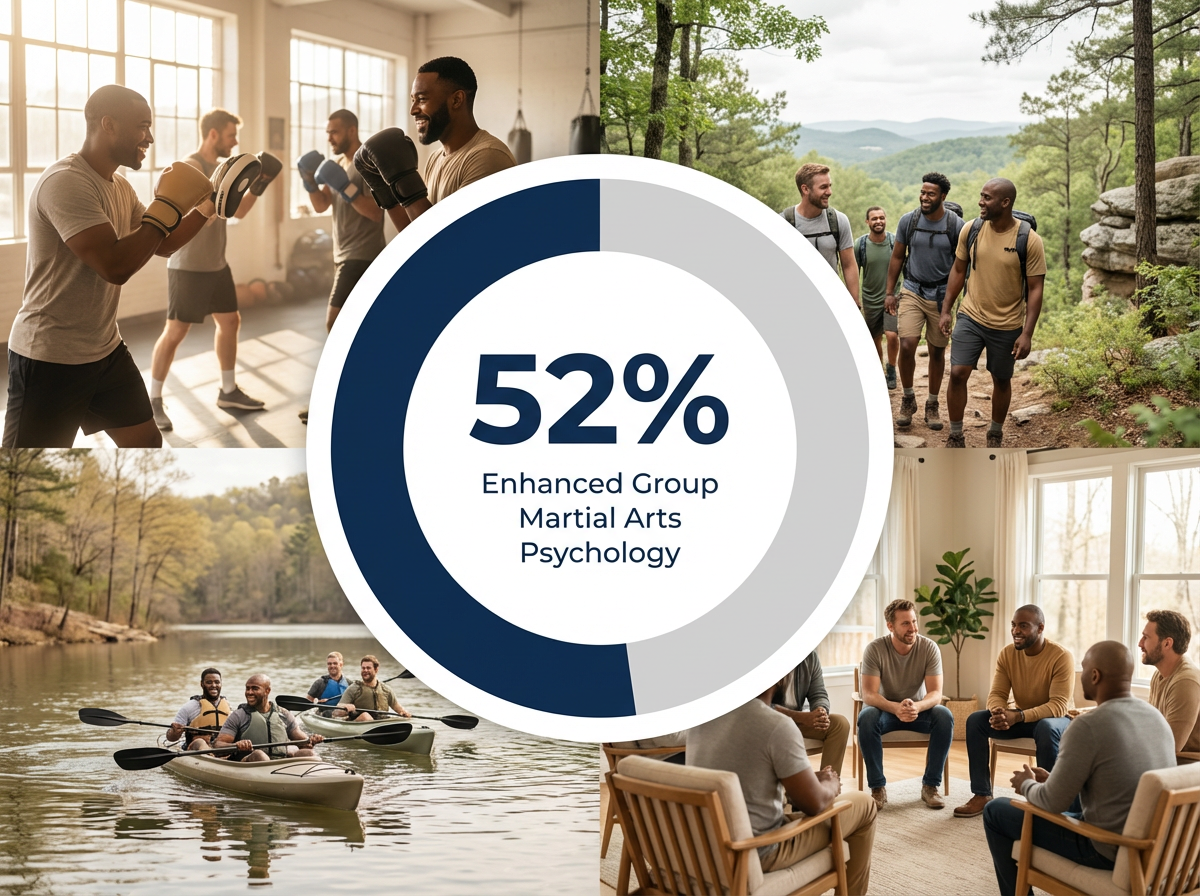
Boxing is increasingly recognized as a powerful trauma processing tool for men navigating substance use and co-occurring mental health challenges. The structured, rhythmic nature of boxing drills and pad work offers a safe way to physically discharge pent-up stress and trauma responses—often more effectively than verbal disclosure alone.
Research into movement-based therapy confirms that trauma activation in recovery requires bottom-up nervous system regulation before cognitive reprocessing can occur, making physical outlets like boxing essential for reducing hypervigilance and restoring a sense of control.5
Boxing’s focus on coordinated footwork, breath control, and striking routines engages the body and mind in tandem, which can help rewire stress responses. These repetitive movements are not just cathartic—they stimulate vagal tone and interoceptive awareness, both linked to lower anxiety and improved emotional regulation. Studies show that men participating in group combat sports report significant improvements in anxiety (d = 0.71) and emotional regulation (d = 0.82), with group-based training amplifying psychological gains by 52% compared to individual exercise.7
Peer connection is also central to boxing’s impact as a trauma-informed practice. Working with a partner or coach builds trust, fosters accountability, and supports vulnerability in a way that resonates with men seeking brotherhood in recovery. This makes boxing an excellent addition to your toolkit, offering both somatic healing and real-world emotional growth.
Next, let’s explore how other combat sports, like jiu-jitsu, create peer accountability and deepen these recovery outcomes.
Jiu-jitsu stands out as a movement-based recovery practice that cultivates peer accountability and emotional discipline among men in treatment. Unlike solitary exercise, jiu-jitsu requires direct, respectful engagement with a partner—building trust, self-control, and shared responsibility on the mat. Each training session reinforces healthy boundaries and mutual respect, offering a unique environment where men challenge themselves alongside peers navigating similar recovery journeys.
One of the greatest strengths of jiu-jitsu is its emphasis on community and iterative skill-building. As men progress through techniques and live drills, they gain feedback from partners and coaches, which fosters a culture of mutual support. Research shows that group-based martial arts, including jiu-jitsu, amplify psychological benefits by 52% over individual training, largely due to social bonding and accountability mechanisms built into the practice. These relationships help counter isolation, reinforce positive behaviors, and provide an anchor during periods of vulnerability.7
Peer accountability in jiu-jitsu isn’t just about showing up—it’s about committing to a team and being witnessed in the struggle and growth of recovery. This model mirrors the brotherhood approach, where progress is celebrated collectively, and setbacks are met with support rather than judgment. Studies confirm that all-male groups focusing on martial arts and peer support experience up to 27% lower relapse risk compared to mixed-gender or clinician-only settings.10
For professionals considering how to implement these strategies, jiu-jitsu offers a practical, evidence-backed avenue to strengthen connection, resilience, and lasting recovery outcomes.
Looking ahead, outdoor adventure therapy provides another movement-based path to restoring self-efficacy and confidence.
Between facility size limits, waivers, and state-by-state rules, figuring out your Medicaid or private insurance benefits can feel like its own full-time job. Our admissions team will verify your coverage in minutes and walk you through exactly what's available — no guesswork required.
Verify Insurance Benefits →No commitment required. Confidential & HIPAA-protected.
Immersing oneself in hiking and wilderness experiences is a proven way for men to actively recover from substance use and co-occurring mental health challenges. The natural environment offers unique therapeutic benefits that clinical settings often cannot replicate. Trails, forests, and mountain landscapes foster a sense of awe, grounding, and emotional reset—key factors in building resilience and self-efficacy during recovery.
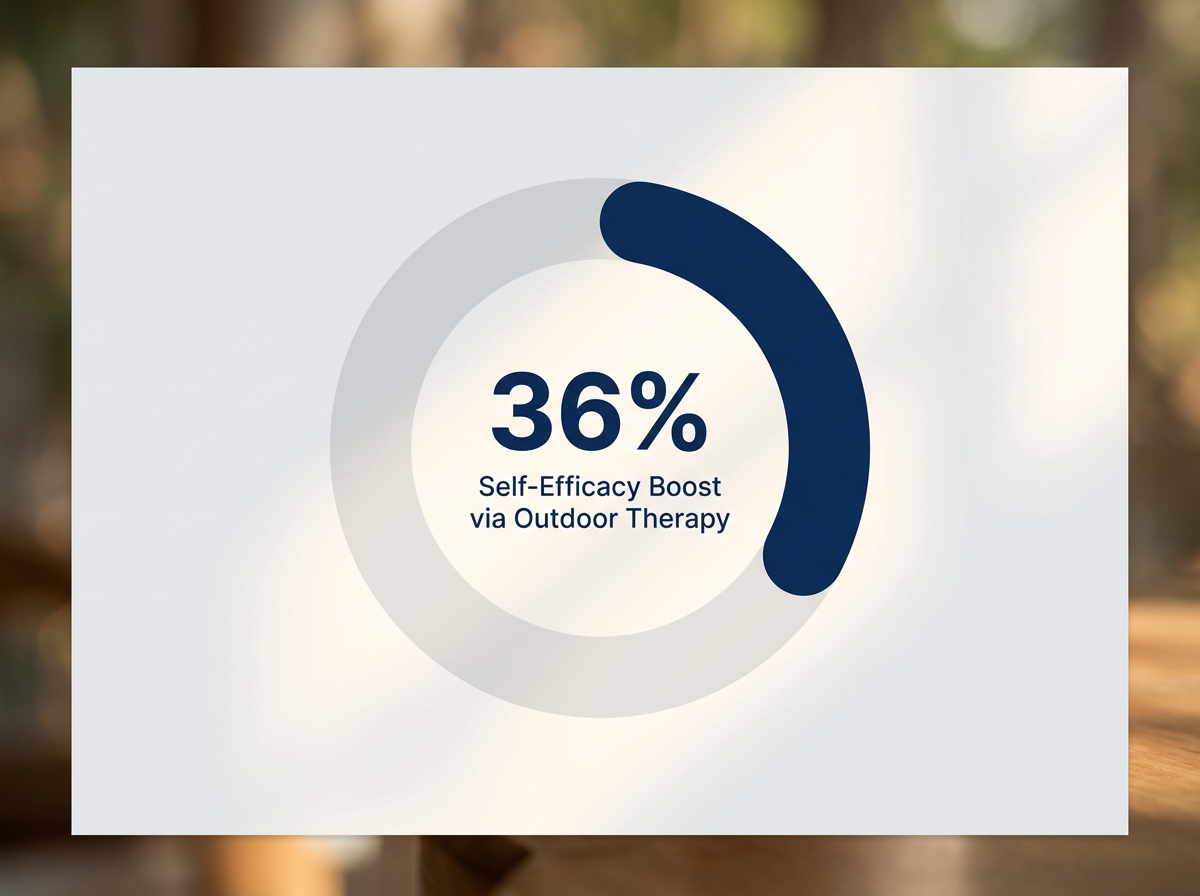
Hiking provides more than physical exercise; it cultivates psychological growth through real-world challenge and accomplishment. Outdoor adventure therapy studies show that participants who engage in structured hiking programs experience a 36% greater improvement in self-efficacy compared to those in standard treatment alone. This boost in self-belief has a direct impact on relapse prevention and long-term motivation: overcoming tangible obstacles on the trail mirrors the inner work required for sustained recovery.8
Nature-based recovery also creates space for reflection and emotional processing, away from the distractions of daily life. The unpredictability and beauty of wilderness settings prompt men to develop adaptability, patience, and problem-solving skills—attributes that reinforce agency and autonomy. Research confirms that these experiential therapies amplify emotional regulation and interpersonal connection, especially when combined with peer support in a brotherhood context.8
Professionals evaluating these methods will find hiking and wilderness experiences to be both evidence-supported and highly accessible across Tennessee’s diverse terrain, making it a staple for any Knoxville rehab for men.
Next, we will look at how structured challenge courses and group activities further strengthen self-efficacy and accountability.
Challenge courses and group-based activities offer a direct, action-oriented path for men to rebuild self-efficacy while fostering peer support in recovery. Unlike solitary workouts, structured challenge courses—such as ropes courses, obstacle runs, or team-based problem-solving exercises—require collaboration and real-time communication. These activities prompt men to step outside their comfort zones, navigate physical and mental obstacles, and rely on group accountability to complete demanding tasks.
The unique value of group challenges lies in their ability to create shared accomplishment and reinforce mutual trust. Research indicates that outdoor adventure therapy incorporating team-based elements leads to a 47% increase in peer bonding and accountability compared to purely individual activities. When men face physically demanding scenarios together, they develop a deeper sense of connection and learn to both give and receive support—critical factors for long-term recovery.8
Participating in challenge courses also helps men translate success on the course to confidence in daily life. Overcoming obstacles as a team builds self-belief and highlights the strengths of brotherhood-focused recovery. Studies show these group experiences amplify emotional regulation and problem-solving skills, directly supporting the restoration of autonomy and agency that is often eroded by substance use.8
For professionals exploring dynamic programming, challenge courses and group activities stand out as evidence-based, practical interventions—especially within Tennessee’s thriving outdoor recovery communities.
Next, we’ll explore biohacking interventions, such as ice bath therapy and targeted strength training, to further enhance neurochemical balance and resilience.
Ice bath therapy—also known as cold water immersion—has become a cornerstone of biohacking interventions for men in recovery, especially those seeking to restore healthy dopamine function after substance use. Plunging into cold water triggers a dramatic release of dopamine and norepinephrine, two neurotransmitters often depleted by addiction and chronic stress.
This neurochemical surge isn’t just a fleeting boost; studies show that regular cold exposure can improve baseline dopamine levels, enhance mood, and reduce cravings by stabilizing the reward system over time.2
The physiological effects of ice bath therapy go beyond dopamine. Cold immersion activates the body’s stress adaptation mechanisms, increasing resilience, sharpening focus, and promoting faster psychological recovery from setbacks. For men in the context of addiction treatment, these benefits translate into a greater capacity to handle discomfort and uncertainty—critical skills for sustaining long-term recovery.
Peer-reviewed research notes that such interventions, when combined with movement-based recovery, offer neuroplastic changes on par with early-phase pharmacological treatments. Tracking metrics like Heart Rate Variability (HRV) can further validate these physiological improvements.2
For professionals evaluating innovative modalities, ice bath therapy stands out as an accessible, science-backed practice. It can fit seamlessly into daily routines and group recovery protocols, reinforcing the sense of accomplishment and brotherhood that underpins successful outcomes.
Up next, the role of structured strength training protocols in supporting neurochemical balance and relapse prevention will be explored.
Structured strength training protocols are a core element of biohacking interventions for men seeking sustainable recovery from substance use and co-occurring mental health challenges. Unlike unstructured gym routines, strength training within a therapeutic framework focuses on progressive overload, form mastery, and measurable performance gains.
This approach supports neurochemical balance, with research showing that resistance training can boost dopamine and serotonin levels while reducing cortisol and symptoms of anxiety and depression.3
The benefits extend well beyond muscle growth. Structured strength protocols help men rebuild routines, restore a sense of personal agency, and set achievable goals—key factors in the long-term recovery process. Peer-reviewed studies indicate that combining aerobic and resistance training yields a 41% greater effect size for reducing substance use severity than either modality alone. This makes strength training a reliable mechanism for mood regulation, relapse prevention, and enhanced self-efficacy.3
In a group setting, strength training also fosters accountability and camaraderie, mirroring the brotherhood approach that amplifies recovery outcomes. Tracking progress together and supporting one another through physical challenges encourages consistency, which is crucial for neurological and psychological adaptation.
The next section will synthesize how to integrate movement-based strategies into a comprehensive recovery plan tailored for men in Tennessee.
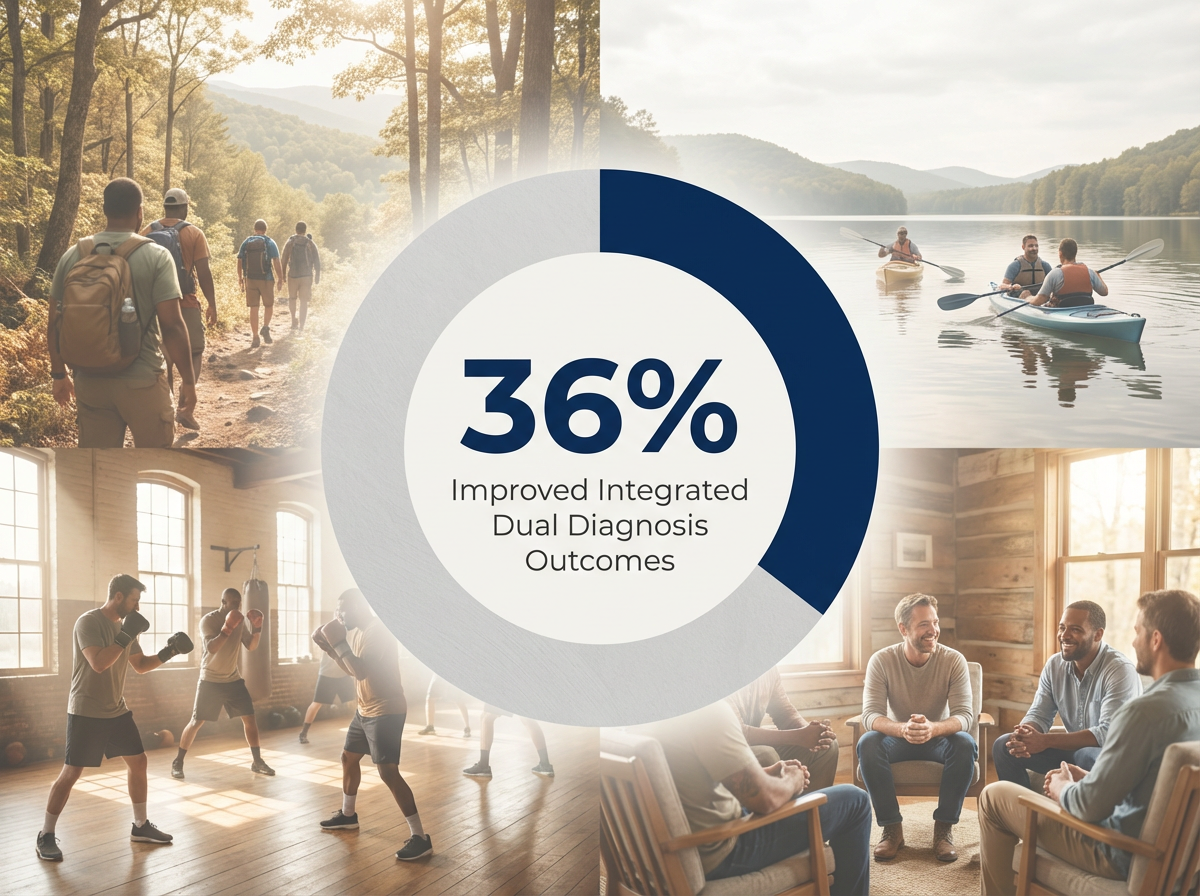
Starting a movement-based recovery program requires intentional planning that builds directly on four foundational principles: progressive challenge, neurochemical regulation, community accountability, and structured routine. Men entering treatment often arrive with depleted energy reserves, disrupted sleep patterns, and bodies recovering from substance use. The approach begins with establishing baseline capacity before introducing the combat sports and outdoor activities that become central to long-term recovery.
A typical progression follows this timeline:
View Sample Weekly Movement Schedule
Research published in the Journal of Substance Abuse Treatment demonstrates that structured exercise programs with progressive intensity show 23% higher retention rates compared to standard care, particularly when activities align with participants' interests and build measurable skills. For men in a Nashville rehab or Knoxville rehab program, the variety of outdoor environments—from urban trails to Smoky Mountain hiking—provides natural progression points that prevent monotony while building physical capacity.
The most effective approach treats movement as a therapeutic intervention, not merely recreation. Boxing, for example, serves multiple recovery goals simultaneously: the cardiovascular demand regulates stress hormones, the technical focus builds present-moment awareness, the controlled aggression provides healthy emotional release, and the visible skill progression reinforces self-efficacy. Ice baths strengthen mental resilience and vagal tone. Group sports like basketball reinforce accountability through shared commitment.
When integrated thoughtfully across the continuum of care—from PHP through IOP and into sober living—physical activity becomes the foundation for sustainable healing, creating neural pathways that support long-term sobriety even after formal treatment concludes.
These three movement-based approaches—combat sports, outdoor adventure therapy, and biohacking interventions—were chosen based on their strong evidence base for supporting men’s active recovery from substance use and co-occurring mental health challenges. Each aligns with current research showing that integrated physical activity programs significantly boost engagement, emotional regulation, and relapse prevention for men compared to traditional treatment alone. Selection focused on modalities that foster brotherhood, accountability, and measurable neurochemical changes, all of which are vital for long-term outcomes. For professionals exploring 3 examples of ways you could actively recover, these methods represent the most effective, peer-supported strategies validated by recent clinical guidelines.1,4,7,8
Combat sports training, when delivered within a structured, trauma-informed recovery program, does not inherently increase aggression or emotional dysregulation for men in early recovery. In fact, research shows that martial arts and boxing can significantly improve emotional regulation and reduce anxiety, especially in group settings where peer accountability is emphasized. The key is supervision and intentional coaching: movement-based therapies like boxing and jiu-jitsu focus on self-control, respect, and somatic regulation rather than promoting aggression. Programs that integrate these combat sports as part of 3 examples of ways you could actively recover actually foster greater psychological stability and lower relapse risk compared to unstructured or solitary exercise approaches.7
Men-only recovery programming is more effective than mixed-gender approaches because it fosters greater emotional vulnerability, trust, and peer accountability. All-male groups allow men to share openly about substance use and mental health without the social pressures that sometimes exist in mixed cohorts. Research shows that men in all-male peer groups experience 44% higher rates of emotional disclosure and 27% lower relapse risk compared to mixed-gender or clinician-led groups. This environment enhances the brotherhood dynamic, making it easier for men to hold each other accountable and support one another through the unique challenges of recovery. For professionals implementing 3 examples of ways you could actively recover, gender-specific programming amplifies both engagement and outcomes.10
Traditional cardio or generic gym-based exercise isn’t highlighted among the 3 examples of ways you could actively recover because, while beneficial for general health, these routines may not deliver the unique therapeutic gains needed for men facing substance use and co-occurring mental health challenges. Research shows that approaches integrating peer accountability, skill-building, and structured group challenges—such as combat sports, outdoor adventure, and biohacking interventions—produce significantly greater improvements in emotional regulation, self-efficacy, and recovery retention compared to standard solo workouts. For professionals, evidence supports prioritizing modalities that foster connection and brotherhood over isolated activities.7,8
Movement-based therapies address co-occurring mental health conditions alongside substance use by targeting both the biological and psychological dimensions of recovery. Physical activity, such as martial arts, outdoor adventure, and structured group exercise, increases serotonin and norepinephrine by 22–35%, rapidly improving mood and reducing symptoms of depression and anxiety. These neurochemical shifts support emotional regulation, which is often disrupted in dual-diagnosis cases. Participation in peer-supported movement programs also fosters connection, accountability, and self-efficacy, which are critical for men who may be hesitant to seek traditional mental health care. For professionals exploring 3 examples of ways you could actively recover, movement-based interventions offer a proven way to integrate mental health and substance use treatment for better outcomes.9,10
The optimal weekly time commitment for movement therapy to produce neurochemical benefits is 150 to 300 minutes of moderate-intensity activity, distributed across the week. This range—supported by meta-analyses of exercise interventions for substance use and co-occurring mental health conditions—has been shown to reliably boost dopamine, serotonin, and other mood-regulating neurotransmitters. Consistency matters more than intensity or session length: breaking activity into 30- to 60-minute blocks, 3–5 times per week, maximizes neuroplastic changes without overwhelming the nervous system. For professionals implementing 3 examples of ways you could actively recover, research confirms that this structure balances efficacy with sustainability in real-world recovery settings.3
Yes, Tennessee offers a range of programs that integrate movement-based recovery—such as combat sports, outdoor adventure therapy, and biohacking—alongside evidence-based mental health support. Major metro areas like Nashville and Knoxville host men’s recovery centers and nonprofit initiatives that feature boxing, hiking, ropes courses, and group-based strength training as core programming. These resources reflect a statewide shift toward holistic, peer-driven approaches, aligning with recent guidelines from the American Society of Addiction Medicine and supported by the 34% higher engagement rate found in multimodal programs. For professionals implementing 3 examples of ways you could actively recover, Tennessee’s recovery landscape increasingly prioritizes movement, brotherhood, and co-occurring care.1,4
Whether it's you or someone you love, our team can help you figure out the next step — what treatment looks like, what's covered, or just someone to talk to.
Talk to Our TeamConfidential. No commitment required.



July 30, 2026