



How to Vet and Choose a Rehab for Alcoholics Near Me
Learn how to evaluate a rehab for alcoholics near me by checking licensure, accreditation, therapies, medication use, and long-term care quality.
Read More
Learn how to evaluate and choose quality 30 day recovery programs near me using expert criteria, accreditation checks, and personalized needs assessment.
Start Your Journey NowWritten and reviewed by the clinical team at Trifecta Healthcare Institute, a men’s-only treatment center in Tennessee specializing in substance use, mental health, and dual diagnosis care.
When you are evaluating 30 day recovery programs near me for your clients or colleagues, the first and most crucial step is assessing their clinical severity. Men in crisis require immediate, medically supervised detox and a highly structured environment to begin their healing journey. As an industry professional, you know that placing someone in the wrong level of care can lead to poor business outcomes and, more importantly, compromise the individual's recovery.
To make the best placement decisions, you need a reliable framework. This ensures that the facility you choose—whether it's a Knoxville rehab for men or a specialized center elsewhere—can handle the specific medical and psychological needs of the individual. Let's break down how to use established criteria to match men with the right level of care.
The American Society of Addiction Medicine (ASAM) Criteria guide clinicians in matching each individual to the most appropriate level of care. This framework uses six core dimensions to assess treatment needs: acute intoxication/withdrawal potential, biomedical conditions, emotional or behavioral complications, readiness to change, risk of relapse, and recovery environment. A thorough evaluation across these areas helps determine whether a client requires medically managed detox, residential treatment, partial hospitalization, or an intensive outpatient program2.

For professionals supporting men in crisis, understanding ASAM Criteria is critical for placement decisions—especially when rapid stabilization and structured support are needed. Research consistently shows that matching treatment intensity to clinical severity leads to better outcomes and more efficient resource use2. For example, men presenting with severe withdrawal symptoms or unstable living environments may benefit most from programs that provide 24/7 supervision and medical oversight.
"Matching treatment intensity to clinical severity is the cornerstone of effective addiction medicine, ensuring resources are utilized where they have the greatest impact."
ASAM’s approach emphasizes evidence-based protocols over program amenities, focusing on clinical rigor and measurable progress3. The table below summarizes the six assessment dimensions and the types of care typically matched to each profile:
| ASAM Assessment Dimension | Typical Care Recommendation |
|---|---|
| Acute Intoxication/Withdrawal | Medical Detox, Residential Care |
| Biomedical Conditions | Integrated Medical & SUD Treatment |
| Emotional/Behavioral Complications | Dual Diagnosis or Trauma-Informed Care |
| Readiness to Change | Motivational Enhancement Interventions |
| Risk of Relapse/Continued Use | Structured, Monitored Environments |
| Recovery Environment | Sober Living, Community Integration |
A thorough ASAM assessment lays the clinical foundation for all subsequent placement and service decisions. Next, it’s essential to consider co-occurring mental health conditions that may impact treatment matching.
A thorough evaluation of co-occurring mental health conditions is vital when matching individuals to the right facility. Men entering acute stabilization or structured recovery environments frequently present with symptoms of anxiety, depression, trauma-related disorders, or undiagnosed psychiatric concerns. If these conditions are not identified and addressed at admission, outcomes can suffer and the risk of treatment dropout increases significantly7.
It is important to note that facilities like Trifecta Healthcare Institute specialize in treating substance use disorders alongside co-occurring mental health support, rather than offering primary mental healthcare. Best practice calls for dual-diagnosis screening as part of the initial assessment. This process should include standardized tools for mood, anxiety, and trauma, as well as clinical interviews that account for the interplay between substance use and psychiatric symptoms.
According to the National Institute of Mental Health, integrated approaches—where mental health and substance use disorders are managed together—produce better results than separate or sequential treatment7. Programs that offer trauma-informed care, medication management, and ongoing psychiatric support are better positioned to support men navigating both substance use and mental health challenges.
The following table outlines key considerations for evaluating co-occurring disorders during placement:
| Screening Focus | Why It Matters for Placement |
|---|---|
| Depression/Anxiety | Guides need for psychiatric or medication support |
| Trauma/PTSD | Indicates benefit from trauma-informed or EMDR care |
| Psychosis/Bipolar | May require stabilization in a higher-acuity setting |
| Suicidality/Self Harm | Triggers safety protocols and enhanced monitoring |
For professionals seeking the best options, recognizing and prioritizing these factors ensures that each client’s placement supports both immediate stabilization and long-term healing7. Once co-occurring mental health needs are clearly identified, the next step is to verify that potential programs meet rigorous accreditation and evidence-based standards.
When evaluating facilities, verifying accreditation and licensing is a critical step for any professional tasked with ensuring clinical quality and regulatory compliance. Accreditation from organizations such as The Joint Commission signals that a facility meets national standards for patient safety, clinical outcomes, and organizational integrity. Facilities that achieve this distinction undergo rigorous review processes, including audits of treatment protocols, staffing qualifications, and patient care environments4.
In addition to national accreditation, state licensing requirements ensure that programs meet local legal and ethical standards. Licensing boards evaluate facilities for compliance with state-specific regulations on medical supervision, documentation, and reporting structures. Programs should display current licenses and be transparent about their accreditation status during intake and program tours. To quickly find a facility's accreditation status online, you can use your browser's search function by pressing Ctrl + F and typing the NPI number or the word accreditation on their about page.
The following table summarizes the primary markers professionals should verify:
| Credential | Why It Matters |
|---|---|
| Joint Commission Accreditation | Confirms evidence-based, nationally recognized care |
| State License | Ensures legal operation and regulatory adherence |
| Staff Credentialing | Verifies clinical expertise and oversight |
Research shows that accredited and licensed programs are more likely to deliver measurable outcomes and maintain consistent quality across treatment episodes4. Once accreditation and state licensing have been established, the next step is to examine the core clinical components that set effective 30-day programs apart.
Effective 30-day recovery programs are grounded in clinical rigor, consistency, and a focus on both immediate stabilization and long-term engagement. Core program components should include comprehensive medical and biopsychosocial assessments at admission, with individualized treatment planning that adapts to changing needs throughout the stay. Evidence-based therapies—such as cognitive behavioral therapy (CBT), motivational interviewing, trauma-informed interventions, and group counseling—are essential for measurable progress in these settings3.
Programs designed for men in crisis benefit immensely from integrating physical activity or movement-based modalities. At facilities like Trifecta Healthcare Institute, neuroscience-backed physical activities such as boxing, jiu-jitsu, ice baths, and hiking are used as therapeutic tools. Research suggests these biohacking approaches can accelerate neurobiological recovery, restore neurochemical balance, and support engagement during early abstinence2.
Medication management, including the availability of medication-assisted treatment (MAT) when appropriate, enhances safety and retention in care. Dual-diagnosis capability is also essential, as many individuals entering structured care have co-occurring mental health conditions requiring coordinated psychiatric and substance use treatment7.
The following table outlines the core components expected in high-quality 30-day programming:
| Core Component | Why It Matters for Outcomes |
|---|---|
| Comprehensive Assessment | Informs placement and treatment planning |
| Evidence-Based Psychotherapies | Drives sustained behavioral and cognitive change |
| Medical Supervision/MAT | Enhances safety, supports withdrawal and stabilization |
| Integrated Dual Diagnosis Care | Addresses co-occurring mental health needs |
| Physical/Mind-Body Programming | Improves engagement, resilience, and brain recovery |
When these elements are present and consistently applied, programs are far more likely to produce durable progress and reduce early relapse risk3. With these foundational components in mind, the next step is to closely examine medical supervision and the clinical staffing that sustains program quality.
Between facility size limits, waivers, and state-by-state rules, figuring out your Medicaid or private insurance benefits can feel like its own full-time job. Our admissions team will verify your coverage in minutes and walk you through exactly what's available — no guesswork required.
Verify Insurance Benefits →No commitment required. Confidential & HIPAA-protected.
Medical detox is a critical first phase for many men entering structured care, especially those with histories of heavy or prolonged substance use. Programs offering true medical detox provide 24/7 nursing coverage, physician-led protocols, and rapid intervention if complications arise. This level of oversight is essential because withdrawal from alcohol, opioids, or benzodiazepines can trigger seizures, cardiac instability, or severe psychiatric symptoms.

The National Institute of Health emphasizes that evidence-based treatment requires comprehensive medical assessment and continuous monitoring during detoxification, as unmanaged withdrawal is a leading cause of early dropout and relapse6. Physician oversight is not just about initial medical clearance. Physicians in effective programs conduct daily rounds, adjust medication regimens, and coordinate with nursing and behavioral health teams to manage both acute symptoms and underlying health conditions.
This integrated approach is especially important for men with co-occurring disorders, as medical complications and psychiatric symptoms often overlap. Facilities meeting best-practice standards document vital signs, symptom scores, and medication adjustments in real time, ensuring safety and supporting engagement in the program’s therapeutic components6.
The table below summarizes key medical detox and physician oversight features that distinguish high-quality programs:
| Feature | Why It Matters for Men’s Recovery |
|---|---|
| 24/7 Nursing Availability | Enables rapid response to medical crises |
| Daily Physician Rounds | Ensures personalized, medically informed adjustments |
| Withdrawal Symptom Monitoring | Supports comfort, safety, and early engagement |
| Integrated Care Coordination | Addresses both medical and psychiatric stabilization |
After confirming robust detox and physician protocols, professionals should next examine the credentials and specializations of the therapeutic staff supporting ongoing care.
The quality of care is directly linked to the credentials and specializations of the therapeutic staff. Strong programs are staffed by master’s-level or doctoral-level clinicians, including licensed professional counselors, social workers, and psychologists. These professionals bring expertise in evidence-based modalities such as cognitive behavioral therapy (CBT), dialectical behavior therapy (DBT), trauma-informed care, and motivational interviewing.
Many programs also employ certified addiction counselors and peer recovery specialists, who add practical experience and peer connection to the treatment environment. Staff members with advanced training in dual diagnosis are essential, as a large proportion of men entering structured recovery present with both substance use and mental health conditions.
According to research from the National Institute on Drug Abuse, programs with integrated mental health and addiction expertise are better equipped to address complex, overlapping symptoms and deliver individualized care3. In addition, facilities with multidisciplinary teams—including medical providers, therapists, case managers, and wellness coaches—are more likely to maintain clinical momentum and support whole-person recovery.
Sample Staff Credential Checklist: [ ] Licensed Clinical Social Worker (LCSW) or equivalent [ ] Board-Certified Psychiatrist or Psychiatric Nurse Practitioner [ ] Certified Peer Recovery Specialist (CPRS) [ ] Specialists in EMDR or Trauma-Informed CareThe following table summarizes key therapeutic staff roles and their relevance for effective treatment:
| Staff Role | Key Responsibilities in 30-Day Programs |
|---|---|
| Licensed Therapists | Deliver evidence-based counseling and trauma work |
| Certified Addiction Counselors | Address substance use patterns, relapse prevention |
| Psychiatric Providers | Manage medications and co-occurring symptoms |
| Peer Recovery Specialists | Foster engagement, model recovery attitudes |
Well-credentialed, specialized staff ensure that men receive care that is not only safe but tailored to their unique histories and challenges3. Next, it’s important to confirm that the program provides a clear continuum of care and strong aftercare planning.
With immediate stabilization addressed and programming evaluated, the path forward depends on what happens after structured treatment ends. Recovery doesn't conclude when formal programming does—it evolves into new phases requiring different forms of support. A comprehensive continuum of care ensures men transitioning between treatment levels receive consistent guidance tailored to their changing needs.
This seamless integration between medical detox, partial hospitalization (PHP), intensive outpatient programming (IOP), and aftercare services creates a safety net during the vulnerable periods when relapse risk remains highest. The strength of any continuum lies in how care coordinates across all levels. Programs maintaining consistent therapeutic relationships allow the same clinicians to follow men through multiple phases of recovery.
This continuity prevents the need to rebuild trust or repeat difficult histories with each transition. When documentation flows smoothly between levels, insights gained during intensive phases naturally inform outpatient and aftercare planning, creating a coherent recovery narrative rather than disconnected treatment episodes. Aftercare integration distinguishes programs that understand recovery as a long-term process rather than a fixed-duration intervention.
Alumni services, peer support groups, and ongoing check-ins provide accountability when formal treatment ends. Men's programs fostering genuine brotherhood connections create natural support networks extending beyond discharge. These relationships often become the foundation for sustained sobriety, offering practical guidance during challenging moments that inevitably arise when navigating early recovery without daily clinical structure.
Sober living environments represent a critical bridge between structured treatment and independent living. Facilities offering integrated sober housing allow men to practice recovery skills in real-world settings while maintaining access to clinical support. This gradual reintegration reduces the shock of returning to environments where substance use previously occurred, building confidence through supervised independence before full autonomy resumes.
For men across Tennessee, practical access to aftercare significantly impacts long-term engagement. A Nashville rehab or Knoxville rehab for men offering multiple outpatient locations reduces travel barriers that might compromise attendance as men return to work and family responsibilities. Virtual programming options expand access for those in rural areas or balancing employment commitments with recovery needs, ensuring geography doesn't become an obstacle to continued support.
Understanding what aftercare actually provides matters more than evaluating it as an abstract concept. Centers demonstrating genuine investment in long-term outcomes typically offer structured alumni programming with intentional touchpoints, not just open-door policies. This approach reflects an understanding that the therapeutic relationship shouldn't end abruptly—it should transition into forms of support honoring the ongoing nature of recovery work.
As men progress through the continuum of care—from medical detox through PHP, IOP, and outpatient programming—specialized interventions become essential for sustaining engagement and preventing relapse. Sustainable recovery requires more than traditional approaches; it demands programming that engages men on multiple levels throughout their treatment journey.
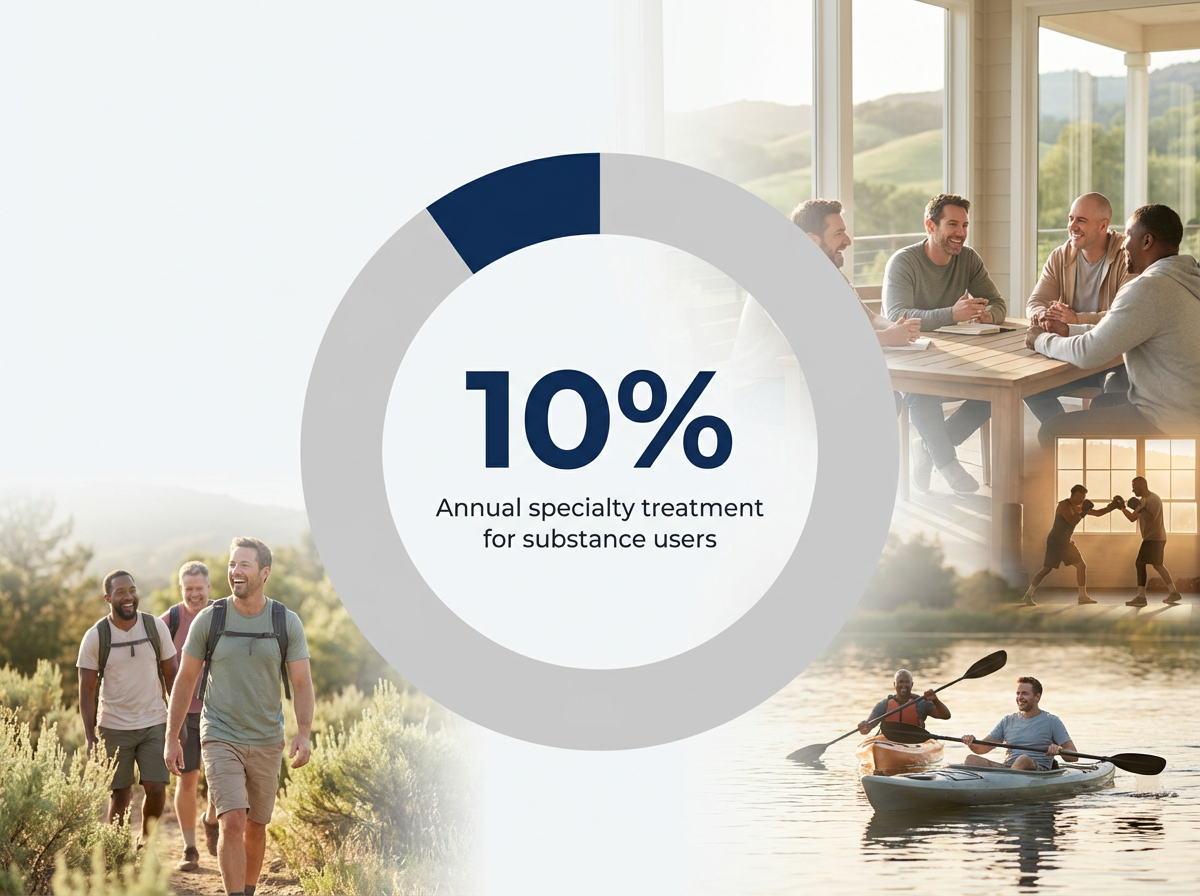
Evidence-based therapies integrated with movement-based activities restore neurochemical balance and build resilience that carries across all care levels. Interventions like boxing, jiu-jitsu, and outdoor adventure therapy activate dopamine and endorphin systems naturally, helping men reconnect with healthy sources of reward and accomplishment—skills they can continue practicing long after discharge.
Treatment centers throughout Tennessee increasingly recognize that physical engagement accelerates healing from substance use disorders. Programs incorporating trauma-informed care alongside activities like ice baths and hiking create opportunities for men to process difficult emotions while developing stress management skills they'll use in aftercare and beyond. This combination addresses both the psychological roots of addiction and the physiological dysregulation that sustains it, creating sustainable practices men can integrate into daily life after leaving structured treatment.
Central to this approach is the brotherhood model—a framework that fosters accountability and peer support within structured environments while building networks that extend well beyond treatment completion. Men connect with others facing similar challenges, forming relationships that strengthen their commitment to recovery across all program levels. This community-based approach creates pathways to sustainable recovery by addressing the whole person—mind, body, and community—rather than focusing solely on substance use cessation, ensuring men remain engaged whether they're in residential care, transitioning to sober living, or participating in alumni services.
A 30-day recovery program is often just the starting point for sustainable change, especially for men with complex or long-standing substance use challenges. Research shows that while many make significant progress in the first month, ongoing support—such as step-down care, outpatient therapy, or sober living—is often necessary to maintain momentum and prevent early relapse 10. If 30 days is not enough for a specific situation, professionals should advocate for a continuum of care that includes aftercare planning and access to extended services. Many 30 day recovery programs near me offer flexible step-down options, allowing men to transition seamlessly into ongoing treatment based on clinical need and progress.
To verify if a program accepts your insurance or offers payment options, start by requesting the facility’s National Provider Identifier (NPI) or tax ID for insurance pre-verification. Most reputable 30 day recovery programs near me have staff who can walk you through insurance verification steps and explain any out-of-pocket expenses, deductibles, or co-payments tied to your plan. Asking for a written summary of covered services and excluded treatments is best practice, as coverage for addiction treatment varies widely between plans and states 8. For those without insurance, inquire about sliding scale fees, payment plans, or third-party financing. Government resources such as the SAMHSA National Helpline can also help identify programs that match specific payment needs 1.
During a facility tour or intake consultation at 30 day recovery programs near me, professionals should prioritize questions that clarify clinical quality and continuity of care. Ask about accreditation status, medical detox capabilities, and the credentials of clinical staff. It’s also important to inquire about how the program integrates evidence-based therapies, supports dual diagnosis needs, and ensures seamless aftercare planning. Request information about outcome measurement, relapse prevention protocols, and how families or peer networks are engaged during treatment. According to national standards, transparency and clear communication in these areas are linked to better treatment matching and improved outcomes 3.
Yes, individuals in rural areas with limited local resources can still access 30 day recovery programs near me by leveraging a combination of in-person and remote services. Many accredited treatment programs now offer telehealth options, including virtual counseling, intake assessments, and ongoing support, making it possible to participate in evidence-based care from a distance 1. Professionals can use national treatment locators to identify programs that provide transportation support, flexible admissions, or virtual programming. It’s also important to connect with regional peer support networks and explore transitional housing or sober living options in nearby cities. These strategies help bridge the access gap and ensure that men in rural communities receive the clinical oversight and brotherhood support essential for healing 1.
Medication-assisted treatment (MAT) is a key consideration when selecting 30 day recovery programs near me, especially for men with opioid or alcohol use disorders. MAT combines FDA-approved medications with counseling and behavioral therapies to address both the physical and psychological aspects of addiction. Programs offering MAT can help stabilize withdrawal symptoms, reduce cravings, and improve retention in care—factors linked to higher success rates in early recovery 3. It’s important to confirm that the clinical team is qualified to manage MAT, including ongoing monitoring and adjustment of medications. Not all facilities offer MAT, so verifying this option during the selection process is essential for aligning treatment with client needs.
When vetting 30 day recovery programs near me, professionals should request detailed outcomes data to ensure the program delivers measurable results. Ask for recent statistics on treatment completion rates, rates of abstinence at 30, 90, and 180 days post-discharge, and rates of follow-up engagement in aftercare or alumni services. Programs adhering to best practices will also track reductions in substance use, improvements in mental health, and client satisfaction scores. According to research, programs that routinely monitor and transparently report outcomes are more likely to achieve sustained recovery and clinical improvement among participants 3. Consistent, data-driven evaluation helps identify areas for quality improvement and assures alignment with evidence-based standards.
Whether it's you or someone you love, our team can help you figure out the next step — what treatment looks like, what's covered, or just someone to talk to.
Talk to Our TeamConfidential. No commitment required.



July 30, 2026