



How to Vet and Choose a Rehab for Alcoholics Near Me
Learn how to evaluate a rehab for alcoholics near me by checking licensure, accreditation, therapies, medication use, and long-term care quality.
Read More
Learn how effective case manager substance abuse strategies improve client retention, communication, and therapy outcomes for lasting recovery success.
Start Your Journey NowWritten and reviewed by the clinical team at Trifecta Healthcare Institute, a men’s-only treatment center in Tennessee specializing in substance use, mental health, and dual diagnosis care.
When evaluating a Nashville rehab or Knoxville rehab for men, understanding the role of a case manager substance abuse professional is critical for referring clinicians. A practical tool for understanding these core functions is the "Function Mapping Checklist." This tool prompts referring professionals to identify which essential domains are actively supported beyond routine care coordination.
In specialized addiction settings, the case manager's role extends well beyond organizing appointments or monitoring compliance. Core responsibilities include advocating for the specific needs of male clients, collaborating with clinical teams to address barriers to engagement, and facilitating access to trauma-informed supports and vocational resources. They may also deliver psychoeducation aimed at normalizing recovery challenges and coach clients in developing self-advocacy skills, supporting autonomy—a function especially relevant for men who may be reluctant to seek help.
"Case management is the connective tissue that transforms isolated clinical interventions into a cohesive, long-term recovery lifestyle, particularly for men navigating co-occurring disorders." — Industry Consensus on Care Coordination
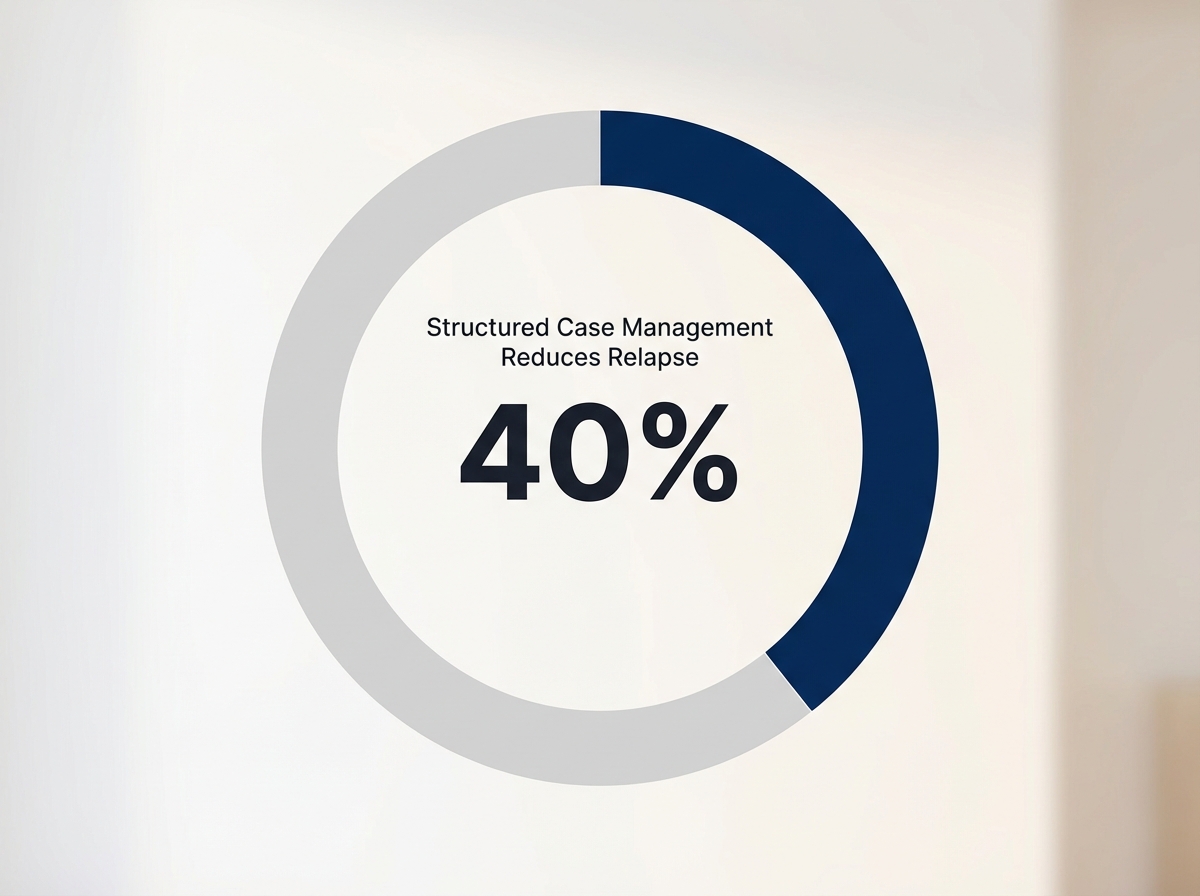
This approach works best when organizations treat individuals with high rates of co-occurring mental health concerns alongside substance use disorders, or those transitioning through multiple levels of care. Evidence shows that structured case management protocols can reduce relapse risk by 40% compared to standard care, particularly when they incorporate these multifaceted functions.6
Case managers often serve as the linchpin between clinical, peer, and community systems, ensuring the recovery environment extends beyond the therapy office. As the next section will explore, these expanded duties are increasingly grounded in a growing body of research supporting systematic integration.
A practical assessment tool for evaluating the evidence base is the "Systematic Integration Scorecard." This tool guides referring professionals in rating facilities on criteria such as adherence to national standards, use of evidence-based protocols, and demonstration of measurable client outcomes.
| Integration Criterion | Standard Care Baseline | Optimized Case Management |
|---|---|---|
| Treatment Retention | Baseline Completion | +40-60% Improvement |
| Acute Care Utilization | High ED Visit Rate | 25-40% Reduction in ED Visits |
| Implementation Cost | Fragmented Billing | $15,000–$30,000 Initial Investment |
The case manager substance abuse framework has a robust and growing evidence base supporting its integration within addiction treatment systems. Meta-analyses and systematic reviews consistently demonstrate that coordinated case management improves treatment retention by 40–60% compared to standard care, with notable reductions in relapse rates and emergency department utilization.1, 5 These outcomes are especially relevant in men's programs, where targeted integration of case management with trauma-informed and movement-based therapies has shown to enhance engagement and self-efficacy in recovery populations.
Research from sources such as the National Association of Addiction Treatment Providers and The Joint Commission highlights that organizations implementing standardized case management protocols report 30–40% higher program completion rates and lower adverse events.2, 3 Consider this method if your organization is seeking to demonstrate value-based outcomes and reduce care fragmentation. Implementing these systems typically requires a time investment of 3 to 6 months for staff training and workflow integration.
Peer-reviewed studies further identify case management as the connective tissue of effective addiction treatment, linking clinical, psychosocial, and community supports for sustained recovery.4 As attention shifts to the professional skills needed to serve men with complex needs, the next section will outline core competencies for navigating co-occurring disorders and trauma-informed care.
A practical tool for evaluating co-occurring disorder navigation skills is the "Dual Diagnosis Scenario Grid." This resource allows referring professionals to assess a facility’s approach by mapping how case managers respond in real-world situations—such as managing simultaneous substance use and anxiety crises, or coordinating with psychiatric prescribers during medication adjustments.
If you're a referring psychiatrist managing a male client with severe alcohol use disorder and co-occurring PTSD, the case manager coordinates directly with your office to ensure medication compliance while the client engages in trauma-informed care and movement therapies like jiu-jitsu.
Case manager substance abuse competencies in this area require nuanced understanding of both substance use disorders and mental health conditions. The most effective practitioners demonstrate proficiency in comprehensive assessment, cross-disciplinary communication, and dynamic care planning that adapts as psychiatric symptoms and addiction recovery needs shift. In men’s programming, these skills are amplified: male clients may under-report mental health symptoms or encounter stigma around accessing psychiatric services.
Case managers who normalize these discussions, facilitate seamless psychiatric referrals, and advocate for integrated medication management protocols can mitigate fragmentation and support long-term stability. This strategy suits organizations that have invested in regular training on evidence-based guidelines for dual diagnosis and maintain low-to-moderate caseloads, allowing for timely crisis response and individualized follow-up.
Research indicates that individuals with co-occurring disorders who receive coordinated case management experience significantly improved psychiatric stability and fewer emergency department visits—outcomes that are especially valuable for professionals and veterans in active recovery.2 Prioritize this skillset when referring to programs treating high rates of co-occurring conditions and seeking reduced acute care utilization. The next section will highlight how trauma-informed coordination protocols further enhance the effectiveness of case management for complex male populations.
A practical tool for assessing trauma-informed coordination in addiction treatment is the "Trauma-Responsive Protocol Audit." This checklist enables referring professionals to evaluate whether a facility’s case management practices systematically screen for trauma exposure, provide ongoing staff training, and implement protocols for safety planning, emotional regulation, and responsive care transitions.
Within the case manager substance abuse role, trauma-informed coordination protocols are foundational—particularly in men’s programs where trauma histories are often under-disclosed due to stigma or gender norms. Trauma-informed care describes a framework that recognizes the prevalence and impact of trauma, and intentionally avoids practices that may re-traumatize individuals. Effective case managers routinely screen for trauma exposure, collaborate with therapists on individual safety plans, and coordinate access to adjunct therapies such as EMDR, movement-based modalities, or peer-led groups.
Case managers often utilize specific EHR inputs to ensure compliance, such as typing TRAUMA_SCREEN_COMPLETE or using keyboard shortcuts like Ctrl + Shift + T to log safety plans efficiently. Opt for this framework when treating men with complex trauma and substance use patterns who benefit from environments prioritizing predictability, emotional safety, and peer accountability.
Facilities meeting The Joint Commission and NAATP standards require ongoing training for case managers in trauma-informed principles and crisis de-escalation, as well as structured documentation of trauma-related interventions.3, 2 Research indicates that the integration of trauma-responsive protocols by case managers reduces premature dropout by up to 30% and improves trust and engagement—particularly in populations with multiple adverse childhood experiences.5
The next section will examine how these critical competencies translate into practice through different levels of care, from medical detox to outpatient transitions.
Between facility size limits, waivers, and state-by-state rules, figuring out your Medicaid or private insurance benefits can feel like its own full-time job. Our admissions team will verify your coverage in minutes and walk you through exactly what's available — no guesswork required.
Verify Insurance Benefits →No commitment required. Confidential & HIPAA-protected.
A practical tool for mapping implementation across care levels is the "Continuum Transition Matrix." This tool assists referring professionals in evaluating how a case manager substance abuse role accompanies clients from medical detoxification through partial hospitalization and into outpatient care.
Consistent handoffs, clearly documented care plans, and regular interdisciplinary meetings are critical for maintaining continuity and minimizing risk of dropout—especially for men navigating transitions between high- and lower-intensity care. Recent systematic reviews indicate that clients who receive continuous case management from detox through outpatient levels are 40–60% more likely to complete treatment and avoid unplanned readmissions compared to those receiving fragmented services.1, 5
This path makes sense for facilities that empower case managers with decision-making authority and training in both clinical and logistical navigation. The next section will examine how case management extends beyond formal treatment settings to support recovery housing and sustained community integration.
A practical tool for evaluating recovery housing and community integration is the "Community Integration Readiness Checklist." This resource enables referring professionals to systematically assess whether a facility's case management practices address housing stability, peer network engagement, vocational support, and strategies for reconnecting men to meaningful activities outside formal treatment.
Within the case manager substance abuse context, facilitating successful transitions into recovery housing and broader community life is a central responsibility. Effective case managers help clients access sober living options, coordinate transportation, and foster connections to peer support groups and local recreation. For men, especially those returning from higher-intensity levels of care, structured community integration planning—including activities like hiking, boxing, or group sports—can be pivotal for sustaining motivation and a sense of brotherhood.
This approach is ideal for organizations that serve men with limited social supports or those at risk of isolation post-discharge. Strong evidence links case management involvement in recovery housing placement and ongoing community engagement to improved housing retention and lower rates of relapse.4, 5 Standard protocols recommend that case managers maintain regular contact with clients during this phase, collaborate with alumni networks, and ensure seamless linkage to employment or vocational training resources.
The following section will explore how outcome measurement and system efficiency can be optimized through structured case management approaches.
Outcome measurement systems serve as the foundation for confident clinical decision-making when referring clients to specialized treatment. For psychiatrists, therapists, and addiction counselors managing complex cases, access to comprehensive, real-time data from treatment partners enables more effective coordination of care and supports evidence-based recommendations to patients and their families about what to expect during and after residential programming.

Baseline assessments across multiple domains—substance use patterns, mental health symptoms, physical health markers, social functioning, and quality of life indicators—create the foundation for tracking meaningful change throughout treatment. Regular reassessment intervals, typically weekly during intensive phases and biweekly during step-down care, allow clinical teams to identify trends, adjust interventions, and document progress that referring professionals can integrate into their ongoing patient management strategies.
| Assessment Domain | Measurement Tool / Metric | Frequency of Tracking |
|---|---|---|
| Physiological Recovery | Heart Rate Variability (HRV), Sleep Architecture | Daily / Weekly |
| Co-Occurring Symptoms | PHQ-9, GAD-7, Trauma Inventories | Bi-Weekly |
| System Efficiency | Referral-to-Admission Time, Retention Rate | Monthly Aggregate |
Evidence-based assessment tools provide standardized metrics that facilitate communication between referring professionals and treatment teams. Instruments measuring craving intensity, depression and anxiety symptoms, trauma responses, and functional capacity offer quantifiable data that complement clinical observations. Trifecta's integration of boxing, jiu-jitsu, and ice bath therapies generates unique physiological outcome data not available in traditional Nashville rehab or Knoxville rehab programs—resting heart rate variability, sleep architecture improvements, cortisol regulation patterns, and autonomic nervous system recovery markers that provide neurobiological evidence of healing alongside psychological measures.
System efficiency metrics focus on how effectively the case management infrastructure supports treatment delivery. Key performance indicators include time from referral to admission, completion rates across program levels, successful transitions between care phases, and retention in aftercare programming. Facilities with robust case management systems typically demonstrate higher completion rates and smoother care transitions, reflecting the operational impact of coordinated service delivery.
Data integration across Trifecta's Nashville and Knoxville locations reveals patterns that inform both individual care planning and program development. The brotherhood model creates accountability structures that are themselves measurable—peer support engagement scores, group participation metrics, and mutual aid involvement correlate with sustained recovery outcomes. When clinical teams track outcomes from specialized interventions across both Tennessee facilities, they can identify which combinations of trauma therapy, movement-based programming, and peer connection produce optimal results for specific client profiles.
Consider this route if a referring psychiatrist manages a 34-year-old professional with alcohol use disorder and treatment-resistant depression: weekly outcome reports showing improved HRV scores from boxing therapy, decreased PHQ-9 scores from trauma processing, and increased group engagement metrics provide concrete data points the psychiatrist can reference when adjusting medication, reinforcing treatment participation with the client, and setting realistic expectations with family members about recovery timelines.
Communication protocols ensure referring professionals receive meaningful updates that inform ongoing collaborative care. Structured progress reports should include quantitative outcome data, clinical observations, participation metrics, and recommendations for post-discharge support. Tracking long-term outcomes beyond discharge provides the most valuable measure of treatment effectiveness and supports referring professionals in setting appropriate expectations. Follow-up data at 30, 60, and 90 days post-treatment reveals sustained recovery patterns and identifies clients who may benefit from additional support.
The outcome measurement systems discussed above don't exist in isolation—their real power emerges when measurement data flows seamlessly through integrated case management platforms that connect every touchpoint in the treatment journey. This integration transforms raw clinical data into actionable insights that strengthen coordination between referring professionals and treatment teams.

Consider how this integration functions in practice at a men-only facility like Trifecta Healthcare Institute's Nashville or Knoxville locations. When a professional client transitions from partial hospitalization to intensive outpatient programming while participating in boxing therapy and trauma-focused EMDR, the integrated system tracks both traditional clinical markers—therapy attendance, medication adherence, psychiatric symptom inventories—and movement-based therapy engagement metrics such as boxing session participation, physical exertion levels, and post-activity mood assessments.
CLIENT OUTCOME REPORT: WEEK 4 ----------------------------- Clinical Engagement: 95% HRV Improvement: +12ms (Post-Ice Bath) Peer Support: Active (Brotherhood Group) Trauma Processing: Stable
The case manager monitors how trauma processing in EMDR sessions correlates with increased engagement in boxing therapy, where controlled physical release complements cognitive reprocessing. This unified view reveals patterns invisible in fragmented systems: perhaps the client's anxiety scores improve most significantly on days combining EMDR with boxing, suggesting optimal scheduling for maximum therapeutic benefit. Meanwhile, the brotherhood peer support model generates qualitative data—peer accountability check-ins, group participation observations, sober living community engagement—that complements quantitative metrics, providing the nuanced context that numbers alone cannot capture.
For referring professionals managing complex caseloads, this integration delivers tangible administrative relief. Rather than initiating multiple phone calls to track a client's progress across psychiatric services, movement therapies, and traditional counseling, you receive consolidated weekly reports synthesizing all treatment dimensions. The system generates proactive alerts when intervention may be needed—declining attendance patterns, emerging medication concerns, or behavioral indicators suggesting increased relapse risk—enabling early collaborative response before situations escalate.
This solution fits when managing clients with co-occurring disorders, where the interplay between psychiatric symptoms, substance use patterns, and physical wellness requires simultaneous monitoring across multiple therapeutic modalities. The result is more efficient case management, stronger treatment outcomes, and professional partnerships built on reliable, comprehensive communication rather than fragmented information exchanges.
For referrals with co-occurring disorders, research consistently supports lower case manager-to-client ratios—ideally between 1:20 and 1:25—to optimize outcomes and ensure timely crisis response, individualized planning, and effective care coordination. In the case manager substance abuse context, facilities managing more complex populations, such as men with dual diagnoses, benefit from these lower ratios by reducing dropout rates and improving psychiatric stability. While some integrated settings may operate with higher ratios (up to 1:40 or 1:50), expert consensus and CMSA standards recommend prioritizing lower caseloads where possible to achieve the strongest clinical and engagement outcomes 12.
Both professional case management credentials and lived experience credentials offer distinct benefits in the case manager substance abuse field. Credentialed case managers—such as those certified by CMSA or NAADAC—bring formal training in assessment, care coordination, and compliance with national standards, which research associates with improved documentation and consistency in outcomes 112. Lived experience credentials, often held by peer recovery specialists, enhance engagement and trust, particularly for men who may respond to shared recovery narratives. Peer-reviewed studies suggest that blending credentialed professionals with peer case managers can optimize client retention and psychosocial functioning 5. This approach works best when facilities clearly define roles and provide ongoing supervision, ensuring both types of expertise are valued in complex addiction treatment settings.
Facilities investing in dedicated case manager substance abuse infrastructure consistently realize strong returns. Peer-reviewed studies show a 25–40% reduction in overall healthcare costs due to fewer emergency department visits and decreased acute service utilization, with ROI estimates ranging from 3:1 to 5:1 for high-acuity populations 89. These savings are amplified when case management supports complex male clients or those with co-occurring mental health disorders. Outcomes also include higher treatment retention, lower relapse, and improved operational efficiency, which can enhance referral satisfaction and payor relationships. This solution fits organizations seeking measurable financial and clinical value from their care coordination investments.
Implementing standardized case management protocols for substance abuse across multiple care levels—such as detox, partial hospitalization, IOP, and outpatient—typically requires three to six months for foundational rollout in a single facility. This timeframe includes staff training, documentation system updates, and initial multidisciplinary coordination. For organizations expanding protocols across several sites or integrating complex services (e.g., trauma-informed and co-occurring disorder pathways), the process may extend to nine months or more, particularly when adapting for men’s specialty programming. Sustained monitoring and quality improvement are ongoing. This method works when leadership invests in dedicated project management and leverages national standards for fidelity 32.
Joint Commission and most state licensure bodies require extensive documentation for all case manager substance abuse activities. This includes individualized assessment notes, care plans with clearly defined goals, evidence of regular care coordination, and records of communication with interdisciplinary teams and external providers. Facilities must also document client progress reviews, safety planning (especially in trauma-informed programs), and outcomes data such as engagement and discharge status. Joint Commission standards specify that all case management documentation should be timely, accurate, and demonstrate ongoing quality improvement, with clear evidence of case manager competency in areas like co-occurring disorder management and trauma-responsive care 32.
Hybrid telehealth models in case manager substance abuse roles utilize a blend of secure video, phone, and asynchronous messaging to maintain therapeutic alliance while expanding access to men across Tennessee. These models preserve relationship-building through regular, scheduled virtual check-ins, continuity of care with the same case manager, and use of trauma-informed communication strategies. Evidence indicates that well-designed telehealth case management achieves engagement and retention rates comparable to in-person care, even among high-acuity populations 35. This approach works best for organizations serving geographically dispersed or mobility-limited clients, providing flexibility without sacrificing the trust and accountability foundational to recovery. Ongoing training in digital rapport-building and privacy compliance further supports effectiveness.
Case management functions should remain distinct from clinical therapy roles when the primary need is resource navigation, benefits coordination, or crisis management—tasks that draw on unique advocacy and systems expertise. This separation helps maintain clear boundaries and reduces role confusion, particularly in settings where men benefit from diversified support structures. Conversely, integration of case manager substance abuse responsibilities with therapy roles can reduce care fragmentation and streamline communication in smaller programs or rural facilities. Evidence suggests that both approaches are effective when tailored to client acuity and organizational resources, and current standards permit flexibility based on staffing and population needs 41.
Whether it's you or someone you love, our team can help you figure out the next step — what treatment looks like, what's covered, or just someone to talk to.
Talk to Our TeamConfidential. No commitment required.



July 30, 2026