



How to Vet and Choose a Rehab for Alcoholics Near Me
Learn how to evaluate a rehab for alcoholics near me by checking licensure, accreditation, therapies, medication use, and long-term care quality.
Read More
Learn about detox West Tennessee regulations, treatment options, and resources supporting men facing substance abuse crises at Trifecta Healthcare Institute.
Start Your Journey NowWritten and reviewed by the clinical team at Trifecta Healthcare Institute, a men’s-only treatment center in Tennessee specializing in substance use, mental health, and dual diagnosis care.
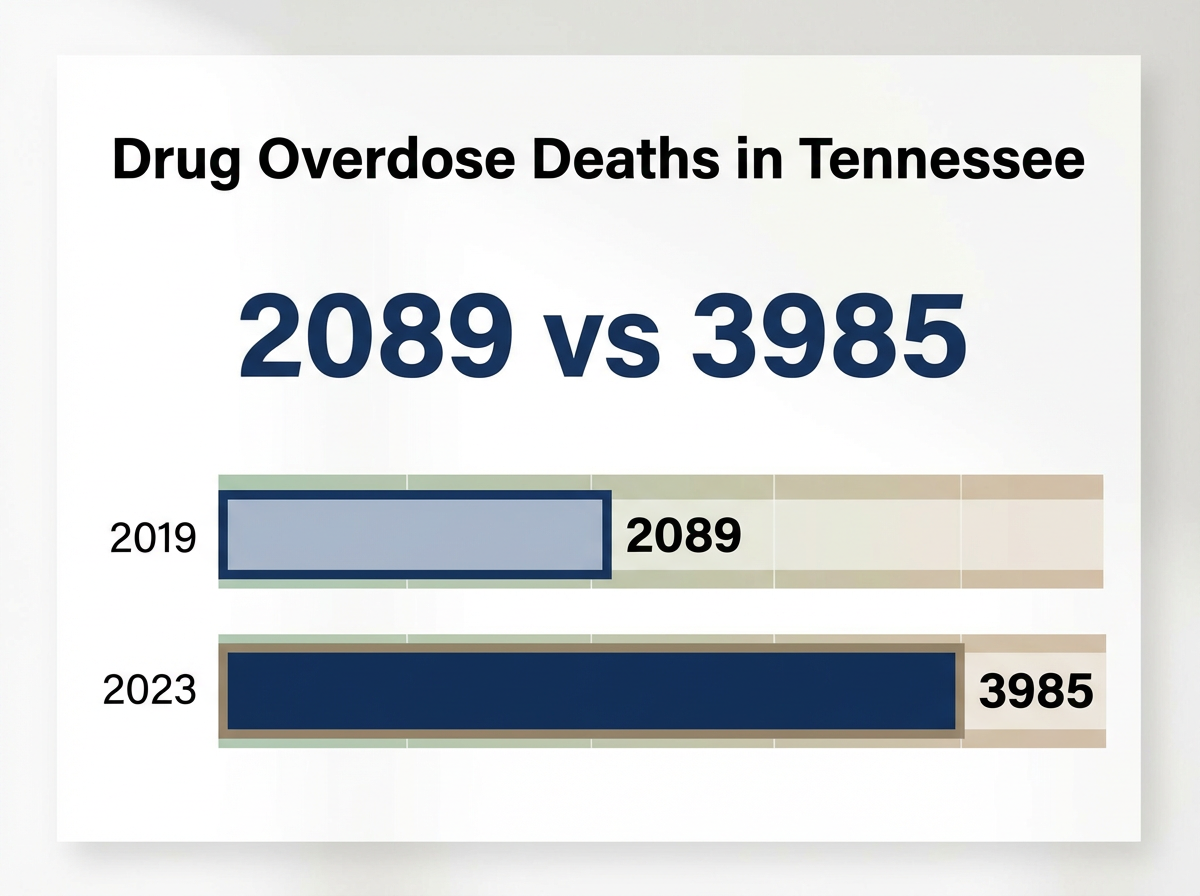
When evaluating the need for a detox West Tennessee program, professionals must first understand the dramatic rise in drug overdose deaths that has profoundly impacted communities from Memphis to Jackson and throughout the Delta region. Between 2019 and 2023, Tennessee’s drug overdose deaths surged from 2,089 to 3,985—a staggering increase of over 90%—with West Tennessee consistently reporting some of the highest per-capita rates in the state.2
This escalation is driven largely by the proliferation of synthetic opioids and polysubstance use, which have presented unique clinical and logistical challenges for local providers. The regional impact extends far beyond raw numbers, affecting the workforce, families, and local healthcare infrastructure.
Hospitals in Memphis have reported increased admissions for opioid overdoses, while rural counties in the western part of the state face persistent gaps in emergency response and post-overdose intervention. These trends underscore the urgent need for accessible, medically supervised withdrawal management, particularly for men in crisis who require rapid stabilization before transitioning to a comprehensive Nashville rehab or Knoxville rehab for men.
Understanding these rising rates and their ripple effects is essential for professionals seeking to design effective interventions and referral networks for the region. The next section examines how geography and culture in West Tennessee further shape access to care.
Geography and culture play a decisive role in shaping access to detox services across the state. Many rural communities in the Delta and along the Mississippi River face long travel times to reach licensed medical detox centers, with limited public transportation and few specialized facilities outside of Memphis.8
This geographic isolation leaves men in crisis, especially those in farming or blue-collar roles, with fewer immediate options for safe withdrawal management. Culturally, strong traditions of self-reliance and privacy in West Tennessee can deter individuals from seeking help until an acute crisis develops.
"In regions where self-reliance is deeply ingrained, overcoming the stigma of addiction requires more than just clinical excellence—it requires a brotherhood that speaks to a man's inherent need for purpose, physical engagement, and peer accountability."
— Trifecta Healthcare Institute Clinical Philosophy
Stigma around substance use disorder remains pronounced, particularly in smaller towns, where confidentiality concerns may discourage men from pursuing rehabilitation. Providers in Memphis and Jackson report that referrals from local clergy, Employee Assistance Programs (EAPs), and peer networks are often more effective than clinical outreach alone—a pattern shaped by the region’s close-knit social fabric.2
These barriers highlight the need for regionally tailored outreach, ensuring that solutions account for both the physical distance to care and the unique social dynamics at play. The following section will explore how clinical protocols are adapted to meet these local challenges.
For men in crisis from Memphis to rural Carroll County, this means induction protocols are often initiated with real-time monitoring—vital for opioid and alcohol detox, where complications can escalate quickly. In practice, programs utilize a combination of medication-assisted treatment (MAT), symptom-triggered dosing, and 24/7 medical observation to minimize discomfort and prevent life-threatening complications such as seizures or cardiac events.3

Evidence-based withdrawal management has become the clinical gold standard across treatment settings. Local protocols draw from guidelines established by the American Society of Addiction Medicine (ASAM), ensuring that each patient receives assessment-driven care tailored to their substance use patterns, physical health, and risk factors for severe withdrawal.5
The focus on patient safety aligns with state regulatory mandates and reflects the region’s response to a nearly 91% increase in overdose deaths since 2019. Programs frequently integrate trauma-informed techniques and peer support elements into their withdrawal management protocols, recognizing the demographic realities and high prevalence of co-occurring trauma among local men.2
These approaches help reduce dropout rates and support long-term engagement in follow-up care. As the next section will detail, stabilization of co-occurring mental health conditions is a parallel priority in these environments, further shaping clinical best practices.
Stabilizing co-occurring mental health conditions during the withdrawal process is a clinical necessity, not an afterthought. Regional data show that men entering treatment in Memphis, Jackson, and throughout the Delta frequently present with anxiety, depression, or trauma-related symptoms alongside substance use disorder.2
Addressing these issues in tandem is crucial for safety and engagement: untreated psychiatric symptoms can intensify withdrawal and increase the risk of elopement or self-harm, particularly in the early phase of detoxification. It is important to note that facilities like Trifecta Healthcare Institute provide specialized co-occurring mental health treatment alongside substance use disorder support, though they do not offer primary mental healthcare services.3
Clinical standards in Tennessee now require comprehensive mental health screening upon admission and ongoing symptom monitoring throughout the detox process. Providers routinely employ evidence-based interventions—such as medication management for acute psychiatric symptoms, trauma-informed counseling, and peer support groups—tailored to the local population’s specific needs.5
This integrated approach aligns with state regulatory guidance and reflects the region’s commitment to whole-person stabilization, especially for men with high occupational and familial stressors. By proactively managing co-occurring disorders, clinical teams reduce the likelihood of complications and foster a smoother transition into subsequent levels of care.
Tennessee's regulatory framework through the Department of Mental Health and Substance Abuse Services (TDMHSAS) establishes the foundation for clinical excellence and operational integrity across addiction treatment facilities. For treatment providers, TDMHSAS licensure requirements directly impact detoxification protocols, clinical outcomes, and the ability to deliver evidence-based care that addresses the complex neurobiological changes underlying substance use disorders.
Compliance with these standards ensures facilities can provide the medical supervision, psychiatric support, and therapeutic interventions necessary for safe, effective detoxification and subsequent treatment phases. For referring professionals, verifying a facility's TDMHSAS licensure status is a straightforward process. Clinicians can access the state's provider portal, input the facility's National Provider Identifier (NPI), and press Enter. The system will return a status indicator confirming the facility's credentials.
Licensed treatment centers operating Nashville and Knoxville programs must maintain qualified clinical teams including licensed therapists, certified addiction counselors, and medical professionals authorized to provide psychiatric support and medication management. TDMHSAS regulations specify minimum staff-to-client ratios, documentation standards, and clinical supervision requirements that ensure evidence-based modalities like CBT, DBT, and EMDR are delivered by appropriately credentialed professionals.
These standards create the clinical infrastructure necessary for facilities to address the acute medical needs of detoxification while establishing therapeutic relationships that support long-term recovery outcomes. Tennessee's regulatory framework also mandates integrated co-occurring disorder treatment capacity, recognizing that clinical teams must address trauma, anxiety, depression, and other mental health conditions alongside substance use disorders.
Licensed facilities must demonstrate assessment protocols and treatment capabilities that address underlying psychological factors contributing to dependency patterns. For facilities offering specialized approaches like movement-based recovery programming, Tennessee regulations require that innovative therapeutic modalities complement core evidence-based practices rather than replace them.
This framework allows treatment providers to integrate activities such as boxing therapy, outdoor adventure therapy, and wellness services while maintaining clinical rigor through individual therapy, group counseling, and psychiatric oversight. State licensure also encompasses sober living environments, alumni services, and aftercare programming, ensuring clinical teams can provide continuity of support that extends beyond initial treatment phases.
Neuroscience research increasingly informs the design of physical interventions in programs serving men in crisis. Movement-based modalities—such as structured exercise, boxing, jiu-jitsu, and cold exposure—are now recognized as more than recreational add-ons.
They directly address the neurobiological disruptions caused by substance use, especially in populations with high rates of trauma and co-occurring disorders. In specialized men's facilities, providers have incorporated supervised physical activity to stimulate endorphin and dopamine production during early withdrawal.3
This is critical for men whose neurochemical systems have been altered by chronic opioid or stimulant use. Regular engagement in activities like resistance training and controlled cold immersion (ice baths) has shown promise in reducing withdrawal symptoms, improving mood stabilization, and decreasing cravings by modulating stress pathways in the brain.4
Physical interventions also resonate culturally in Tennessee, where athletic values and outdoor traditions run deep, particularly among younger and working-age men. Facilities in the region report that these approaches help foster engagement among those less responsive to traditional talk therapy, supporting better adherence and early recovery outcomes.
Brotherhood models and peer accountability are central to effective programs for men, reflecting both clinical best practices and regional values of camaraderie and trust. In Memphis, Jackson, and smaller Delta towns, peer-driven groups provide a unique source of structure and belonging that is often lacking for men in crisis.
These models create environments where honesty and mutual support are the norm, countering the stigma and isolation that frequently accompany substance use disorder. Group-based accountability—whether through daily check-ins, peer mentorship, or alumni networks—has been shown to reduce relapse rates and promote lasting engagement with post-detox care.2,3
Men often respond positively to frameworks that emphasize shared responsibility, clear boundaries, and the opportunity to support others facing similar struggles. Local providers note that peer-led groups can foster rapid trust-building, an essential ingredient for meaningful therapeutic progress in the early stages of recovery.
This emphasis on brotherhood aligns with Tennessee’s cultural landscape, where strong social bonds and community identity remain influential. The next section will explore how a full continuum of care builds upon these foundations to support long-term recovery and stability.
Between facility size limits, waivers, and state-by-state rules, figuring out your Medicaid or private insurance benefits can feel like its own full-time job. Our admissions team will verify your coverage in minutes and walk you through exactly what's available — no guesswork required.
Verify Insurance Benefits →No commitment required. Confidential & HIPAA-protected.
While regulatory compliance establishes baseline treatment standards, the true measure of quality care lies in what happens after medical stabilization. Research demonstrates that detoxification outcomes correlate directly with continuum engagement: individuals who transition from medical detox into comprehensive treatment achieve substantially better long-term recovery than those who complete detox alone.
A 2020 SAMHSA analysis found that only 18% of individuals completing standalone detox maintained abstinence at 12 months, compared to 67% of those who progressed through a full continuum of care. This stark difference underscores why medical detox must function as the foundation of a broader treatment architecture rather than an endpoint.
The progression through a structured continuum creates transitions that reduce relapse risk during vulnerable periods. A comprehensive model typically includes:
Data from Tennessee treatment facilities indicates that men who complete this full continuum demonstrate 3.2 times higher retention rates at six months post-discharge compared to those who exit after initial stabilization. Integrating movement-based programming throughout this continuum offers particular advantages for sustained recovery outcomes.
Physical activities like boxing, jiu-jitsu, and structured outdoor adventures help restore neurochemical balance disrupted by prolonged substance use, providing natural dopamine and endorphin production that addresses the anhedonia many men experience following detox. Research on exercise interventions in addiction treatment shows 22-34% improvements in treatment completion rates when physical activity components are incorporated across care levels.
Alumni services and ongoing support structures prove critical for maintaining gains achieved during formal treatment. Men who remain connected to their recovery community through alumni programming, peer support groups, and continued therapeutic relationships demonstrate relapse rates 40% lower than those without ongoing engagement.
Sober living environments bridge the gap between intensive treatment and independent living, allowing men to practice recovery skills in real-world settings while maintaining structure and peer support. Tennessee facilities offering this full spectrum provide the comprehensive framework necessary for sustainable, long-term recovery outcomes that extend far beyond initial stabilization.
Medically supervised detox represents the essential foundation for sustainable recovery from addiction disorders. For men entering treatment in Nashville or Knoxville, this critical phase provides the safety, medical oversight, and supportive structure needed to navigate withdrawal while preparing for the therapeutic work ahead.
The regulatory frameworks governing operations—from TDMHSAS licensing requirements to ASAM criteria implementation—exist precisely to ensure this foundation remains clinically sound. When facilities maintain proper staffing ratios, evidence-based protocols, and comprehensive assessment processes, they create the conditions for successful transitions into PHP, IOP, and outpatient programming.
The evidence consistently demonstrates that professionally managed withdrawal reduces medical complications, improves treatment retention, and establishes momentum toward long-term sobriety within the broader continuum of care. Understanding the operational integration between these protocols and subsequent treatment phases directly impacts clinical outcomes across the entire recovery trajectory.
When programming incorporates proper pharmacological management, psychosocial preparation, and individualized discharge planning, clients enter PHP and IOP with greater stability, engagement cappaacity, and therapeutic readiness. The combination of medical expertise, evidence-based practices, and supportive therapeutic environments—including movement-based interventions and brotherhood-focused peer support—creates optimal conditions for men to begin healing and develop the resilience necessary for sustained recovery.
When you or someone you love are ready to begin healing—mind, body, and spirit—connect with Trifecta Healthcare Institute. We help men thrive in and out of treatment.
Most detox West Tennessee facilities accept a range of insurance plans, including TennCare (Tennessee’s Medicaid program), major commercial insurers, and many managed care organizations. Coverage specifics can vary by facility and plan, but state regulations require that all licensed detox providers maintain contracts with Medicaid and comply with the Affordable Care Act’s parity requirements for mental health and substance use treatment. Professionals referring to Memphis or Jackson programs should verify in-network status and preauthorization requirements directly with the provider. Uninsured men may qualify for state-funded beds or financial assistance through the Tennessee Department of Mental Health & Substance Abuse Services.2,7
The duration of medical detox in Tennessee facilities typically ranges from 3 to 7 days, though the exact length depends on the substance involved, severity of dependence, and the individual’s physical and mental health profile. Opioid and alcohol withdrawal may require longer observation, especially for men with co-occurring conditions or prior complications. Detox West Tennessee programs in Memphis and Jackson generally follow American Society of Addiction Medicine (ASAM) guidelines, using clinical assessments to determine when a patient is safe to transition to the next level of care. Ongoing support and step-down planning are usually initiated before discharge to improve long-term outcomes.2,5
Family visitation policies during detox West Tennessee programs are shaped by both clinical best practices and state regulations. Most licensed facilities in Memphis, Jackson, and across the Delta region allow family visits, but these are typically scheduled and supervised to protect patient privacy and safety. Visits may be limited during the initial stabilization period, especially if the patient is experiencing severe withdrawal symptoms or has co-occurring mental health concerns. Tennessee guidelines emphasize involving families in treatment planning and education, believing that supportive relationships can improve engagement and long-term outcomes. Providers usually encourage clear communication with families, while maintaining strict confidentiality protocols.2
If a patient experiences complications during withdrawal at a detox West Tennessee facility, immediate medical intervention is the standard response. Complications such as seizures, severe agitation, hallucinations, or cardiac symptoms prompt rapid stabilization by licensed medical staff—often including emergency medication, IV fluids, and continuous monitoring. Facilities in Memphis and Jackson are required by Tennessee regulations to have protocols for transferring patients to higher levels of care, such as local hospitals, if life-threatening symptoms arise. This ensures patient safety and aligns with state oversight for medical detox services. Ongoing staff training and real-time monitoring help reduce these risks in professional settings.2,5
Yes, several detox West Tennessee facilities offer specialized protocols for specific substances, reflecting the region’s evolving clinical needs. Facilities in Memphis and Jackson, for example, often maintain distinct tracks for opioid, alcohol, and stimulant withdrawal, aligning with state guidelines and the high rates of opioid-related admissions locally. Some centers also provide tailored protocols for polysubstance dependence, which has become increasingly common in the Delta region. These specialized programs incorporate evidence-based withdrawal management and may include medication-assisted treatment (MAT) or enhanced monitoring based on the substance profile. Professionals are encouraged to verify each facility’s specialization and capacity to manage complex cases when making referrals.2,5
Tennessee’s drug overdose death rate has outpaced the national average in recent years, with a particularly sharp rise across West Tennessee. In 2023, the state recorded 3,985 overdose deaths—a 90% increase from 2019—while the national rate increased at a slower pace during the same period. This surge is largely driven by synthetic opioids and polysubstance use, resulting in West Tennessee counties often ranking among the highest per capita for overdose deaths statewide. These elevated rates emphasize the critical need for medically supervised detox West Tennessee solutions designed to address both acute withdrawal and long-term relapse risks.2
Transportation remains a significant challenge for men in rural West Tennessee seeking detox. Many counties in the Delta and surrounding areas lack regular public transit, making access to Memphis or Jackson facilities difficult without reliable private transportation. Some counties coordinate with local non-profit organizations or offer limited medical transport services for those with urgent needs, especially if referred by a hospital or crisis center. In select cases, the Tennessee Department of Mental Health & Substance Abuse Services may assist with travel arrangements to ensure safe arrival at a detox West Tennessee facility. Professionals are encouraged to work closely with local agencies and peer networks to identify available resources and minimize barriers to timely care.2,8
Whether it's you or someone you love, our team can help you figure out the next step — what treatment looks like, what's covered, or just someone to talk to.
Talk to Our TeamConfidential. No commitment required.



July 30, 2026