



How to Vet and Choose a Rehab for Alcoholics Near Me
Learn how to evaluate a rehab for alcoholics near me by checking licensure, accreditation, therapies, medication use, and long-term care quality.
Read More
Explore targeted care options and local data insights to support clinical referrals for men needing specialized drug rehab services in Knoxville.
Start Your Journey NowWritten and reviewed by the clinical team at Trifecta Healthcare Institute, a men’s-only treatment center in Tennessee specializing in substance use, mental health, and dual diagnosis care.
Just north of the Tennessee River and blocks from Market Square, the substance use landscape in Knox County presents distinct challenges for clinicians seeking a reliable knoxville drug rehab for referring clinical professional partnership. Knoxville’s neighborhoods—including Sequoyah Hills, Fountain City, Bearden, South Knoxville, and the Old North—have each seen variable patterns in substance use. Recent CDC Wonder Database queries show opioid-related hospitalizations and alcohol misuse clustering in specific zip codes3.
In areas like West Hills and Downtown, proximity to major thoroughfares such as I-40 and Alcoa Highway increases accessibility to both risk and resources. Clinical professionals prioritizing placements often note the influence of campus life near the University of Tennessee and the pressures faced by men in high-visibility professions in neighborhoods like Fourth & Gill and West Knoxville.
"Public safety concerns and parking limitations around Fort Sanders or near the Convention Center can complicate both treatment attendance and family involvement, making strategic facility location paramount for our male clients." — Local Clinical Partner
Recent data points to a rise in dual diagnosis presentations among men from East Knoxville and Inskip, prompting a need for referral partners knowledgeable in integrated care pathways7. Local clinicians have cited success for their clients in programs that offer structured movement-based activities.
This is especially true for men who report higher engagement when therapies extend beyond traditional talk therapy formats8. Understanding these neighborhood-specific patterns and barriers allows referring professionals to tailor placements and anticipate logistical challenges.
Across East Tennessee, evidence-based modalities form the backbone of effective programming for men’s substance use disorder treatment. In Knoxville, facilities serving communities like Bearden, Fountain City, South Knoxville, and the Old North have adopted a multimodal approach. This combines cognitive behavioral therapy (CBT), dialectical behavior therapy (DBT), motivational interviewing, and trauma-informed care informed by ASAM Criteria5.

The integration of EMDR for trauma, group-based psychoeducation, and individualized psychiatric support allows treatment teams to address the high rates of dual diagnosis presentations now documented in areas such as East Knoxville and Inskip7.
| Therapeutic Modality | Clinical Application | Target Demographic in Knoxville |
|---|---|---|
| CBT & DBT | Cognitive restructuring, emotional regulation | Men with co-occurring anxiety or depression |
| EMDR | Trauma processing and desensitization | Veterans and professionals with complex trauma |
| Movement Therapy | Neurochemical stabilization, somatic grounding | Men resistant to traditional talk therapy |
Accessibility remains a strategic focus: locations close to I-40 or near local landmarks like the Convention Center and UT campus are prioritized. This is especially critical in neighborhoods where public transit or parking challenges could otherwise hinder attendance.
Programs increasingly utilize movement-based and somatic modalities, drawing on local clinicians’ reports that men from West Hills and Downtown demonstrate higher engagement when treatment includes structured physical activity alongside talk therapy8. One Fountain City-based referring professional noted a patient’s sustained sobriety following intensive DBT paired with group hiking outings in Sharps Ridge, while a Bearden client’s progress was described as “transformative” after the addition of EMDR and vocational support.
In Knoxville’s Old North, just a few blocks from the Fourth & Gill neighborhood, clinical teams are increasingly incorporating movement-based interventions into substance use disorder treatment for men. The neuroscience underlying these approaches has gained traction among referring professionals seeking improved engagement and neurochemical stabilization for clients. Studies published in journals like JAMA Psychiatry confirm that structured physical activities—such as boxing, hiking in Sharps Ridge, or supervised jiu-jitsu—can promote dopamine and serotonin regulation8.
This neurobiological support is crucial for mood recovery and executive function in men with substance use disorders. For men referred from Bearden, Fountain City, and South Knoxville, physical programming has been observed to activate brain reward circuits and reduce cravings, making it an effective adjunct to cognitive therapies.
The integration of movement-based sessions near the University of Tennessee campus or within accessible locations off I-40 means logistical barriers, like parking and traffic, are minimized for both clients and their referring clinicians. When coordinating these specialized care plans, clinicians often utilize secure EMR systems, inputting specific treatment codes like H0015 for intensive outpatient services or using quick shortcuts like Ctrl+S to save and share ASAM multidimensional assessments securely.
Local case reviews have highlighted the success of Fountain City participants who, after combining group trail runs with evidence-based therapy, demonstrated higher rates of sustained sobriety and improved social connectedness. From a clinical perspective, the application of neuroscience-informed interventions offers a measurable way to address the unique needs of men in areas like Sequoyah Hills and Downtown, optimizing both brain health and behavioral outcomes8.
Trauma-informed somatic approaches have become increasingly relevant for clinical partners, particularly in neighborhoods such as Bearden, South Knoxville, and the Old North. These modalities go beyond traditional talk therapy by integrating body-focused interventions—such as guided breathwork, focused movement, and grounding exercises—into the therapeutic process.
For men referred from areas like Sequoyah Hills or Fountain City, incorporating somatic practices helps address the physical imprint of trauma, supporting emotional regulation and resilience in real time. Local clinicians report that somatic interventions are especially effective for men with histories of complex trauma, frequently observed in populations near the University of Tennessee campus and Downtown.
By offering programming minutes from local landmarks like Volunteer Landing and convenient to I-40, treatment centers ensure accessibility for both clients and referring professionals. This mitigates city-specific concerns such as limited parking near Fort Sanders or fluctuating traffic around the Convention Center.
One referring professional from West Hills shared a case where a client’s participation in trauma-informed yoga and group grounding sessions in the Old North led to marked reductions in anxiety and improved retention in care. Meanwhile, a team based in South Knoxville noted greater buy-in from men who initially resisted therapy but responded well to movement-based, somatic programming integrated into their recovery plan. The clinical literature supports these outcomes, indicating that trauma-informed somatic modalities can improve engagement and reduce relapse rates in substance use disorder treatment8.
Placement assessment and coordination in Knoxville require a nuanced approach, especially when serving diverse neighborhoods like Sequoyah Hills, Fountain City, Bearden, South Knoxville, and the Old North. With proximity to major connectors such as I-40 and the Convention Center, local facilities are positioned for convenient access, but each area presents its own logistical considerations.

Parking limitations in Fort Sanders, for example, or traffic fluctuations near Downtown must be factored into the care plan. For referring clinical professionals, efficient placement involves matching recommended levels of care to each client’s clinical profile, using ASAM Criteria as the guiding standard5.
The coordination process typically follows a structured pathway to ensure seamless transitions:
Local testimonials reinforce the value of this approach—one clinician in Fountain City described how coordinated handoffs led to improved retention and family engagement. Similarly, an Old North provider noted smoother transitions for men discharged from hospital-based detox, ensuring placement is both clinically sound and logistically practical for Knoxville’s unique landscape.
Ongoing communication and continuity form the backbone of successful partnerships between referring clinical professionals and receiving treatment teams. In neighborhoods like Bearden, South Knoxville, and Old North, clinicians consistently cite the impact of streamlined updates.
Whether coordinating progress reports for clients attending programming near the University of Tennessee campus or arranging timely case reviews for men transitioning from hospital-based detox in Fort Sanders, consistent dialogue is essential. Many Knoxville facilities adopt secure digital platforms, enabling referring partners in areas such as Fountain City and Sequoyah Hills to exchange documentation, track milestones, and manage discharge planning without delays caused by traffic on Kingston Pike or limited parking downtown.
According to clinical best practices outlined by the American Society of Addiction Medicine, continuity of care—including regular, bidirectional communication and collaborative treatment reviews—has been shown to improve retention and overall outcomes in substance use disorder treatment5.
A recent case from West Hills highlights the value of this approach: a referring therapist noted that weekly feedback loops with the receiving team directly contributed to a client's successful step-down from partial hospitalization to outpatient care. Similarly, a South Knoxville provider shared that ongoing communication helped resolve a medication management issue before it escalated, preventing unnecessary disruption to the client’s care trajectory.
Between facility size limits, waivers, and state-by-state rules, figuring out your Medicaid or private insurance benefits can feel like its own full-time job. Our admissions team will verify your coverage in minutes and walk you through exactly what's available — no guesswork required.
Verify Insurance Benefits →No commitment required. Confidential & HIPAA-protected.
Men-only treatment environments create unique therapeutic advantages that traditional co-ed programs cannot replicate. When men engage in recovery surrounded exclusively by other men, they often feel more comfortable addressing vulnerabilities, trauma, and behavioral patterns that might otherwise remain unexamined.
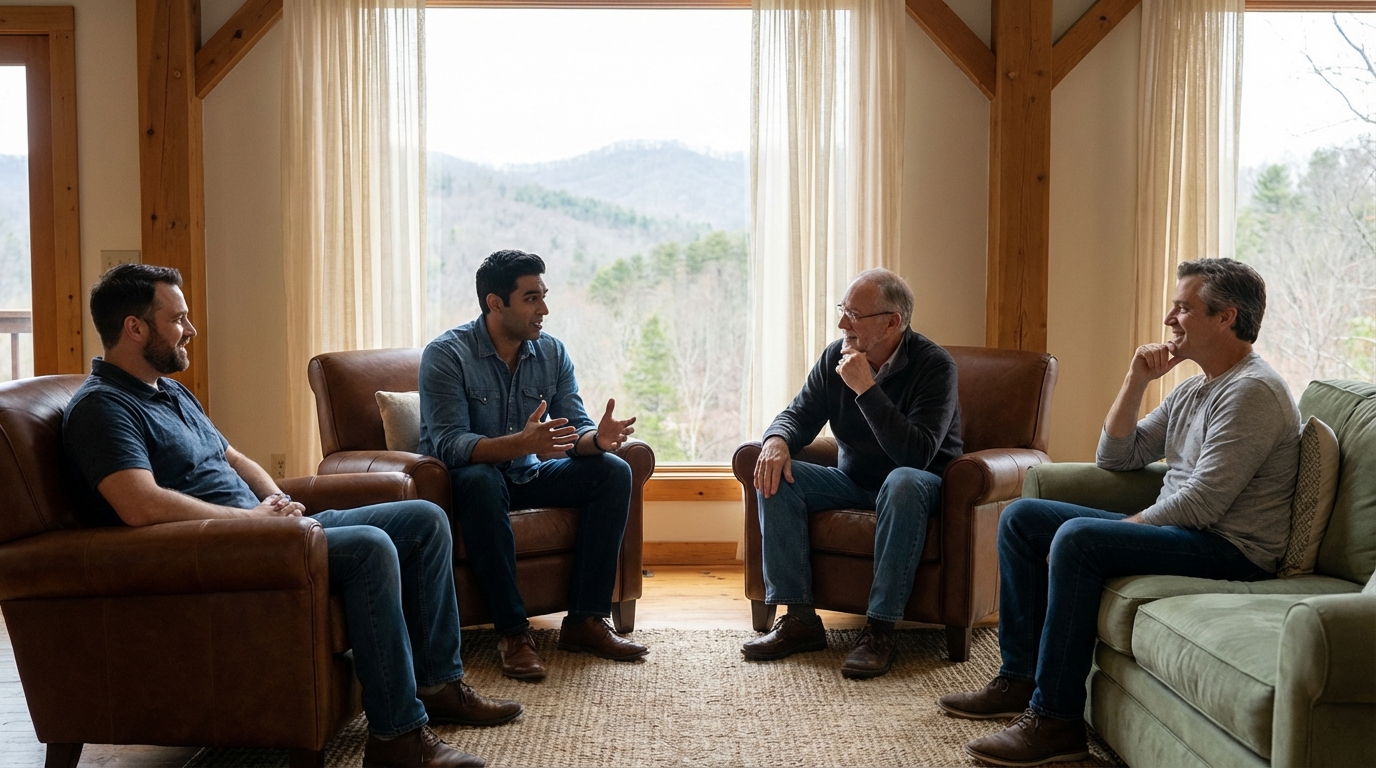
This gender-specific approach eliminates social dynamics that can sometimes inhibit honest disclosure, allowing participants to focus entirely on their healing journey without distraction or performance anxiety. The peer accountability structure inherent in men-only programming serves as a powerful catalyst for sustained behavioral change.
Men naturally form bonds through shared challenges and collective experiences, creating informal support networks that extend beyond scheduled therapy sessions. In group settings, participants witness others confronting similar struggles with substance use disorders and co-occurring mental health conditions, which normalizes the recovery process and reduces feelings of isolation.
The brotherhood model creates natural opportunities for men to practice accountability skills they'll need in long-term recovery. What distinguishes Trifecta's brotherhood approach from generic peer support is its structured mentorship framework, where men progress through defined accountability roles—from newcomers receiving support to established participants serving as peer mentors who lead group check-ins and model recovery principles.
Daily accountability rituals include morning intention-setting circles, post-activity processing sessions, and evening reflection groups where men commit to specific behavioral goals and report progress to their brothers. This peer-driven accountability often proves more influential than external motivation alone, as men develop genuine investment in each other's success.
Evidence-based modalities like CBT, DBT, and trauma-informed care gain additional potency when delivered in gender-specific contexts. Men frequently respond differently to therapeutic interventions than women, and programming designed specifically for male psychology and communication styles tends to generate higher engagement rates.
The combination of traditional psychotherapy with movement-based activities—boxing, jiu-jitsu, hiking, and outdoor adventure programming—addresses the mind-body connection in ways that resonate particularly well with men who may have previously struggled with purely talk-based approaches. For example, DBT distress tolerance skills are applied during ice bath exposure, where men practice emotional regulation techniques while experiencing controlled physiological stress.
For referring clinical professionals, gender-specific programming represents an evidence-supported treatment approach that addresses the distinct needs of male clients. Men-only environments in Nashville and Knoxville facilities allow for specialized curriculum development, targeted therapeutic interventions, and community-building strategies that maximize treatment effectiveness for this population.
Trifecta Healthcare Institute's referral process is designed for efficiency and transparency. Referring clinicians receive an initial response within 2 hours during business hours, with insurance verification and clinical pre-screening completed within 24 hours.
The admissions team provides detailed feedback on appropriateness of fit, recommended level of care, and anticipated admission timeline—enabling you to maintain momentum with clients ready for treatment. Upon admission, referring professionals receive a comprehensive intake summary within 48 hours, outlining initial assessments, treatment plan framework, and assigned clinical team contacts.
Communication protocols are structured to keep referring clinicians appropriately informed without creating administrative burden. Weekly progress updates are available upon request, with mandatory communication at level-of-care transitions (medical detox to PHP, PHP to IOP, IOP to outpatient).
Discharge planning begins at admission, with 30-day and 7-day pre-discharge summaries sent to referring professionals, detailing treatment progress, continuing care recommendations, and alumni services enrollment. For clients transitioning to Trifecta's sober living environments in Nashville or Knoxville, referring clinicians receive housing placement confirmation and ongoing outpatient schedules, ensuring continuity across the full continuum from medical detox through alumni services.
Trifecta's dual-location model provides flexibility for referring professionals serving clients across Tennessee. The Nashville facility specializes in higher acuity cases with robust medical detox capabilities, while the Knoxville location offers expanded outdoor programming access with proximity to hiking trails and adventure therapy venues.
Both locations offer identical evidence-based clinical programming—CBT, DBT, EMDR, trauma-informed care—combined with movement-based therapies including boxing, jiu-jitsu, and ice bath protocols. Clients can transfer between locations based on clinical needs, family proximity, or employment considerations, with seamless care coordination managed internally. This geographic flexibility, paired with men-only programming that addresses male-specific trauma responses and resistance patterns, enables referring clinicians to match clients with optimal therapeutic environments while maintaining consistent clinical standards and communication protocols throughout treatment.
Knoxville drug rehab for referring clinical professional partners typically accept a range of commercial insurance networks, as well as TennCare, Tennessee’s Medicaid program. Facilities located near Bearden, South Knoxville, and the Old North often participate in major insurance plans and follow TennCare’s established reimbursement protocols, which are outlined by the TennCare Bureau 4. Prior authorization and appropriate documentation are generally required for TennCare coverage, and reimbursement rates may vary based on the client’s level of care, such as detox, residential, or outpatient programming. Clinical teams are encouraged to verify individual network status and coordinate with facility billing staff to ensure a seamless referral and authorization process.
Knoxville drug rehab for referring clinical professional partners routinely align their level-of-care determinations with the ASAM Criteria, the gold standard for assessing substance use disorder treatment needs. Programs located in neighborhoods like Bearden, South Knoxville, and Fountain City conduct multidimensional assessments, considering factors such as withdrawal risk, co-occurring conditions, and recovery environment. These assessments help guide placement in partial hospitalization, intensive outpatient, or outpatient care, ensuring each client receives a clinically appropriate level of support. Documentation and care pathways are reviewed collaboratively with referring professionals to maintain fidelity to ASAM protocols and meet local clinical expectations 5.
A seamless referral to a Knoxville drug rehab for referring clinical professional typically requires a detailed clinical summary, including current diagnoses, recent substance use history, and any co-occurring mental health conditions. Documentation should also include the most recent ASAM Criteria assessment, medication list, relevant lab results, and a copy of insurance information or TennCare status. For men in neighborhoods like Bearden, Fountain City, and South Knoxville, timely sharing of these records helps prevent gaps in care caused by city-specific barriers such as traffic or limited parking downtown. Secure digital transfer of documents is recommended to maintain confidentiality and expedite the intake process 5.
Knoxville drug rehab for referring clinical professional partners serves a wide range of neighborhoods across the city, including Bearden, Fountain City, South Knoxville, Sequoyah Hills, Old North, Downtown, and West Hills. Facilities are also accessible to men from nearby areas such as Inskip, Fourth & Gill, and Fort Sanders, with convenient proximity to landmarks like the University of Tennessee campus and the Convention Center. Beyond Knox County, many programs accept referrals from surrounding East Tennessee counties, such as Blount, Anderson, and Sevier, supporting broader regional needs 3. This geographic reach allows clinical partners to coordinate care efficiently, even for clients facing city-specific barriers like parking limitations or transit challenges.
In Knoxville drug rehab for referring clinical professional settings, co-occurring psychiatric conditions are managed through integrated dual diagnosis programming rather than primary mental healthcare. Facilities in neighborhoods like Bearden, Fountain City, and South Knoxville coordinate with external psychiatric providers for clients requiring primary mental health services, maintaining a focus on substance use disorder treatment with adjunctive support for anxiety, depression, or trauma-related symptoms. Local clinical teams utilize evidence-based modalities—such as CBT, DBT, and trauma-informed care—to stabilize mental health while ensuring ongoing communication with referring psychiatrists or outpatient mental health clinics 6. Cross-team consultations and coordinated medication management are standard, supporting continuity for men with complex presentations.
Discharge planning for Knoxville drug rehab for referring clinical professional partners centers on coordinated transition protocols and robust alumni engagement. Facilities in neighborhoods like Bearden, Fountain City, and South Knoxville develop individualized discharge plans, which include scheduled follow-ups, relapse prevention strategies, and referrals to outpatient or alumni peer groups. Many programs offer structured alumni services—such as weekly support groups or mentorship meetups—accessible near landmarks like Market Square or the University of Tennessee campus. Secure digital communication allows continuous connection with alumni, a strategy linked to improved long-term retention and reduced relapse rates in men’s recovery programs 8. These supports help bridge care as clients return to their communities.
Men-only programs in Knoxville drug rehab for referring clinical professional partners approach trauma with tailored, gender-responsive interventions distinct from mixed-gender settings. In neighborhoods like Bearden, Fountain City, and South Knoxville, men’s groups foster a sense of safety and camaraderie, enabling deeper disclosure of trauma histories and more open emotional processing. Research in JAMA Psychiatry highlights that men often engage more fully in body-based or movement-oriented trauma therapies—such as boxing or outdoor activities—when surrounded by peers with shared experiences 8. This environment reduces stigma and promotes accountability, factors that can be diluted in mixed-gender groups. These men-specific approaches are linked to improved engagement and retention in trauma recovery.
Whether it's you or someone you love, our team can help you figure out the next step — what treatment looks like, what's covered, or just someone to talk to.
Talk to Our TeamConfidential. No commitment required.



July 30, 2026