



How to Vet and Choose a Rehab for Alcoholics Near Me
Learn how to evaluate a rehab for alcoholics near me by checking licensure, accreditation, therapies, medication use, and long-term care quality.
Read More
Learn how active recovery stretches reset your nervous system, enhance emotional regulation, and support mind-body healing with Trifecta Healthcare Institute.
Start Your Journey NowWritten and reviewed by the clinical team at Trifecta Healthcare Institute, a men’s-only treatment center in Tennessee specializing in substance use, mental health, and dual diagnosis care.
As professionals in the addiction treatment space, you understand that cognitive breakthroughs often require physiological stability. Active recovery stretches serve as a vital bridge between physical movement and neurological healing, offering men actively engaged in substance use disorder treatment a tangible way to reconnect with their bodies. Unlike passive rest, these purposeful stretches stimulate blood flow, reduce cortisol levels, and activate parasympathetic responses—our natural calming mechanism that frequently becomes dysregulated through prolonged substance use.
The science behind active recovery stretching reveals why kinetic approaches prove particularly effective when healing from addiction and co-occurring mental health conditions. When performed consistently, these stretches help restore natural neurochemical balance, supporting the same systems that traditional therapies like CBT and DBT address from a cognitive perspective. This dual approach—addressing both mind and physiology—creates more comprehensive, sustainable healing outcomes.
"At Trifecta's Nashville and Knoxville locations, active recovery stretching integrates seamlessly with the center's movement-based programming philosophy, preparing men for the physical and mental demands of boxing, jiu-jitsu, and outdoor adventure activities."
— Trifecta Healthcare Institute Clinical Philosophy
During intensive treatment programs, these stretches provide immediate benefits that complement other therapeutic interventions. They reduce muscle tension that accumulates from stress and trauma, improve sleep quality, and create moments of mindfulness that interrupt racing thoughts or cravings. Furthermore, they prepare individuals for more intensive physical activities, ensuring their bodies are primed for the rigors of a comprehensive wellness routine.
The key distinction lies within that active component. Rather than simply holding static positions, active recovery incorporates controlled movement that engages neural pathways intentionally. This engagement helps men in a Nashville rehab or Knoxville rehab for men develop greater somatic awareness—a critical skill empowering them to recognize early warning signs of stress, triggers, or emotional dysregulation throughout their recovery journey.
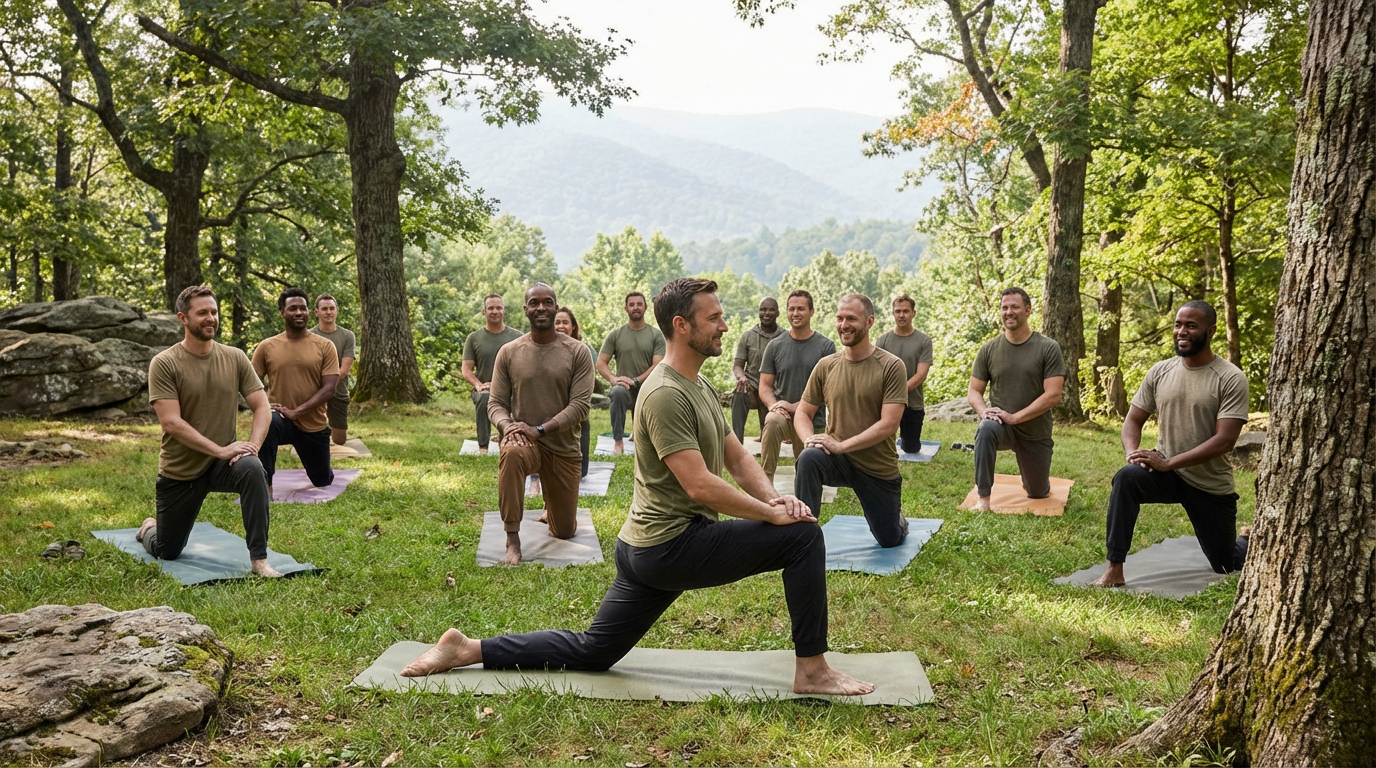
The hip flexor stretch serves as a foundational reset technique because tension accumulates heavily in this area during active addiction and early sobriety. Men who have spent months or years in a fight-or-flight state often carry chronic tightness through the psoas muscle—the deep hip flexor connecting the spine and femur. This muscle group doesn't just affect mobility; it is intimately connected to how the body processes stress, making it a powerful entry point for calming an overactive sympathetic state, as noted in clinical performance studies.4
Developing hip flexor mobility also prepares men for the physical demands of Trifecta Healthcare Institute's boxing and jiu-jitsu programming, where hip flexibility directly impacts performance and injury prevention. To perform this movement effectively, start in a low lunge position with the right knee forward at 90 degrees and the left knee resting on the ground. The key isn't pushing deeper into the pose, but rather focusing on pelvic positioning.
Gently tuck the tailbone under while engaging the core, creating a posterior pelvic tilt that intensifies sensation through the front of the left hip. Hold this position for 60-90 seconds while maintaining steady, diaphragmatic breathing. The extended exhale activates the vagus nerve, which signals the parasympathetic response and downregulates stress hormones. This combination of physical release and breathwork creates what neuroscience research identifies as a "bottom-up" approach to physiological regulation.
Key Takeaway: Men participating in movement therapy programs often report immediate shifts in anxiety levels after hip flexor work. The technique becomes particularly valuable before group therapy sessions or during moments of acute stress, providing a practical tool for self-regulation that doesn't require equipment or extensive training.
While hip flexor work targets stored tension in specific muscle groups, the grounded forward fold creates a powerful shift in autonomic function by positioning the head below the heart. This inversion triggers parasympathetic activation through baroreceptor stimulation, sending clear signals to the brain that it is safe to rest and recover. It is a highly accessible stress management tool that men can use anywhere during their recovery journey, supported by research on neural and autonomic nervous system activity.1
To perform this posture, stand with feet hip-width apart and slowly fold forward from the hips, letting your upper body hang heavy. Bend your knees generously to protect your lower back and allow your head to hang completely relaxed. Your arms can dangle toward the floor or hold opposite elbows. Hold this position between 90 seconds and two minutes, utilizing a structured breathing protocol:
Protocol: Inhale for 4 seconds | Hold for 2 seconds | Exhale for 6 seconds
The therapeutic benefit extends beyond simple flexibility. This position increases blood flow toward the brain while simultaneously decompressing the spine and releasing tension held throughout the posterior chain muscles. When addressing co-occurring mental health conditions alongside substance use disorder recovery, this posture offers immediate anxiety reduction.
Key Takeaway: Maintaining bent knees throughout is crucial; it prevents hamstring strain and allows the focus to remain on a nervous system reset rather than muscular flexibility. Practitioners can repeat this posture multiple times daily, particularly when experiencing cravings, creating a reliable physical intervention that supports long-term healing.
Spinal twists offer a unique mechanism for regulating the autonomic response through gentle compression and release of the torso. This rotation-based movement stimulates the vagus nerve while creating space in the thoracic cavity, directly influencing heart rate variability and stress response patterns. For men navigating recovery, this becomes particularly valuable as their physiology relearns healthy self-regulation after extended periods of substance-driven dysregulation, aligning with cardiovascular flexibility guidelines.3
To practice a seated spinal twist, sit cross-legged or in a chair with feet planted firmly. Place your right hand behind you and left hand on your right knee. Inhale to lengthen your spine, then exhale as you rotate rightward, keeping your head aligned with your torso. Hold for five to eight breaths, allowing each exhale to deepen this twist slightly. Return to center and repeat on your opposite side.
The physical mechanics of twisting create a wringing effect on internal organs and surrounding fascia, promoting circulation and supporting natural detoxification processes. As the spine rotates, pressure alternates between sympathetic nerve chains running alongside vertebrae, creating a balancing effect that helps restore equilibrium to an overactive stress response.
Key Takeaway: The bilateral nature of this practice reinforces neural pathways associated with balance and integration. Men working through trauma or co-occurring mental health conditions often carry tension asymmetrically; twists address these imbalances while building interoceptive awareness.
Child's Pose creates a unique opportunity for those navigating recovery to develop interoceptive awareness—the ability to sense and interpret internal bodily signals. This skill proves essential for men working through substance use disorders, as dependency often involves a profound disconnection from natural feedback systems within the body. In this grounded position, practitioners can tune into subtle sensations that typically go unnoticed, which research shows helps prevent relapse.4
Clinical Modification for Knee or Hip Pain
If a client experiences discomfort in deep flexion, place a rolled blanket between the calves and hamstrings, or elevate the torso using a bolster. The goal is nervous system regulation, not forcing joint mobility.
The pose's gentle compression of the abdomen stimulates the vagus nerve, which plays a central role in the parasympathetic branch of our autonomic system. This activation helps individuals recognize the physical sensations associated with calm and safety—feelings that may have been chemically suppressed or avoided through addictive patterns. By holding this position for three to five minutes, practitioners begin to notice their breathing rhythm and the gradual release of tension throughout the lower back.
This vagal activation becomes particularly valuable when integrated into comprehensive treatment approaches. For those participating in Trifecta's boxing and outdoor adventure programming, Child's Pose serves as a bridge between high-intensity activities and introspective work. After rigorous sessions, this restorative position allows autonomic regulation to occur while maintaining conscious awareness of that transition.
Key Takeaway: Practitioners learn to identify the difference between physical exhaustion and emotional overwhelm, between productive discomfort and harmful stress. This practice strengthens the mind-body connection that trauma often severs, helping men rebuild trust in their internal experience.
The shoulders carry more than physical weight—they store tension patterns from hypervigilance, defensive postures, and unprocessed trauma responses. Men navigating sobriety often discover chronic tightness across the upper back and shoulder girdle, residual effects of a sustained stress response during active addiction. This tension restricts breathing, limits range of motion, and maintains a physiological state that signals continued threat to the body's stress-regulation systems, linking embodied cognition directly to therapeutic outcomes.5
Shoulder release exercises target these holding patterns through gentle, sustained stretches that activate parasympathetic responses. The doorway pec stretch offers particular therapeutic value. To execute this properly:
This position specifically addresses anterior shoulder tightness and opens the chest—areas where trauma-related tension frequently accumulates. The therapeutic value extends beyond flexibility gains. As shoulder tension releases, individuals often experience emotional releases—sometimes relief, occasionally memories surfacing as physical structures let go of protective patterns no longer needed. This somatic processing complements traditional therapies like EMDR and trauma-informed care.
Key Takeaway: Trifecta's movement-based recovery programs in Nashville and Knoxville incorporate shoulder work as foundational preparation for more dynamic activities. Releasing chronic tension improves not just physical capability but emotional regulation, creating alignment between soma and psyche.
The hamstring stretch offers more than physical flexibility—it creates a direct channel to proprioceptive awareness, the ability to sense body position in space. This awareness becomes particularly valuable for men navigating recovery who have spent months or years disconnected from physical sensations, turning to substances to mediate their relationship with their own physicality, a concept foundational to proprioceptive rehabilitation.6
To perform it, sit on the floor with one leg extended and the other bent inward. Reach toward the extended foot, keeping the spine long rather than rounded. The key isn't touching the toes—it's maintaining awareness of sensation throughout the posterior chain. Hold for 45-60 seconds, breathing deeply into areas of resistance.
What makes it powerful for trauma processing is its ability to access stored tension within our largest muscle group. The hamstrings often hold chronic stress patterns, particularly for those who've experienced fight-or-flight responses repeatedly. This deep muscular work creates a unique opportunity to identify where tension accumulates during moments of stress or craving—a skill that becomes invaluable for recognizing triggers before they escalate.
Key Takeaway: This proprioceptive connection supports Trifecta's neuroscience-based approach to movement therapy. When men can identify where tension lives within their musculature, they develop early warning systems for stress and emotional dysregulation, creating a daily check-in point that doesn't depend on external substances.
Between facility size limits, waivers, and state-by-state rules, figuring out your Medicaid or private insurance benefits can feel like its own full-time job. Our admissions team will verify your coverage in minutes and walk you through exactly what's available — no guesswork required.
Verify Insurance Benefits →No commitment required. Confidential & HIPAA-protected.
The chest opener stretch addresses a physical manifestation of emotional guarding that many men carry without conscious awareness. When someone experiences trauma or prolonged stress, their frame naturally contracts forward—shoulders round, chest collapses inward, creating a protective posture that becomes habitual. This physical pattern doesn't just reflect emotional pain; it perpetuates it by restricting breath and limiting one's capacity for full emotional expression, demonstrating the profound mind-body connection in pain management.2
Standing in a doorway with arms extended against the frame, leaning gently forward until tension builds across the chest and shoulders, creates an opportunity for more than muscular release. As the pectoral muscles stretch and the ribcage expands, breathing naturally deepens. This increased oxygen flow activates the parasympathetic response, shifting someone from a defensive state into one more conducive to processing difficult emotions.
Men working through addiction often discover that physical openness precedes emotional availability. The chest opener becomes a gateway—a safe, structured way to begin dismantling protective barriers that no longer serve recovery. When paired with intentional breathing, this practice can surface emotions that have been compressed beneath layers of tension. The physical act of opening creates space for emotional processing that might otherwise feel too vulnerable to approach directly.
Key Takeaway: Trifecta Healthcare Institute's physical recovery programming recognizes these connections between posture and emotional capacity. Rather than forcing vulnerable conversations before a client feels ready, structured stretching creates conditions where emotional processing happens organically. The physical leads, the mental follows, and healing unfolds through activity.
Tennessee has emerged as a hub for innovative addiction treatment, with kinetic recovery programming gaining recognition for its effectiveness in treating substance dependency disorders. This approach integrates physical activity directly into therapeutic protocols, recognizing that healing from addiction requires addressing both body and mind simultaneously. For professionals seeking a Knoxville rehab for men or a Nashville rehab, this methodology offers a compelling alternative to traditional models.
Programs throughout Nashville and Knoxville now incorporate boxing, jiu-jitsu, hiking, and outdoor adventure activities as core therapeutic modalities rather than recreational add-ons. These activities help men healing from addiction restore neurochemical balance disrupted by prolonged drug or alcohol use while building confidence, discipline, and peer connections essential for long-term sobriety. Trifecta Healthcare Institute does not offer primary mental healthcare, but rather specializes in treating co-occurring mental health conditions alongside substance use disorders through this integrated lens.
The brotherhood model prevalent in Tennessee's men-only treatment centers creates accountability structures that extend beyond traditional clinical settings. When combined with evidence-based therapies like CBT, DBT, and trauma-informed care, exercise-integrated programming addresses the full spectrum of challenges facing men on their recovery journey—from co-occurring mental health conditions through their need for purpose and community.
This integrated approach represents a shift toward more engaging, action-oriented treatment that resonates particularly well with men seeking alternatives to conventional talk therapy formats, ensuring they have the tools to build a resilient, active life in recovery.
Movement-centered recovery programming represents a transformative shift in how you and your peers approach healing from substance use disorders and co-occurring mental health conditions. By integrating physical activities like boxing, jiu-jitsu, hiking, and ice baths with evidence-based therapies, treatment centers across Tennessee are addressing the neurochemical imbalances that traditional talk therapy alone may not fully resolve. This approach recognizes that men often process emotions and trauma differently, finding expression through action rather than conversation.
The brotherhood model amplifies these benefits, creating accountability structures and peer support networks that extend well beyond initial treatment phases. Men who engage in structured physical activities during recovery report improved mood regulation, reduced cravings, and stronger relapse prevention skills. For professionals seeking a Nashville rehab or Knoxville rehab for men targeting male clients, these programs offer an active alternative that aligns perfectly with goal-oriented mindsets.
As the addiction treatment landscape evolves, exercise-integrated programming stands out through neuroscience-backed methodology that honors how men heal—through challenge, camaraderie, and purposeful action toward lasting recovery.
When you or someone you love are ready to begin healing—mind, body, and spirit—connect with Trifecta Healthcare Institute. We help men thrive in and out of treatment.
These seven active recovery stretches were selected based on their ability to address the most common neurobiological and somatic needs of men in addiction and co-occurring mental health recovery. Each stretch targets a key area—such as proprioception, interoceptive awareness, or autonomic regulation—proven to support nervous system balance and mind-body integration. They were chosen from protocols cited in clinical guidelines and supported by research showing that stretching can enhance parasympathetic activity, reduce stress hormones, and deepen somatic awareness—outcomes linked to improved resilience and reduced relapse rates in recovery populations.1,3,8
For optimal nervous system benefits, each hip flexor stretch should be held for 20 to 30 seconds and repeated 2 to 3 times per side. Clinical guidelines consistently support this duration as effective for improving flexibility and promoting autonomic regulation without risking muscle strain or performance loss. Research also notes that holding hip flexor stretches in this range helps maintain hip extension and supports lumbar spine stability, which is crucial for men rebuilding postural integrity and nervous system balance in recovery. Consistent, mindful practice within these evidence-based timeframes maximizes the therapeutic impact of active recovery stretches.3,4
Yes, stretching practices can influence dopamine levels during recovery. Research shows that physical activity—including active recovery stretches—triggers the release of dopamine, a neurotransmitter tied to mood, motivation, and pleasure. In fact, a systematic review found that 6 out of 7 studies reported increased dopamine availability in brain regions responsible for reward and motivation after exercise-based interventions. For men in recovery, this means that regular stretching may help restore neurochemical balance and support motivation, both of which are critical when rebuilding healthy routines. Incorporating stretch-based movement into recovery programs is a practical way to reinforce these neurobiological changes.7
Dynamic stretching was not included in this recovery protocol because it typically involves rapid, repetitive movements designed to increase heart rate and prepare the body for intense activity. For men in early addiction or trauma recovery, these movements may overstimulate the nervous system, potentially reinforcing a fight-or-flight response rather than promoting the calm, restorative state targeted by active recovery stretches. Research demonstrates that static and mindful stretching elicits greater parasympathetic activation and emotional regulation, which are foundational for rebuilding resilience in recovery populations. This protocol prioritizes slow, intentional movement to support nervous system stability and safe mind-body reconnection.1
For most men in recovery, performing active recovery stretches at least two to three times per week is considered the minimum frequency to achieve meaningful therapeutic effects. Clinical guidelines and research indicate that this regularity helps improve flexibility, supports nervous system regulation, and reduces the risk of injury or relapse triggers. Benefits accumulate with consistency, allowing the body and mind to adapt gradually without overstimulation. Even brief sessions—just 5 to 10 minutes—can be effective if done routinely. Professionals seeking deeper mind-body integration may increase frequency as their comfort and mobility improve, but starting with two to three sessions weekly establishes a strong foundation for healing.9
These stretches complement evidence-based therapies like CBT or EMDR by providing a somatic, body-based pathway for processing emotions and regulating the nervous system. While cognitive therapies target thoughts and emotional patterns from a 'top-down' approach, active recovery stretches offer a 'bottom-up' experience—helping men access, release, and integrate physical tension or trauma that might be difficult to reach through talk therapy alone. Research shows that stretching can induce measurable changes in brain activity and autonomic regulation, which directly support therapeutic outcomes such as improved emotional processing and reduced relapse risk when combined with behavioral interventions.1,5
Yes, there can be contraindications for stretching practices in early recovery stages, especially for men with recent injuries, untreated musculoskeletal conditions, or acute medical issues related to substance use. Caution is necessary if there is severe joint pain, recent surgery, or cardiovascular instability. Clinical guidelines recommend consulting a healthcare provider before starting active recovery stretches if any of these conditions are present. Additionally, overstretching or using improper form can lead to muscle strain or exacerbate existing injuries. For men in early recovery, starting with gentle, supported stretches and gradually increasing intensity as stability improves is safest. Always prioritize safety, body awareness, and professional guidance when introducing new movement routines.3
Whether it's you or someone you love, our team can help you figure out the next step — what treatment looks like, what's covered, or just someone to talk to.
Talk to Our TeamConfidential. No commitment required.



July 30, 2026