



How to Vet and Choose a Rehab for Alcoholics Near Me
Learn how to evaluate a rehab for alcoholics near me by checking licensure, accreditation, therapies, medication use, and long-term care quality.
Read More
Evaluate readiness for group therapy Knoxville TN with key success metrics and practical tips at Trifecta Healthcare Institute for lasting recovery support.
Start Your Journey NowWritten and reviewed by the clinical team at Trifecta Healthcare Institute, a men’s-only treatment center in Tennessee specializing in substance use, mental health, and dual diagnosis care.
Knoxville’s recovery community is vibrant yet essential, particularly for men seeking support for substance use and co-occurring mental health concerns. From Old North Knoxville to Cedar Bluff, residents face barriers to care despite a growing need. Group therapy Knoxville TN resources at Trifecta Healthcare Institute align with the city’s spirit of brotherhood, utilizing movement-based recovery and peer accountability.
For many, convenient access via I-40 or Kingston Pike is crucial to overcoming daily traffic patterns. As local leaders in men’s addiction treatment, we see stories of neighborly resilience daily. The following section examines the specific mental health data shaping our approach.
Knox County faces unique challenges, especially for men in neighborhoods like Bearden and South Knoxville. To understand the urgency, consider the following local health data:
Table 1:
| Knox County Mental Health & Substance Use Statistics | Statistic (per 100k or %) | Impact on Men |
|---|---|---|
| Non-Fatal Drug Overdose | 286 per 100,000 | High risk in North/West Knoxville |
| Suicide Mortality Rate | 85.9 per 100,000 | Men are ~4x more likely to die by suicide |
| Frequent Mental Distress | 12% of Residents | Often unreported due to stigma |
These figures reflect the hardship present from Old North Knoxville to Sequoyah Hills. Movement-based recovery groups serve as lifelines for men battling these statistics, offering hope where isolation is most felt.
Access to services in West and North Knoxville is limited by a provider shortage. For men in West Hills and Powell, this often means longer wait times. Knox County is designated as a Health Professional Shortage Area (HPSA), meaning behavioral health providers cannot meet local demand.8
Trifecta fills this gap by offering accessible sessions with extended hours, making care practical for busy professionals. Brotherhood-based group counseling is especially valuable here, providing supportive spaces when specialty care is scarce.
Stigma and the pressure to appear strong often keep men from reaching out. National research shows only about 13.4% of men accessed mental health treatment in 2019 compared to 25.7% of women.4
"I thought asking for help was a weakness. It wasn't until I sat in a room with other men from West Hills that I realized silence was the real enemy." — Michael, Group Therapy Participant
In communities like Bearden and Old North Knoxville, silence about emotional distress often feels mandatory. Men may internalize the belief that "real men handle it alone." Trifecta’s programs are shaped to break this stigma, fostering confidential environments where men can move, speak, and heal together.
We utilize three primary modalities to ensure recovery sticks: CBT (Cognitive Behavioral Therapy), Peer Mentorship, and Movement-Based Interventions. Research shows group therapy can match or surpass individual therapy outcomes when coupled with action-oriented activities.2
CBT groups guide participants through practical strategies for recognizing unhelpful thoughts. When paired with peer mentorship, the impact deepens. Data indicates that peer-led recovery nearly doubles the time to psychiatric rehospitalization.3
Adding group CBT to pharmacotherapy produces better results for substance use disorders than medication alone. This integrated approach helps men address co-occurring needs by blending counseling with medical treatment.9
We integrate physical activity directly into the healing process. This is not just "working out"; it is a therapeutic tool to restore brain chemistry.
Physical activity boosts production of essential neurochemicals like dopamine and beta-endorphins—messengers often depleted by substance use. This "neurochemical reset" helps men in communities from Hardin Valley to Cedar Bluff experience improved mood and fewer cravings.6
Accessing care should not be a logistical burden. We have strategically placed our services to be accessible via major arteries like Kingston Pike and I-40.
We serve men from across the region. Here is how our locations serve specific communities:
Understanding the financial commitment is vital. We accept major insurance carriers and offer transparent cost estimates.
Table 2:
| Estimated Investment for Group Therapy | Estimated Cost Range | Notes |
|---|---|---|
| In-Network Insurance | $20 - $50 / session | Dependent on copay/deductible. |
| Out-of-Network | $50 - $150 / session | Superbills provided for reimbursement. |
| Sliding Scale | Variable | Based on income eligibility. |
We offer IOP (Intensive Outpatient Program) and standard outpatient sessions. Options include early mornings, evenings, and weekends to accommodate work schedules.
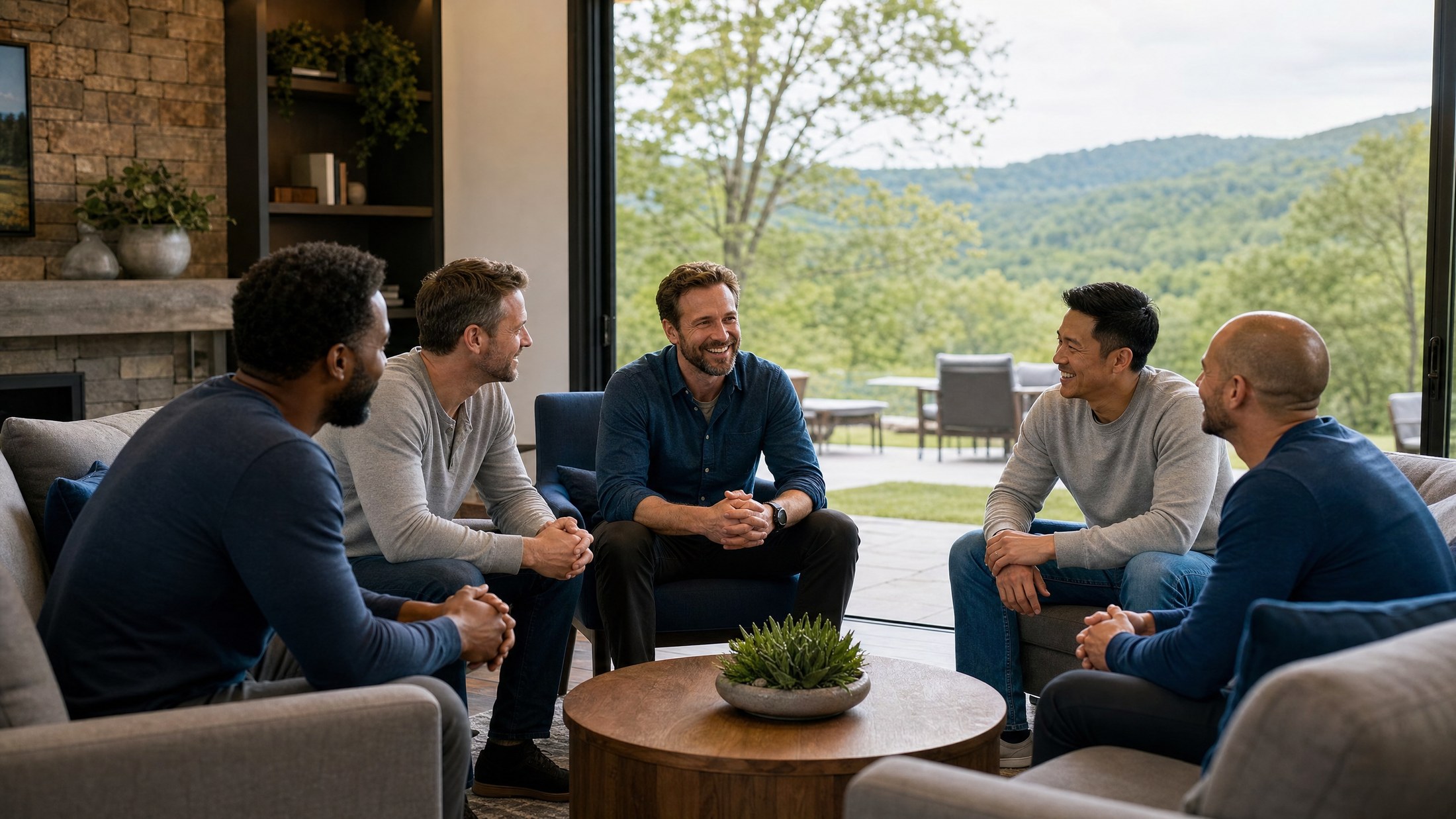
Stepping into men-only group therapy brings together the city’s spirit of camaraderie. Participants from Bearden to Fountain City join groups rooted in trust. Research shows that group models with clear structure lead to higher retention.5
The brotherhood model anchors every session. Men hold each other to their commitments—celebrating milestones and supporting one another through setbacks. This culture of accountability is the main driver behind sustained progress for many of our clients.
We offer specialized support for veterans and first responders. These groups address hypervigilance and survivor guilt, common among Knoxville’s service professionals, using trauma-informed principles that prioritize safety and empowerment.
The journey to recovery is structured to ensure you are never overwhelmed. Here is the typical path:
Knoxville men working toward lifelong recovery know that success extends beyond the last session. It is about finding true brotherhood. At Trifecta Healthcare Institute, the path to lasting change begins in neighborhoods like West Hills and Powell but continues through our alumni network.
Programs that prioritize continuous peer connection help men avoid isolation and foster a sense of purpose. By blending evidence-based group therapy with action-oriented routines, local men discover recovery that is both meaningful and enduring.
When you or someone you love are ready to begin healing—mind, body, and spirit—connect with Trifecta Healthcare Institute. We help men thrive in and out of treatment.
Between facility size limits, waivers, and state-by-state rules, figuring out your Medicaid or private insurance benefits can feel like its own full-time job. Our admissions team will verify your coverage in minutes and walk you through exactly what's available — no guesswork required.
Verify Insurance Benefits →No commitment required. Confidential & HIPAA-protected.
Finding the right group therapy Knoxville TN program often sparks practical questions. Below are answers to help you overcome decision paralysis.
Yes. With in-person sessions off Middlebrook Pike and Oak Ridge Highway, plus virtual options, we serve Powell, Cedar Bluff, and North Knoxville. This addresses the provider shortage in these areas.8
Absolutely. Every participant agrees to strict confidentiality guidelines. Whether you live in Bearden or Downtown, your privacy is protected to ensure a safe space for vulnerability.
Core men's groups are closed to family to protect the brotherhood dynamic. However, families are invited to separate educational workshops to learn how to support the recovery journey effectively.
Graduates enter our Alumni Network. This includes monthly events, peer mentorship, and ongoing movement activities to sustain the progress made during treatment.
Our primary location is minutes from Market Square via Kingston Pike or I-40. We have ample onsite parking, and several KAT bus lines service the corridor for those using public transit.
We assist in coordinating admission to a trusted local detox facility. Once medically stable, you can transition seamlessly into our group therapy program.
Men-only settings reduce the pressure to "perform" and allow for deeper vulnerability regarding issues like fatherhood, anger, and societal expectations. Research supports higher retention in these settings.4
Yes. Our flexible scheduling (early morning, evening, weekend) and telehealth options are specifically designed for working professionals and students.
We treat the whole person. By addressing anxiety or depression alongside substance use through CBT and movement, we treat the root causes rather than just the symptoms.
Expect a warm welcome, introductions, and a review of group guidelines. Ice-breaking movement activities often help reduce initial nerves.
Most major plans cover addiction group counseling. We provide free verification to help you understand your specific benefits and any potential costs.
Talk therapy processes thoughts; movement therapy processes physical stress and emotion. The combination offers a more holistic path to healing than either approach alone.
Many of our clients have tried other programs. Our unique combination of brotherhood, movement, and trauma-informed care often succeeds where generic talk groups may have failed.
Typically 8 to 16 weeks, though this is tailored to your individual progress and needs.
Whether it's you or someone you love, our team can help you figure out the next step — what treatment looks like, what's covered, or just someone to talk to.
Talk to Our TeamConfidential. No commitment required.


July 30, 2026