



How to Vet and Choose a Rehab for Alcoholics Near Me
Learn how to evaluate a rehab for alcoholics near me by checking licensure, accreditation, therapies, medication use, and long-term care quality.
Read More
Learn how to choose effective addiction treatment for men at Trifecta Healthcare Institute with tailored care, peer support, and steps for lasting recovery.
Start Your Journey NowWritten and reviewed by the clinical team at Trifecta Healthcare Institute, a men’s-only treatment center in Tennessee specializing in substance use, mental health, and dual diagnosis care.
Men face unique biological, psychological, and social factors that shape their experience with addiction treatment for men. Research shows that men typically develop dependency patterns differently than women, often beginning alcohol or drug use earlier and progressing more rapidly to addiction. Testosterone levels, brain chemistry differences, and metabolic variations all contribute to how substances affect the male body and mind.
Social conditioning plays a significant role in how men approach both chemical dependency and recovery. Cultural expectations around masculinity often discourage men from acknowledging emotional struggles or seeking help, leading many to self-medicate with alcohol or drugs rather than addressing underlying pain. This reluctance to be vulnerable can delay treatment and complicate the healing process, making gender-specific programming essential for breaking through these barriers.
Men also face distinct challenges in their relationships with addictive substances. Statistics indicate that men are more likely to engage in binge drinking and polysubstance abuse, and they experience higher rates of legal consequences and workplace issues related to addiction. The isolation that often accompanies these struggles can deepen the cycle of dependency, as traditional male social circles may normalize heavy drinking or drug consumption rather than supporting recovery.
"Men often thrive in environments where they can build genuine connections with other men who understand their experiences, creating a foundation of accountability and support that extends beyond initial treatment."
Understanding these differences is why specialized men's rehab programs in Nashville and Knoxville have become increasingly important. Treatment approaches that acknowledge male-specific challenges—including the need for exercise, brotherhood, and purpose-driven recovery—tend to produce better outcomes. This peer-based approach helps address the isolation and emotional suppression that frequently contribute to addiction disorders in men.
Biological and neurological differences play a central role in why addiction treatment for men often requires a tailored approach. Men’s brains may respond differently to substances due to variations in brain chemistry and hormonal influences, which can affect both the development of substance use disorders and how treatment is experienced. For example, men are statistically more likely to develop substance use disorders related to illicit drugs and alcohol, and their patterns of use may be influenced by factors like risk-taking and reward sensitivity—traits influenced by both genetics and neurobiology.2,10
Addiction treatment programs for men in Nashville and across Tennessee take these factors into account by offering strategies that align with male engagement styles, such as movement-based therapy and peer accountability. These foundational differences set the stage for understanding specific patterns in brain response and substance preference.
Brain chemistry plays a key role in shaping how men respond to addictive substances. Research finds that differences in dopamine and reward pathways can make men more sensitive to the initial stimulating effects of drugs and alcohol, which increases risk-taking and reinforces substance use patterns unique to male physiology. For instance, men often experience greater activation in brain regions linked to reward and motivation, contributing to a cycle where the pursuit of pleasure or escape becomes deeply ingrained.10
These neurological distinctions partly explain why addiction treatment for men in Tennessee, especially in Nashville rehab programs, often incorporates active, movement-based recovery techniques—methods that align with how men process stress and cravings. By understanding these patterns, treatment centers can better support long-term healing and reduce relapse risk through strategies tailored to the male brain. This solution fits men seeking a brotherhood approach and recovery environment that resonates with their natural engagement style.10
When looking at substance use patterns among men, prevalence rates are notably higher than in women across almost every substance category. For example, 11.5% of males over age 12 in the U.S. are affected by a substance use disorder, compared to 6.4% of females. Men are especially likely to use illicit drugs and alcohol at higher rates, with preferences often leaning toward stimulants, cannabis, and opioids.2,10
These trends in substance choice are influenced by biological, social, and cultural factors that shape both risk and resilience. In Tennessee, addiction treatment for men is designed to address these distinct patterns, tailoring interventions to match the specific needs and substance preferences of male clients. Understanding these differences helps programs like Trifecta Healthcare Institute foster movement-based recovery and brotherhood-focused healing. This approach is ideal for men who benefit from targeted, gender-responsive support that addresses the realities of male substance use and recovery.2,10
Masculine norms often shape the ways men approach addiction and recovery—sometimes creating invisible barriers to getting help. Many men have been taught to value self-reliance, emotional control, and toughness, which can make it difficult to acknowledge vulnerability or ask for support when struggling with substance use. This reluctance is reinforced by stigma, both internal and societal, leading to significantly lower rates of treatment-seeking among men compared to women.3,7
Studies show that heightened conformity to traditional masculine expectations directly predicts reduced engagement with mental health and addiction services. In Tennessee, addiction treatment for men—especially at programs like Trifecta Healthcare Institute—focuses on breaking down these barriers by fostering a supportive brotherhood and movement-based recovery. This approach is ideal for those who benefit from a sense of camaraderie and accountability, helping men reclaim their health in an environment that honors both strength and vulnerability.7
Recognizing self-reliance and emotional suppression is the first step toward breaking the cycle. Consider this checklist of common traits:
These traits, shaped by traditional masculine norms, can prevent men from seeking addiction treatment for men even when support is needed most. Studies show that higher adherence to self-reliance and emotional restraint correlates with lower engagement in mental health and substance use services. In programs like Trifecta Healthcare Institute’s Knoxville rehab for men, the focus is on building trust and encouraging healthy vulnerability within a movement-based, brotherhood setting.7
Stigma plays a powerful role in why many men avoid seeking addiction treatment for men, especially in environments where traditional masculine ideals are celebrated. Studies confirm that men are far less likely to pursue mental health or substance use care due to fears of judgment, being perceived as weak, or internalizing cultural expectations to "tough it out" alone.3,7
This stigma—both societal and self-imposed—creates a cycle of silence and isolation, with men often waiting until crisis points before reaching out. In Tennessee, programs like Trifecta Healthcare Institute work to dissolve these barriers by fostering a brotherhood environment where vulnerability is reframed as courage. This method works when men want to connect with others who understand their journey, making it easier to accept support and engage in meaningful recovery.
Understanding how men's treatment differs from traditional approaches provides important context—but the critical next step involves determining whether this specialized model aligns with your specific recovery needs. Consider these key questions:
Your answers to these questions reveal whether gender-specific programming might offer the environment where genuine healing becomes possible. Several indicators suggest gender-specific programming may be an ideal match. Men dealing with dual diagnosis challenges—such as depression, anxiety, or trauma alongside addiction—often benefit from treatment spaces where emotional expression feels safer and less stigmatized.
Those who have experienced setbacks in previous treatment programs might need the brotherhood approach that creates deeper accountability and connection. Veterans, first responders, and professionals facing career-related stressors frequently report stronger engagement when surrounded by peers who understand similar pressures. Movement-based recovery programming appeals especially to men who feel disconnected from traditional talk-therapy models. Exercise and outdoor pursuits like hiking, fitness training, and wilderness challenges create natural opportunities for processing emotions while building confidence and resilience.
A practical self-assessment starts with targeted diagnostic questions designed to illuminate whether addiction treatment for men is the right fit. Begin by asking:
Research shows that men who answer yes to these questions often benefit from movement-based recovery and peer accountability—key elements of Trifecta Healthcare Institute’s programming in Tennessee. This approach is ideal for those who seek a brotherhood-driven recovery environment, as well as for men whose substance use patterns are influenced by social or psychological barriers.1,5
For men considering addiction treatment for men, it’s vital to assess the presence and impact of trauma and co-occurring mental health issues. Begin by asking: Have you experienced events that still cause distress or avoidance? Do symptoms of PTSD, anxiety, or depression influence your substance use patterns?
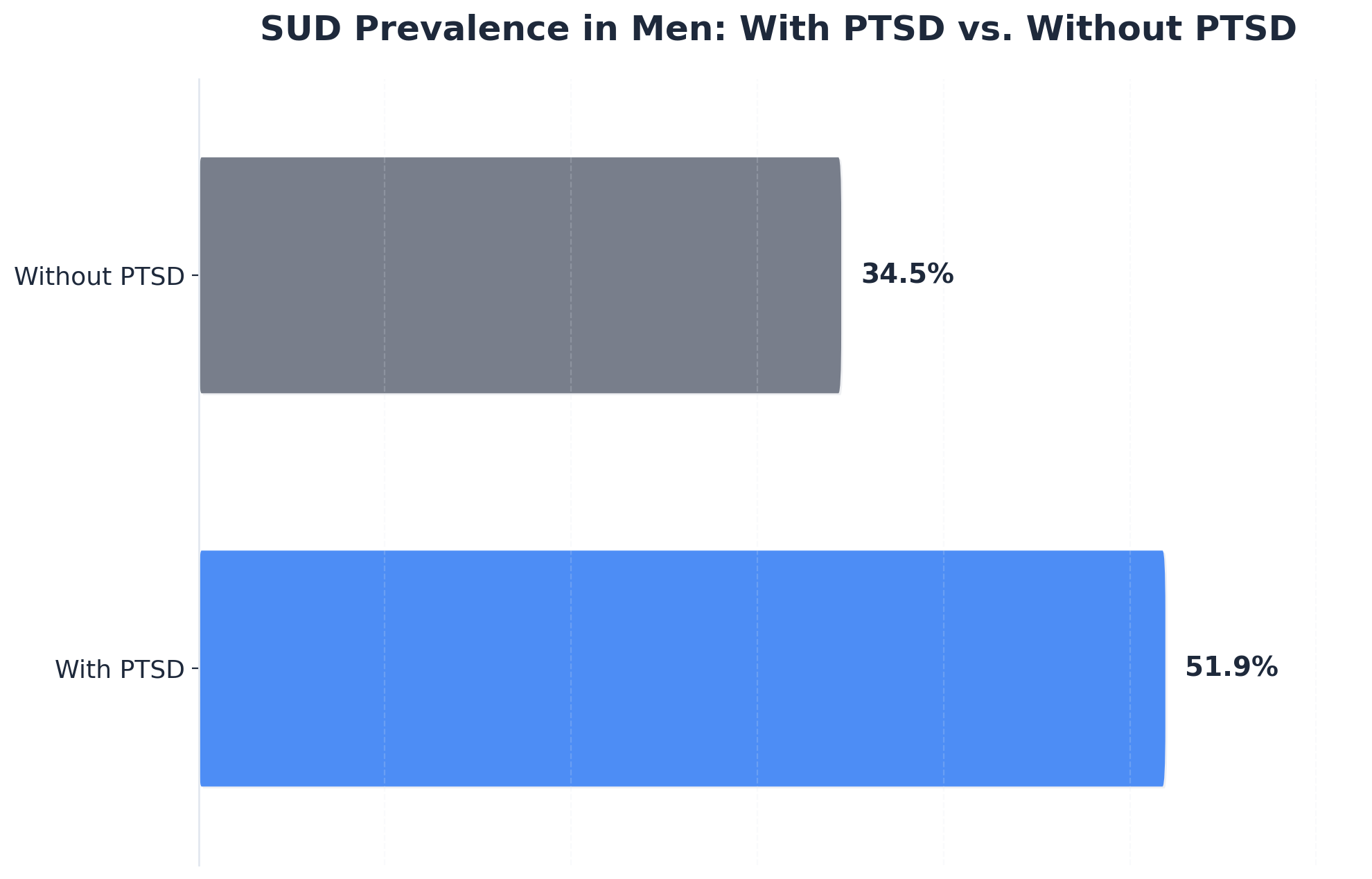
Research shows that men with PTSD are significantly more likely to have a co-occurring substance use disorder—51.9% compared to 34.5% for men without PTSD. This strong link highlights why Trifecta Healthcare Institute’s programs in Tennessee are designed to address both addiction and mental health together, offering movement-based recovery and a supportive brotherhood environment. This solution fits men who need integrated support for trauma and substance use, and who benefit from peer-driven accountability and active engagement in their recovery.1,5
Choosing the right engagement style is essential for men seeking effective addiction treatment for men. A quick checklist can clarify your preferences:
Studies show that many men respond best to treatment models that emphasize activity, teamwork, and real-world skill-building—core features of programs like those at Trifecta Healthcare Institute in Tennessee. This approach works best when you feel energized by group challenges, benefit from structured routines, and seek camaraderie in a brotherhood setting.1,6
A clear decision framework helps men determine the best type and intensity of addiction treatment for men, especially when co-occurring mental health challenges are present. Start by mapping your needs in three areas: 1) severity of substance use, 2) level of daily functioning, and 3) support network strength.
If your substance use disrupts work, relationships, or health, or if you have a history of relapse, you may need a more structured setting like a residential or intensive outpatient program. Research finds that men are less likely to seek help early, so choosing a treatment level that matches your current risk and goals is crucial. In Tennessee, programs like Trifecta Healthcare Institute guide men through this process, emphasizing movement-based recovery and a supportive brotherhood.4,7
Use this step-by-step tool for matching treatment intensity to your unique situation:
This approach is ideal for men whose substance use patterns disrupt daily life or who have struggled with maintaining recovery. Studies show that men often delay seeking help—making timely, structured support essential for long-term success. At Trifecta Healthcare Institute, addiction treatment for men is tailored to these realities, offering options from intensive outpatient to residential care, all anchored by movement-based recovery and peer accountability.4,7
Choosing between gender-specific and gender-responsive care is a key step in selecting addiction treatment for men. Gender-specific programs, such as those found in some Nashville rehab settings, serve only men and focus on building connection through male-only groups and activities. Gender-responsive care, on the other hand, adapts the treatment environment and approach to address the unique needs and experiences of men—whether in all-male or mixed-gender settings.
Research suggests that while specialized men's programs can boost engagement (especially for those struggling with masculine norms or stigma), some studies find similar outcomes when treatment is simply responsive to male needs, rather than exclusively male-only. This solution fits men who want a recovery environment aligned with their values, whether that means the camaraderie of a brotherhood or a flexible, personalized approach. Both models emphasize movement-based recovery, peer accountability, and co-occurring mental health support—core strengths of Trifecta Healthcare Institute.4,7
Between facility size limits, waivers, and state-by-state rules, figuring out your Medicaid or private insurance benefits can feel like its own full-time job. Our admissions team will verify your coverage in minutes and walk you through exactly what's available — no guesswork required.
Verify Insurance Benefits →No commitment required. Confidential & HIPAA-protected.
Once men have determined their readiness and assessed their specific needs, the next step involves selecting an implementation pathway that aligns with their circumstances and recovery goals. Men seeking treatment have several entry points to consider, each offering distinct advantages based on individual circumstances and needs.
| Treatment Type | Typical Duration | Best For | Key Features |
|---|---|---|---|
| Residential Treatment | 30–90 Days | Severe addiction, dual diagnosis, need for 24/7 support. | Immersive environment, removal of triggers, intensive therapy. |
| Intensive Outpatient (IOP) | 8–12 Weeks (9–12 hrs/week) | Working professionals, moderate addiction, strong home support. | Flexible scheduling (AM/PM), balance of work/treatment. |
| Standard Outpatient | Ongoing | Step-down care, mild addiction, maintenance. | Less frequent sessions, focus on integration into daily life. |
Residential treatment programs provide the most immersive experience, removing individuals from environments that may trigger addictive behaviors while offering 24/7 support. These programs typically run 30 to 90 days, with completion rates averaging 65-75% for those who remain for the full duration. This intensive approach creates space for men to focus entirely on healing without the distractions of daily life, often incorporating movement-based elements like exercise routines and outdoor experiences that address the unique ways men process trauma.
Outpatient programs offer flexibility for men who have work or family commitments they cannot set aside. These pathways allow individuals to maintain their daily responsibilities while attending scheduled treatment sessions. Intensive outpatient programs (IOP) typically require 9-12 hours of weekly participation over 8-12 weeks, with success rates comparable to residential care when participants demonstrate strong external support systems. Standard outpatient care involves fewer hours and works well for those transitioning from higher levels of care or managing less severe addiction patterns.
Geographic considerations also matter. Knoxville rehab options and other regional programs allow some individuals to stay closer to family support systems, while others benefit from the fresh start that comes with treatment in a new location, such as Nashville rehab programs that combine evidence-based care with innovative approaches.
A practical checklist for evidence-based therapies tailored to male clients includes:
Each of these approaches addresses the distinct needs and engagement styles that make addiction treatment for men more effective. Research shows that trauma-focused interventions, when combined with substance use treatment, produce better outcomes for men—especially those with PTSD or anxiety. Exercise-based therapies are also proven to reduce cravings, improve mood, and foster motivation, making them especially appealing to men who connect through action and teamwork.5,6
In Tennessee, Trifecta Healthcare Institute blends these therapies with a brotherhood approach, ensuring men receive hands-on support and practical skills for long-term recovery. This method works particularly well for male clients who value movement, structure, and peer accountability as they rebuild healthy routines.
Trauma-focused treatment is a cornerstone of effective addiction treatment for men, particularly for those living with both posttraumatic stress disorder (PTSD) and substance use disorder (SUD). Research shows that 51.9% of men with PTSD also have a co-occurring SUD, underscoring the deep connection between trauma and substance use patterns in male clients.5
At Trifecta Healthcare Institute in Tennessee, programs are designed to address both challenges together, using evidence-based approaches like Cognitive Processing Therapy (CPT), Eye Movement Desensitization and Reprocessing (EMDR), and integrated models such as COPE. These therapies help men process past trauma in a supportive setting while building resilience through movement-based recovery and brotherhood. This strategy suits men who need practical skills to manage trauma triggers and benefit from peer-driven accountability as part of their long-term healing.
Movement-based recovery programming is a core element of addiction treatment for men at Trifecta Healthcare Institute, designed to match the natural engagement styles and preferences of male clients. Research highlights that exercise-based therapies not only reduce cravings and withdrawal symptoms but also improve mood, self-efficacy, and motivation, making them especially effective for those who connect through action and teamwork.6
In practice, this means integrating structured physical activity—such as group exercise, outdoor challenges, or skill-based movement workshops—into daily routines. These approaches foster a sense of accomplishment, reinforce healthy habits, and build social bonds, all while supporting co-occurring mental health needs. For men who thrive on camaraderie and active participation, this solution fits best, as it transforms recovery into a hands-on, empowering journey.
Brotherhood and peer accountability models are essential components of effective addiction treatment for men, especially within Tennessee rehab programs like Trifecta Healthcare Institute. These models create spaces where men can connect through shared experience, mutual support, and consistent encouragement, which research shows significantly boosts engagement and long-term success.1,7
By fostering a sense of brotherhood, men are empowered to support one another in facing substance use challenges and co-occurring mental health concerns, while also holding each other accountable for progress. This environment aligns with male clients’ preference for action, camaraderie, and clear feedback, making recovery feel both supportive and motivating. For those seeking addiction treatment for men in Nashville or Knoxville, opting for a brotherhood-driven approach often leads to stronger trust, deeper connection, and more sustainable change.
Male-only environments foster transformative change by creating a safe and supportive space where men can connect authentically without fear of judgment. Research shows that men often hesitate to express vulnerability or seek help in mixed-gender groups due to societal expectations around masculinity and self-reliance.7
In a dedicated setting—such as Trifecta Healthcare Institute’s addiction treatment for men in Nashville or Knoxville—participants experience a unique brotherhood rooted in shared understanding. This model encourages open discussion, honest feedback, and peer accountability, all of which are proven to increase treatment engagement and long-term recovery outcomes for male clients. For those who benefit from movement-based recovery and camaraderie, male-only programs reduce stigma and promote resilience throughout the healing journey.1,7
Rebuilding identity is a crucial aspect of addiction treatment for men, particularly in environments that emphasize brotherhood and peer accountability. In programs like Trifecta Healthcare Institute’s Nashville and Knoxville rehab for men, participants are supported in exploring who they are beyond substance use, drawing on movement-based recovery and shared life experiences.
Research highlights that when men are encouraged to develop a sense of purpose and belonging outside of substance-related behaviors, their engagement in treatment and long-term outcomes improve significantly. Brotherhood models provide the encouragement and structure needed for men to set new personal goals, strengthen resilience, and build a supportive community—key elements for sustainable recovery and positive identity formation.1,7

Breaking free from addiction requires more than good intentions—it demands concrete action. The next 30 days aren't just another month—they're the critical window between recognizing the problem and letting momentum fade into excuses. Men who commit to intentional steps during this period build unstoppable forward motion, while those who delay often find themselves trapped in the same cycle six months later. This action plan transforms urgency into structured progress.
A practical resource planning tool for men starting addiction treatment includes three steps: 1) Identify your available time for treatment, work, and family; 2) List all immediate support resources (friends, leave options, transportation); 3) Outline a 30-day timeline with weekly goals for each area. While every man’s circumstances differ, research confirms that creating a structured plan early on increases accountability and follow-through, especially in movement-based and peer-driven recovery environments.1,6
In Tennessee, programs like Trifecta Healthcare Institute support men in mapping out these logistics—helping balance treatment needs with daily responsibilities. This approach works best when men want to reduce stress, anticipate challenges, and engage fully in both addiction treatment for men and personal life.
When planning for addiction treatment for men, choosing the appropriate level of care—such as residential, partial hospitalization, or intensive outpatient—is essential to match both treatment needs and personal circumstances. Research shows that men often delay seeking structured support, making it crucial to select a setting that encourages engagement and accountability, especially in movement-based recovery programs.4,6
While financial planning is a key part of resource management, costs and insurance coverage for these services can vary widely, and it’s important to consult directly with providers like Trifecta Healthcare Institute for region-specific guidance. This method works best for those who want a realistic, step-by-step approach to balancing recovery goals with practical life demands.
Balancing work, family, and treatment needs is a central challenge for many men starting addiction treatment for men. A practical approach involves mapping out your weekly routine, setting clear expectations with employers and loved ones, and coordinating responsibilities to create protected time for movement-based recovery and peer-driven group sessions.
Research underscores that men are more likely to engage and follow through with treatment when daily routines are structured and when they have support from both family and peers. In Tennessee, programs like Trifecta Healthcare Institute help men identify flexible solutions—such as adjusting work hours, arranging childcare, or enlisting family support—to ensure treatment stays a top priority without sacrificing critical obligations.1,6
The first steps toward recovery for men in Tennessee begin with a clear, actionable plan that recognizes both the unique strengths and challenges of male clients. Upon entering a Nashville rehab or Knoxville rehab for men, individuals are encouraged to embrace movement-based recovery and connect with peer-driven support systems. Research shows that such structured, brotherhood-focused environments increase engagement and foster accountability, improving outcomes for those starting addiction treatment for men.1,6
Early days may include orientation, assessment, and the creation of personalized goals, all designed to build confidence and set a positive tone for the journey ahead. This approach is ideal for men who want to combine physical activity, peer connection, and practical routines as they take their first steps toward lasting change.
During the first one to two weeks of addiction treatment for men at a Nashville rehab or Knoxville rehab for men, the priority is on thorough assessment and safe detox planning. Clinicians conduct in-depth evaluations to identify substance use patterns, co-occurring mental health needs, and individual strengths—laying the groundwork for a personalized care plan.1
Detox services are tailored to men’s physical and emotional needs, with movement-based recovery activities introduced early to promote comfort and engagement. This approach works best when men need structured routines, peer-driven support, and reassurance as they navigate withdrawal and early recovery challenges. Research shows that integrating assessment, brotherhood support, and movement programming increases engagement, reduces anxiety, and builds trust in male clients.1,6
In weeks three and four, men enrolled in Nashville rehab or Knoxville rehab for men at Trifecta Healthcare Institute transition into active participation with movement-based recovery and deepening peer connection. This stage centers on building new routines—daily group sessions, structured physical activity, and personal goal-setting—within a supportive brotherhood.
Research highlights that as men engage in these accountability-focused environments, they report greater motivation and improved mental health outcomes. These weeks are also when co-occurring mental health support becomes more integrated, allowing men to address both substance use patterns and emotional challenges alongside peers who understand their journey. This method works best when men are ready to step beyond initial withdrawal and invest in genuine connection, teamwork, and personal growth.1,6
When searching for men's addiction treatment in Tennessee, knowing what to look for makes the difference between finding adequate care and finding exceptional care that truly supports lasting recovery. Rather than simply choosing the nearest facility, men and their families should evaluate programs against specific criteria that indicate quality, comprehensiveness, and effectiveness.
Key Evaluation Criteria for Men's Addiction Treatment Programs:
Before committing to any program, take specific action steps to verify quality. Schedule in-person facility tours and ask direct questions: What is your staff-to-client ratio? How do you handle medical emergencies? What happens if someone relapses during treatment? Request to see common areas, sleeping quarters, and therapy spaces. Verify accreditation through official databases rather than relying solely on facility claims. Watch for warning signs including pressure to commit immediately, vague answers about treatment approaches, lack of medical oversight, promises of guaranteed outcomes, or facilities that seem more focused on amenities than clinical excellence. Trust your instincts—if something feels off during your evaluation, continue your search until you find a program that demonstrates genuine commitment to men's long-term recovery and wellness.
Men seeking addiction treatment in Tennessee often have similar questions about the recovery process. Understanding what to expect can help make the decision to seek help feel less overwhelming.
Men are less likely to seek addiction treatment than women due to a combination of social, cultural, and internal barriers. Traditional masculine norms often encourage self-reliance, emotional restraint, and toughness, making it difficult for many men to express vulnerability or ask for help. Research consistently shows that higher conformity to these masculine ideals is linked with lower rates of help-seeking and engagement in both addiction and mental health services. Stigma—both societal and internalized—can lead men to fear judgment or see seeking support as a sign of weakness, which delays or prevents entry into treatment. In Tennessee, programs like Trifecta Healthcare Institute address these barriers by fostering a supportive brotherhood and emphasizing movement-based recovery, helping men feel understood and empowered throughout their healing journey.3,7
About 51.9% of men with posttraumatic stress disorder (PTSD) also have a co-occurring substance use disorder (SUD), highlighting a significant overlap between trauma and addiction in male clients. This means that more than half of men living with PTSD are also navigating challenges with alcohol or drug use. Addressing both trauma and addiction together is essential for effective recovery, which is why programs like Trifecta Healthcare Institute in Tennessee offer integrated, movement-based approaches tailored for men.5
Deciding between a men’s-only rehab and a co-ed program depends on your comfort level, personal growth goals, and the barriers you may face in recovery. If you find it difficult to open up in mixed-gender groups or feel that masculine norms make it hard to share vulnerability, a men’s-only program—like those in Nashville or Knoxville—can offer a safe, brotherhood-focused space built around movement-based recovery and peer accountability. Research shows that these environments help reduce stigma, increase trust, and foster deeper engagement for men who benefit from camaraderie and shared experience.1,7
The average cost of men's addiction treatment in Tennessee can vary significantly depending on the level of care, duration, and services included. While national statistics highlight rising investment in substance use disorder treatment, specific pricing for residential, intensive outpatient, or movement-based recovery programs like those found at Nashville rehab or Knoxville rehab for men is not standardized and often depends on individual needs and insurance coverage. Because costs can range widely, it’s best to reach out directly to providers such as Trifecta Healthcare Institute for a personalized estimate.4,6
Yes, many men are able to continue working while attending an intensive outpatient program (IOP) in Nashville or Knoxville. IOPs at Trifecta Healthcare Institute are specifically designed for flexibility, offering treatment sessions during mornings or evenings so that participants can maintain their employment and family responsibilities. Research indicates that structured routines and active engagement, such as movement-based recovery and peer-driven group sessions, help men balance work and addiction treatment for men more effectively.4
Insurance coverage for men's addiction treatment programs, including those in Nashville and Knoxville, generally depends on your specific policy and the level of care needed. Most private insurance plans and many employer-sponsored policies will cover at least part of the cost for evidence-based addiction treatment for men, particularly when services are deemed medically necessary and provided by licensed facilities like Trifecta Healthcare Institute. Coverage may include movement-based recovery programs and support for co-occurring mental health needs.4
Movement-based therapy is especially effective in addiction treatment for men because it aligns with natural engagement styles and helps address both physical and emotional aspects of recovery. Research shows that exercise-based interventions reduce cravings, ease withdrawal symptoms, and improve mood and self-confidence, making them particularly helpful for men who benefit from hands-on, action-oriented activities. Programs like those at Trifecta Healthcare Institute in Nashville and Knoxville weave group exercise, outdoor challenges, and skill-building workshops into daily routines.4
During your first week at a Nashville rehab for men, you can expect a welcoming environment built around brotherhood and movement-based recovery. The week usually begins with orientation and a thorough assessment, where clinicians get to know your substance use patterns, co-occurring mental health needs, and personal strengths. This process sets the foundation for a customized treatment plan, with early introduction to movement-based activities—such as group exercise or outdoor challenges—that help ease anxiety and build camaraderie.1,6
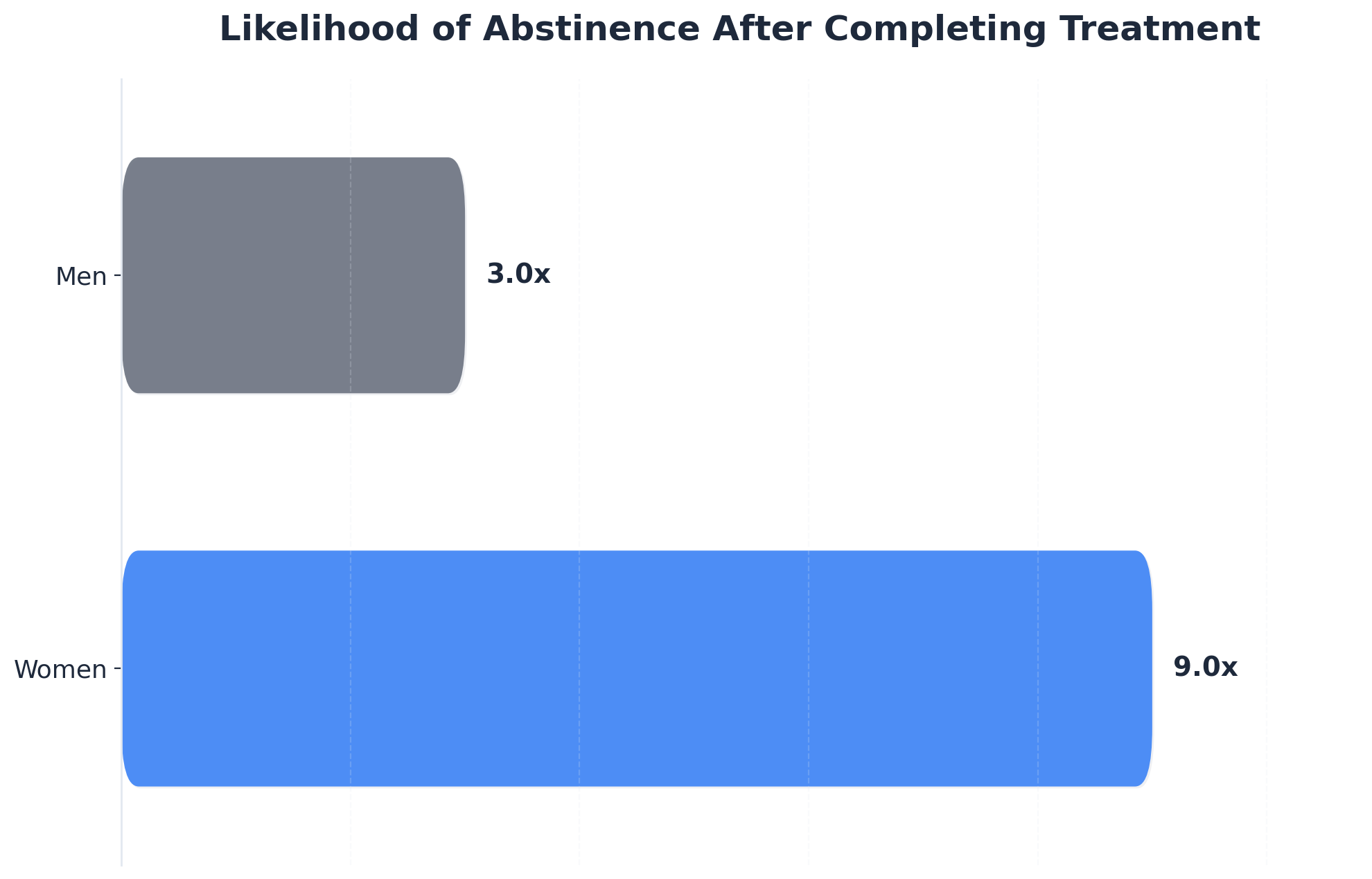
Research indicates that men are somewhat more likely to relapse after completing treatment compared to women, though the reasons are complex and tied to both biological and social factors. Studies show that while women who complete addiction treatment are nine times more likely to remain abstinent than those who do not, men are only three times more likely to achieve abstinence after completing treatment. This suggests that men may face additional challenges in maintaining long-term recovery, including lingering effects of masculine norms and less engagement with ongoing support.4
Trauma-focused therapy and traditional addiction counseling serve different but complementary roles in addiction treatment for men. Trauma-focused therapy—such as Cognitive Processing Therapy (CPT) or Eye Movement Desensitization and Reprocessing (EMDR)—directly addresses traumatic experiences and their impact on substance use, helping men process painful memories and build healthier coping skills. This approach is especially effective for those with posttraumatic stress disorder (PTSD) or a history of trauma, as research shows integrated trauma-focused interventions lead to better outcomes than non-trauma-focused methods.5
The length of a men's addiction treatment program can vary widely based on individual needs, the severity of substance use, and the type of care chosen. Most men’s residential or intensive outpatient programs at facilities like Trifecta Healthcare Institute in Nashville or Knoxville last anywhere from 30 to 90 days, with some participants benefiting from extended care or step-down options. Research shows that longer engagement—especially in movement-based recovery and peer accountability programming—can improve outcomes for male clients and support lasting change.6
Trifecta Healthcare Institute is equipped to treat co-occurring mental health disorders alongside addiction, but only as part of its integrated substance use disorder (SUD) programming. For men navigating both addiction and mental health challenges—such as anxiety, depression, or trauma—Trifecta offers coordinated care that addresses both concerns together through evidence-based approaches like movement-based recovery, trauma-focused therapy, and peer support. Research highlights that men with PTSD, for example, are significantly more likely to also struggle with substance use, making dual-focus treatment essential for long-term healing.5
Brotherhood and peer accountability are powerful elements in addiction treatment for men because they address both the social and psychological needs unique to male clients. Research shows that when men are part of a supportive brotherhood—where encouragement, honest feedback, and shared experience are central—they are more likely to engage fully, challenge old patterns, and sustain progress in recovery. Peer accountability provides a sense of responsibility not only to oneself but also to others, which helps men stay motivated and connected.1,7
Yes, medication-assisted treatment (MAT) is available at many men's rehab programs in Tennessee, including those in Nashville and Knoxville. MAT uses FDA-approved medications such as buprenorphine, methadone, or naltrexone alongside counseling and movement-based recovery to help men manage withdrawal symptoms and decrease cravings. Research shows that the proportion of clients receiving buprenorphine in U.S. treatment programs increased from 3% in 2011 to 16% in 2020, reflecting the growing role of MAT in substance use disorder care.6
If you experience a relapse after completing a men's addiction treatment program, know that you are not alone—and it does not mean you have failed. Research shows that men are only three times more likely to remain abstinent after completing treatment, compared to nine times for women, which highlights the unique post-treatment challenges men may face. Relapse can be part of the long-term recovery journey, especially as you adapt to new routines and continue building resilience. At Trifecta Healthcare Institute in Tennessee, support is always available to help you re-engage with movement-based recovery and reconnect with the brotherhood.4
Whether it's you or someone you love, our team can help you figure out the next step — what treatment looks like, what's covered, or just someone to talk to.
Talk to Our TeamConfidential. No commitment required.



July 30, 2026