



How to Vet and Choose a Rehab for Alcoholics Near Me
Learn how to evaluate a rehab for alcoholics near me by checking licensure, accreditation, therapies, medication use, and long-term care quality.
Read More
Learn how exercise recovery enhances strength and supports sobriety through trauma-informed coaching, peer accountability at Trifecta Healthcare Institute.
Start Your Journey NowWritten and reviewed by the clinical team at Trifecta Healthcare Institute, a men’s-only treatment center in Tennessee specializing in substance use, mental health, and dual diagnosis care.
As an industry peer, you know that rebuilding a life after addiction requires more than just removing the substance. Implementing an effective exercise recovery program provides a tangible, action-oriented pathway for men seeking lasting change. Before diving into the science, use this checklist to monitor progress in your cohorts.
Checklist: Signs Your Dopamine System Is Rebounding in Recovery
Think of dopamine like the brain's internal battery. This neurotransmitter, central to the reward pathway, is heavily disrupted by substance use. When men enter recovery, this system often struggles to function, leading to low motivation and persistent cravings. Exercise recovery programs target this neurochemical imbalance by harnessing the body’s natural ability to boost dopamine through physical activity. Aerobic and resistance training both prompt the release of dopamine and endorphins, helping reawaken the brain’s natural reward circuits compromised during active addiction.1
Recent studies show that consistent exercise activates these pathways in a manner similar to how substances once did, but without the destructive consequences. For professionals and veterans in recovery, routine movement paired with accountability and peer support yields the best outcomes. Research demonstrates that integrating structured exercise with standard substance use disorder (SUD) treatment can reduce relapse rates by up to 40% and improve treatment completion by more than double in men.1,4
This strategy suits organizations that are seeking cost-effective, evidence-based ways to support long-term sobriety and emotional health. Integrating a basic aerobic protocol requires a minimal time investment of roughly 3 to 4 hours weekly per cohort, with an initial resource requirement of $500 to $1,500 for basic fitness equipment. Next, the focus shifts to how repeated movement actually rewires the brain for lasting change.
Decision Tool: Is Your Recovery Program Supporting Neuroplasticity?
Neuroplasticity—simply put, the brain's remarkable ability to reorganize and form new neural connections throughout adulthood—is essential for healing. For men in recovery, this means the brain can repair circuits damaged by chronic substance use, given the right stimulus. Exercise recovery protocols harness neuroplasticity by increasing brain-derived neurotrophic factor (BDNF), a protein that promotes new synapse formation and cognitive healing.7
Figure 1: The 12-week timeline of neuroplastic changes driven by consistent physical activity.
Research shows that consistent physical activity triggers visible neuroplastic changes within 8–12 weeks, especially when movement is skill-based and socially reinforced. Programs that combine aerobic, resistance, and complex motor activities appear to drive the most robust brain restructuring, supporting sustained attention, memory, and stress resilience.5,7
Consider this route if your professional population values measurable improvement beyond mere abstinence, particularly for those with co-occurring cognitive or emotional challenges. The next section explores how exercise recovery directly addresses depression, anxiety, and trauma symptoms in dual-diagnosis cases.

Quick Assessment: Are Depression and Anxiety Improving in Your Program?
For men navigating substance use disorder with co-occurring depression or anxiety, traditional talk therapy often falls short of achieving full symptom relief. At Trifecta Healthcare Institute, we do not offer primary mental healthcare; rather, we provide specialized co-occurring mental health treatment alongside SUD support, ensuring that movement therapies directly complement the recovery journey. Integrating exercise recovery as a core mental health intervention changes the equation—structured movement drives measurable reductions in both depressive and anxious symptoms.
Research shows that 12-week movement-based protocols produce a 38% reduction in depression and a 42% reduction in anxiety for dual-diagnosis clients, outperforming many medication-only strategies and supporting long-term functional gains. Regular physical activity also improves stress management, sleep quality, and emotional regulation, all of which are critical for men rebuilding lives after addiction.3,6
Opt for this framework when your organization seeks to reduce crisis episodes and foster sustainable improvements in mood and anxiety alongside substance use recovery. For professional populations, this approach is ideal when emotional resilience and rapid return to work are prioritized outcomes. The next section addresses trauma-informed protocols for men with complex trauma histories.
Protocol Checklist: Building Trauma-Informed Movement Interventions
"Movement is the language the body uses to process what the mind cannot yet articulate, making it a vital tool for trauma recovery."
Trauma-informed movement protocols are essential for men with complex trauma histories navigating substance use disorder treatment. These approaches recognize that abrupt or high-intensity exercise can sometimes trigger trauma responses, so progression and choice are built into the design. Programs start with gentle, repetitive physical activities that foster safety and predictability, gradually introducing more dynamic exercises as trust builds within the group environment.
Recent guidelines recommend collaborative pacing and trauma-sensitive coaching, with special attention to personal boundaries and autonomy throughout each session. Research shows that trauma-informed exercise recovery models reduce dropout rates and improve emotional regulation, supporting long-term sobriety.6
This solution fits organizations serving populations with a high prevalence of PTSD or adverse childhood experiences, particularly when traditional group therapy has not produced meaningful engagement. Next, the discussion moves to how combat sports and brotherhood accountability can further drive engagement and retention.
Between facility size limits, waivers, and state-by-state rules, figuring out your Medicaid or private insurance benefits can feel like its own full-time job. Our admissions team will verify your coverage in minutes and walk you through exactly what's available — no guesswork required.
Verify Insurance Benefits →No commitment required. Confidential & HIPAA-protected.
Therapeutic Assessment: Is Combat Sports Programming a Fit for Your Recovery Cohort?
Boxing and jiu-jitsu stand out as powerful tools in exercise recovery, especially for men who respond to structure and physical challenge. These combat sports offer more than just physical conditioning—they foster self-discipline, emotional regulation, and a sense of brotherhood among participants. Neurobiologically, both boxing and jiu-jitsu stimulate dopamine and endorphin release, helping restore brain reward pathways often disrupted by substance use disorder.8
Recent research shows that male recovery populations engaging in combat sports demonstrate 2.8 times higher sustained engagement rates compared to those in traditional exercise programs—a critical factor for long-term sobriety. For example, professionals and veterans frequently report enhanced confidence, reduced aggression, and rapid improvements in mood after participating in structured combat sports sessions.8
This approach works best when your program can provide trauma-informed instruction, clear boundaries, and gradual skill progression. Equipping a dedicated space for combat sports requires a budget range of $2,000 to $5,000 for mats and heavy bags, plus a time investment of 2 to 4 hours weekly from certified instructors. Not only do these modalities address physical cravings, but they also create a platform for authentic connection and accountability. Next, we turn to group challenges as another lever for driving retention.
Peer Accountability Checklist: Designing Retention-Boosting Group Challenges
Group challenges function as the linchpin for retention in exercise recovery programs targeting men’s substance use disorder. Unlike solitary workouts, group-based physical activities foster accountability, camaraderie, and healthy competition—key motivators for sustained engagement. Structured challenges, such as 12-week fitness competitions or outdoor adventure expeditions, can double retention rates compared to individual-based programs, with one study showing a 2.1x higher retention rate in group exercise settings.9
When tracking participant engagement in your facility's CRM, use a tag like Group-Challenge-Active or run a SELECT * FROM participants WHERE challenge_status = 'active' query to monitor retention metrics accurately. For populations that value brotherhood—such as veterans, professionals, or men with prior team-based experiences—group challenges become a powerful lever for long-term sobriety and mutual support. Outdoor adventure therapy, in particular, produces sustained positive behavior change in up to 75% of participants at 12-month follow-up, especially when combined with peer-driven accountability.10
This path makes sense for recovery models seeking to reinforce structure, resilience, and authentic peer connection through shared accomplishment. The following section will guide you through building a movement-based recovery plan tailored to professional men’s needs.
Baseline Assessment Tool: Key Domains to Evaluate Before Starting Exercise Recovery
Establishing a clear starting point is the foundation for any effective exercise recovery plan. Physical baseline assessments typically include simple metrics: a timed walk or step test, grip strength measurement, and basic flexibility checks. Mental health evaluation should screen for symptoms of depression, anxiety, and trauma using validated self-report tools. This dual approach ensures that recovery programming is both safe and appropriately challenging for each participant.
Recent studies recommend integrating physical and psychological baseline data to personalize movement prescriptions—men with lower initial fitness or high distress may require a gentler ramp-up, while those with prior training or less severe symptoms can advance more quickly. Screening for prior injuries or medical conditions also helps prevent setbacks and supports long-term adherence.4
Prioritize this when the goal is to maximize engagement and minimize risk in the initial phase of exercise recovery for professional cohorts. Having a thorough baseline allows for realistic progress tracking and tailored goal-setting. The next section details how to structure and progress activity during the critical first 90 days.
Progression Tool: 90-Day Movement Structure for Recovery Cohorts
3–4 sessions/week of moderate aerobic activity (walking, biking, or swimming), 20–30 minutes per session. Integrate 1–2 group classes (e.g., boxing, yoga, or circuit training) for accountability and skill-building.
Add resistance training (bodyweight or weights) twice weekly, and extend aerobic sessions to 30–40 minutes. Encourage participation in skill-based or outdoor activities (hiking, team sports).
Advance to 4–6 days/week of structured movement, including at least one complex motor skill session (martial arts, ropes course, or adventure challenge). Begin tracking measurable gains (endurance, strength, mood ratings) and reinforce progress with peer recognition.
Research confirms that structured exercise recovery plans—starting with accessible, low-barrier activities and building toward more challenging, socially reinforced movement—produce 2.3 times higher completion rates for men in substance use disorder treatment. Adapt progression for those with injuries or higher baseline distress by extending the ramp-up period and prioritizing safety.4
This method works when professional cohorts benefit from clear milestones, group cohesion, and visible progress. Once a 90-day foundation is set, programs can individualize modalities and set long-term performance or wellness goals for sustained engagement. The next section provides an actionable 30-day roadmap tailored to Tennessee men ready to take the next step.

Recovery begins with a single decision, followed by immediate physical action. The first 72 hours at a Nashville rehab or Knoxville rehab for men combine medical stabilization with movement—men complete professional assessment and detox protocols while beginning light physical activity that signals to the nervous system that change is underway. Early morning group workouts and structured outdoor time aren't recreational add-ons; they're neurological interventions that begin restoring dopamine pathways damaged by substance use.
Brotherhood forms quickly through shared physical challenges—the accountability of showing up for a 6 AM boxing session creates bonds that clinical settings alone don't forge. Days 4-14 intensify both therapeutic and physical engagement. Evidence-based therapies like CBT and trauma-informed care address underlying patterns, while movement-based activities become primary tools for processing what talk therapy can't reach. Controlled sparring in boxing sessions allows men to physically discharge rage without destruction.
At Trifecta Healthcare Institute, biohacking approaches like ice bath exposure rewire stress response systems, teaching the body to regulate under pressure—a skill that translates directly to craving management. Outdoor challenges on hiking trails or ropes courses build confidence through tangible achievement, creating neurochemical rewards that substance use once provided artificially. Peer support deepens as men witness each other's breakthroughs during physically demanding moments.
Weeks 3-4 shift toward sustainable integration. Group therapy sessions explore patterns revealed through physical work, individual counseling connects emotional insights to daily routines, and the brotherhood network solidifies through shared accountability. The final phase emphasizes transition planning with concrete Trifecta connections—scheduling ongoing alumni boxing sessions, establishing weekly outdoor activity commitments with peer groups, and building check-in rhythms with men who've walked the same path. This 30-day framework creates momentum through escalating capability, transforming crisis into clarity through action-oriented healing that continues long after discharge.
When you or someone you love are ready to begin healing—mind, body, and spirit—connect with Trifecta Healthcare Institute. We help men thrive in and out of treatment.
Entering exercise recovery with past injuries or limited physical fitness is common, and the process can be tailored to your unique needs. Programs should start with a thorough baseline assessment—screening for injuries, mobility limitations, and current fitness levels—to ensure activities are both safe and achievable. Research recommends beginning with low-impact, low-intensity exercises such as walking or guided stretching, gradually increasing difficulty as confidence and strength return. This path makes sense for professionals and veterans with orthopedic concerns, as well as those who haven’t exercised in years. Structured progression, peer support, and trauma-informed coaching can help reduce risk and maximize benefits, regardless of starting fitness. Recovery is not a race—consistent, personalized movement is what matters most.4
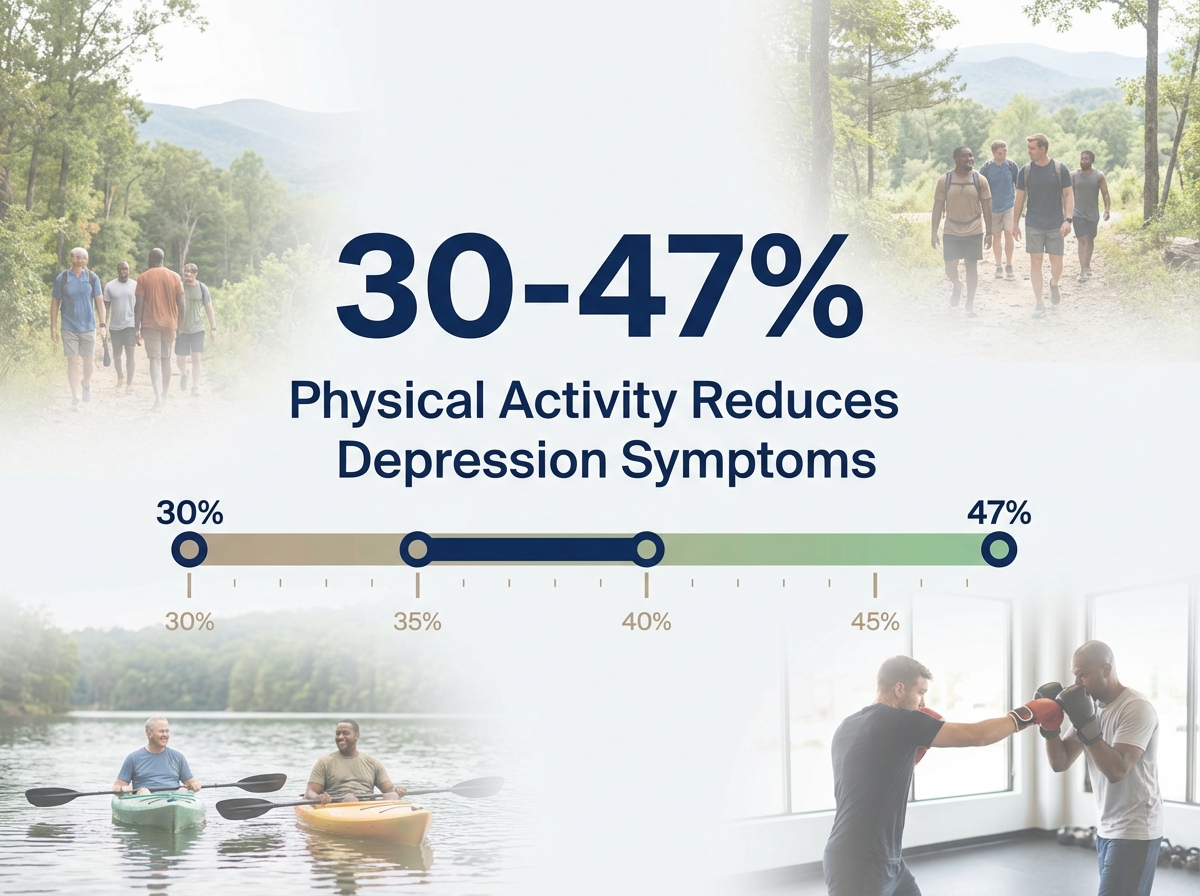
Most men notice early mental health improvements from exercise recovery within the first few weeks of consistent participation. Research shows that structured movement can reduce symptoms of depression by 30–47% and anxiety by up to 42% after just 12 weeks of engagement—effects often on par with medication for many clients. Initial gains typically include better sleep, increased motivation, and improved mood stability. For professionals or veterans, this approach works best when exercise is regular, peer-supported, and skill-based. While timelines vary by individual, even modest increases in physical activity can yield measurable benefits well before the three-month mark.3,6
Yes, movement-based recovery can be effective even for men who have experienced multiple relapses with traditional talk therapy alone. Exercise recovery programs directly influence the brain’s dopamine and endorphin systems—key pathways often dysregulated by long-term substance use and repeated setbacks. Integrating structured physical activity with peer accountability leads to 2.3 times higher treatment completion rates in men compared to standard approaches. This path makes sense for professionals and veterans seeking a more engaging, action-oriented alternative when prior methods haven’t produced lasting results. For those feeling stuck, movement offers a new neurobiological route to healing and sustained sobriety.1,4
The minimum recommended weekly exercise commitment to support sustained sobriety is 150 minutes of moderate-intensity aerobic activity, such as brisk walking, cycling, or swimming, ideally spread across at least three days per week. This baseline, established in multiple studies, is associated with reduced relapse risk and improved mental health outcomes in men’s recovery programs. Adding two or more sessions of resistance or skill-based training further supports neuroplasticity and emotional regulation, especially for professionals or veterans seeking robust results. This approach works best when movement is paired with peer accountability and structured progression, not simply left to chance.4
Choosing between movement modalities—such as combat sports and outdoor activities—depends on your goals, temperament, and recovery needs. Combat sports like boxing or jiu-jitsu provide structure, mastery, and an intense sense of brotherhood, which can be especially effective for men craving challenge and peer accountability. Engagement rates in combat sports are 2.8 times higher than traditional exercise among male recovery cohorts. In contrast, outdoor activities (like hiking or adventure therapy) foster resilience, reduce stress, and show sustained positive behavior change in up to 75% of participants at 12 months. This approach is ideal for those seeking camaraderie through shared accomplishment in natural settings. Both modalities support exercise recovery—opt for the one that best matches your personal motivation and comfort.8,10
Insurance coverage for treatment programs that integrate physical activity as a primary therapy depends on the specific policy and provider. Many commercial and public insurance plans now recognize exercise recovery as an evidence-based component of substance use disorder (SUD) and co-occurring mental health treatment, especially when paired with psychotherapy or medical oversight. Coverage is most likely when physical activity is part of a structured, clinician-supervised program—such as partial hospitalization or intensive outpatient care—instead of a stand-alone wellness offering. Prior authorization and documentation of medical necessity are often required. For professionals and veterans, this route makes sense when seeking reimbursement for movement-based interventions within recognized SUD treatment frameworks.4,6
If you experience trauma triggers during physically intense recovery activities, it's important to pause and use grounding techniques—such as deep breathing, focusing on your surroundings, or stepping back to a familiar, lower-intensity movement. Trauma-informed exercise recovery models are designed to respect personal boundaries and allow participants to regain a sense of control in these moments. Research highlights that programs integrating trauma-sensitive coaching and gradual progression lead to reduced dropout rates and improved emotional regulation for men with PTSD or trauma histories. This approach is ideal for those who need flexibility and emotional safety as they rebuild trust in their bodies through movement.6
Whether it's you or someone you love, our team can help you figure out the next step — what treatment looks like, what's covered, or just someone to talk to.
Talk to Our TeamConfidential. No commitment required.



July 30, 2026