


How to Vet and Choose a Rehab for Alcoholics Near Me
Learn how to evaluate a rehab for alcoholics near me by checking licensure, accreditation, therapies, medication use, and long-term care quality.
Read More
Learn how to boost your willingness recovery with practical steps, values alignment, and peer support to enhance motivation and lasting progress.
Start Your Journey NowWritten and reviewed by the clinical team at Trifecta Healthcare Institute, a men’s-only treatment center in Tennessee specializing in substance use, mental health, and dual diagnosis care.
A practical way to distinguish between motivation and willingness recovery is to evaluate your daily actions. At a premier Nashville rehab like Trifecta Healthcare Institute, we emphasize that waiting for the "right feeling" often delays progress. Instead, we focus on actionable steps that men dealing with substance use disorders can take immediately.
Use the following comparative table to assess where you currently stand:
Motivation refers to the drive or desire to achieve a certain goal—such as wanting to stop using substances or improve your life. It is often influenced by emotions, external rewards, or internal hopes. Willingness, on the other hand, is the psychological capacity to accept discomfort, uncertainty, or resistance and still engage in necessary recovery behaviors.
"Simply put, motivation is about wanting, while willingness is about doing what matters despite difficulty."3
This distinction is critical: motivation fluctuates, but willingness can be cultivated as a skill. For example, a professional experiencing burnout may lack motivation to attend group therapy after a long day, yet with willingness, he chooses to show up and participate anyway. Research shows that willingness recovery strategies—rooted in values and acceptance—lead to 40-50% higher engagement in treatment compared to motivation alone.7
This approach works best when individuals are ready to accept discomfort as part of the process, rather than waiting for the perfect moment to arrive. Understanding these differences sets the foundation for exploring the neuroscience behind commitment in the next section.
To understand why willingness recovery practices are effective, it helps to look at the brain’s role in commitment and behavior change. Use this quick self-check to identify where your commitment shows up neurologically:
Commitment in recovery has a measurable neural footprint. Neuroimaging studies reveal that acceptance-based strategies activate the prefrontal cortex—specifically regions linked to self-regulation and long-term planning—while avoidance or resistance triggers more primitive, reactive circuits. This means that the very act of willingness, such as staying with uncomfortable feelings or urges rather than fighting them, physically strengthens the brain’s capacity for self-control over time.4
For men seeking active change, willingness recovery is ideal when the goal is to build resilience against relapse triggers and emotional upheaval. The science shows that repeated practice of willingness-based behaviors—like showing up for group therapy or choosing movement-based coping like jiu-jitsu or ice baths—rewires the brain’s response to stress and craving. This leads to better treatment engagement and reduced relapse risk.4
Consider this method if you are a professional or high-performer who wants a practical, science-backed way to anchor lasting change. Understanding these brain pathways sets up the next step: identifying personal values and readiness to sustain meaningful recovery.
Begin by taking stock of your current willingness and readiness for change. The following self-assessment tool offers a structured approach to identifying strengths and barriers as you engage in willingness recovery. This requires a time investment of just 10-15 minutes weekly and costs nothing to implement.
Take a few minutes to rate each statement from 1 (rarely true) to 5 (almost always true). This process helps clarify where your willingness is strong and where additional support may be needed. Research has found that individuals who regularly self-monitor and reflect on their readiness achieve significantly higher engagement in recovery activities—some studies report a 40-50% increase in participation when self-assessment is built into programming.7
This strategy suits professionals who want direct feedback on their progress and are willing to address areas that need growth. Many high-performing men benefit from setting aside time for this exercise, either independently or with a trusted peer in a brotherhood support setting. No advanced resources are required—just honesty, reflection, and a willingness to act on what you discover.
Assessing your current stance not only builds self-awareness but also lays the groundwork for clarifying what truly matters in your recovery journey. The next section will guide you in identifying and prioritizing your core values for lasting change.

A practical tool for clarifying your core values in willingness recovery is the "Values Clarification Worksheet." Use this to identify what truly motivates you to persist through discomfort. At a Knoxville rehab for men, this is often the first step in building a personalized treatment plan.
Research has shown that values-based clarity is a powerful predictor of sustained engagement—individuals who spend time defining their core values demonstrate 40-50% higher participation in recovery activities and lower relapse rates. The process requires an honest 20-30 minute investment each week, ideally in a quiet setting or during a peer support session. No specialized resources are needed, but discussing your responses with a trusted group or mentor can deepen insight and accountability.7
Opt for this framework when you prefer concrete, actionable frameworks rather than abstract talk about "motivation." It makes sense for professionals and high performers who want their recovery to align with their broader identity and purpose, not just symptom management. By connecting daily behaviors to personal values, the path of willingness recovery becomes less about compliance and more about integrity—doing what matters, even when it's difficult.
Clarifying what matters most sets the stage for selecting evidence-based strategies that actively build willingness and resilience, addressed in the following section.
Between facility size limits, waivers, and state-by-state rules, figuring out your Medicaid or private insurance benefits can feel like its own full-time job. Our admissions team will verify your coverage in minutes and walk you through exactly what's available — no guesswork required.
Verify Insurance Benefits →No commitment required. Confidential & HIPAA-protected.
Acceptance-based approaches provide a practical framework for cultivating willingness recovery, especially for men seeking hands-on, actionable methods. The following decision tree helps you identify which acceptance strategies fit your current needs:
Breathe technique.Acceptance and Commitment Therapy (ACT) is the gold standard for these approaches, emphasizing psychological flexibility—the skill of staying present with discomfort while taking actions that align with your values. For example, a professional who feels resistance to group therapy can use a brief grounding exercise (two to five minutes) to notice discomfort without judgment, then choose to participate anyway. These methods require as little as 5–20 minutes daily and no specialized equipment; guided audio resources or worksheets can support practice.3
Research demonstrates that integrating acceptance-based exercises into treatment leads to 40-50% higher engagement and lower relapse rates compared to motivation-only approaches. This path makes sense for men who want structured yet adaptable tools for handling resistance, especially in high-stress environments where emotional avoidance is common. It is highly effective when traditional problem-solving feels stalled or when emotional discomfort threatens to derail progress.7
Building acceptance skills paves the way for more embodied methods, such as movement and physical activity, which will be explored in the next section.
Physical activity is a powerful, evidence-based tool for fostering willingness recovery, especially in men’s treatment programs that blend movement with values-driven action. Trifecta Healthcare Institute integrates neuroscience-backed physical activities as therapeutic tools. To help integrate movement into your recovery strategy, use this weekly planning checklist:
Research in recovery science shows that regular physical activity—especially when connected to personal values and peer support—can increase treatment engagement by as much as 40-50%. Movement does more than improve physical health: it regulates neurochemistry, reduces anxiety, and provides a direct, embodied experience of willingness by encouraging men to persist through discomfort. Note that while Trifecta utilizes these tools, we do not offer primary mental healthcare—only co-occurring mental health treatment alongside SUD support.7
Resource needs are minimal: most activities require basic athletic gear and a willingness to participate in group or solo movement for 30–60 minutes, three times a week. This approach is ideal for professionals or veterans who find talk therapy alone insufficient or who value direct, action-oriented coping tools. It translates psychological concepts into action and accountability.
Building a movement routine not only strengthens willingness recovery but also lays the groundwork for deeper peer connections and environmental supports, which are explored in the following section.
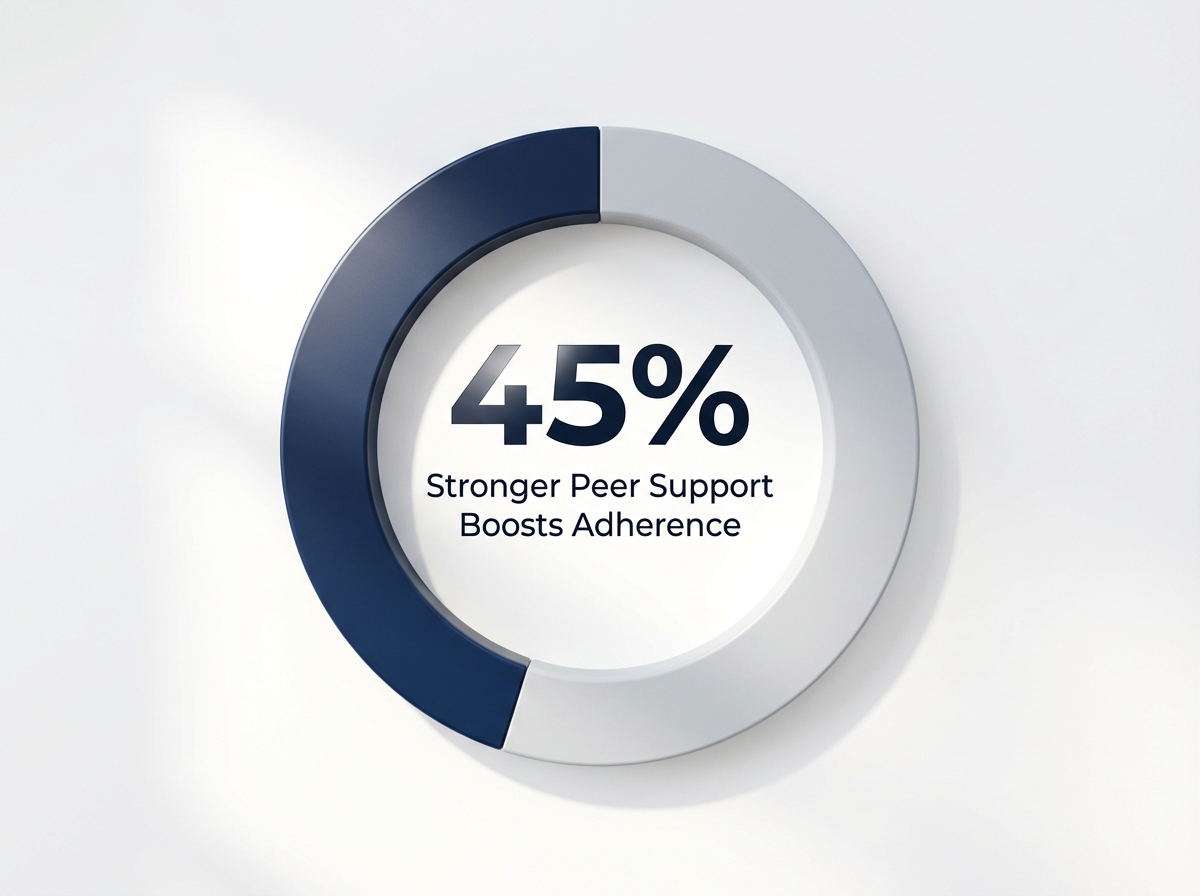
Recovery professionals understand a fundamental principle: willingness alone doesn't sustain sobriety. Even the most committed individuals face decision fatigue when every moment requires conscious resistance to old patterns. Structured environments reduce the willingness threshold needed for daily recovery actions by removing unnecessary friction and creating systems that support rather than test resolve. Environmental supports don't replace individual commitment—they amplify it.
Figure 1: How Environmental Structures Amplify Recovery Efforts
Environmental design begins with eliminating immediate triggers and establishing spaces that default toward healthy behaviors. Living situations, work environments, and social settings either reinforce recovery or create constant resistance against it. Physical surroundings influence decision-making powerfully during stress or vulnerability, often below conscious awareness. Recovery-oriented environments include structured routines, accessible wellness activities, and minimal exposure to substances or situations previously associated with use. This design work isn't about avoiding challenges—it's about directing limited willingness toward growth rather than exhausting it on basic resistance.
Sober living environments provide structured transitional support that demonstrates this principle clearly. Through regular accountability measures, mandatory participation in recovery activities, and house meetings that reinforce commitments, these settings remove decision fatigue around daily choices. The environmental structure preserves willingness for skill-building rather than depleting it through constant temptation management. Men develop recovery capacities while the environment handles baseline stability.
Peer accountability operates differently than professional oversight, creating horizontal relationships where willingness becomes contagious rather than mandatory. When individuals share struggles with others walking the same path, authenticity replaces performance. Brotherhood-based recovery models establish mutual respect that naturally generates accountability. Peers challenge each other, celebrate progress, and intervene when warning signs appear—because they recognize patterns from personal experience. This peer dynamic builds willingness through connection rather than demanding it through obligation.
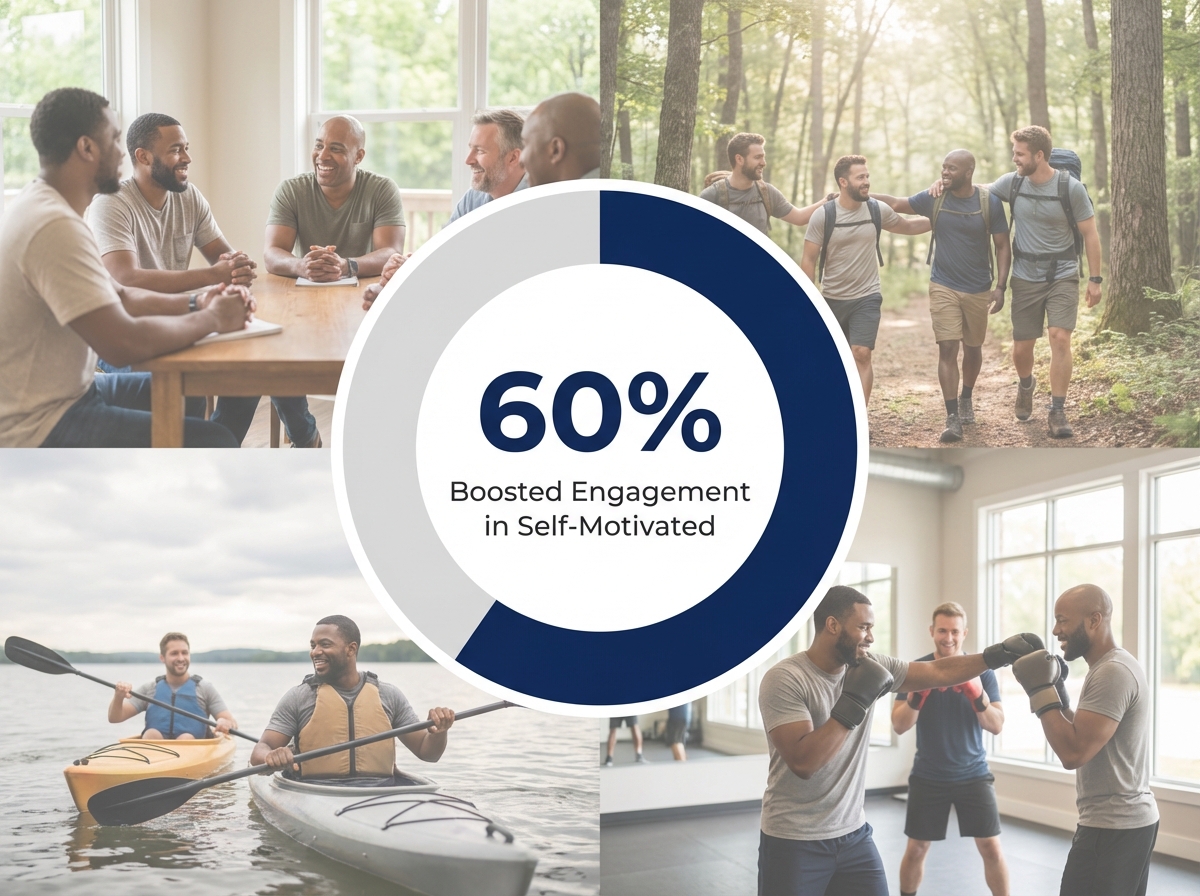
Movement-based activities strengthen peer bonds through shared physical challenges that require presence, focus, and trust. Boxing sessions, jiu-jitsu training, and outdoor adventures create camaraderie extending beyond traditional group formats. These activities demand qualities that translate directly into recovery relationships. Shared physical effort builds connections that withstand the isolation addiction exploits, generating collective willingness that individuals can draw from during difficult moments.
Effective peer accountability requires structure and intention to maintain momentum. Regular check-ins, shared goal-setting, and transparent communication about struggles prevent accountability from becoming superficial. Alumni services and ongoing peer support groups maintain these connections beyond formal treatment, creating networks accessible during challenging periods. The most resilient recovery communities establish clear expectations around honesty, availability, and mutual support—frameworks that sustain willingness over time.
Regional recovery infrastructure matters because local peer networks, accessible sober activities, and community resources create sustained environmental support. Tennessee's recovery communities in areas like Nashville and Knoxville have developed distinct characteristics—urban centers offering diverse peer networks alongside accessible outdoor spaces that support movement-based activities. Programs offering comprehensive alumni services create lasting infrastructure for peer accountability, ensuring connections don't dissolve after intensive treatment phases conclude.
Consider this route if you recognize that willpower alone is insufficient. Environmental supports and peer accountability work synergistically to sustain willingness over time. Structured environments facilitate peer connections, while strong peer networks help navigate environmental challenges. Together, they create frameworks for long-term recovery that extend individual willingness rather than depending entirely upon it.
The first 30 days reveal how environmental supports translate willingness into momentum. Men who build sustainable recovery during this initial month typically focus on establishing one consistent practice—whether that's daily group sessions, morning movement routines, or regular check-ins with accountability partners. These aren't arbitrary choices but deliberate anchors that transform abstract commitment into daily action.
Men in early recovery who make meaningful progress tend to identify specific resistance patterns early in the process. They bring these patterns into therapy sessions and peer support meetings, discovering that the act of naming these barriers in trusted settings begins dissolving their power. What felt insurmountable in isolation becomes manageable when spoken aloud in environments designed for honest reflection.
Physical activity becomes particularly valuable during this initial month. Men engaging in boxing sessions, hiking trails, or structured outdoor activities report immediate neurochemical shifts that make willingness feel less abstract and more embodied. Movement doesn't just support recovery—it demonstrates that change is already happening in real time, creating tangible evidence that the brain and body are responding to new patterns.
This method works when you track small wins daily and notice something significant: willingness emerges more frequently, even if briefly at first. These moments compound. By day 30, the foundation for sustained recovery isn't built on forced motivation—it's constructed from repeated choices to stay open, stay engaged, and trust the process one day at a time.
It’s common for willingness to ebb and flow throughout different recovery phases. Early on, external structure or peer support may compensate for low internal drive, while later stages often require renewed commitment as new challenges or complacency set in. Research shows that willingness recovery is not a fixed trait but a capacity that grows or contracts based on context, stressors, and available supports. Fluctuations shouldn’t be seen as failure; instead, they highlight the importance of regular self-assessment, values work, and environmental supports. This approach works best when you anticipate change and build routines that help you recommit during tougher moments.7
To tell the difference between resistance that calls for acceptance and genuine misalignment with a treatment approach, start by noticing the pattern and context of your reactions. Resistance that needs acceptance often shows up as discomfort, emotional avoidance, or reluctance that fluctuates with mood or stress—yet your core values still align with the overall recovery goal. In contrast, misalignment tends to be persistent and value-based: the treatment approach feels fundamentally at odds with your beliefs, strengths, or cultural background. Willingness recovery encourages brief self-reflection and values clarification when doubt arises. Research highlights that individuals who regularly clarify values can better discern which obstacles are internal (requiring acceptance) and which signal a need for treatment adjustment.7
Yes, willingness can be developed even if external pressures—such as legal mandates, family interventions, or workplace requirements—initiated treatment. Research shows that while initial engagement may be driven by outside forces, individuals often build authentic willingness recovery as they clarify personal values and experience early progress. This process typically involves moving from compliance (acting to satisfy others) toward internal commitment, especially when programs encourage self-reflection and values-based action. This approach works best when men are given opportunities to explore what matters to them, rather than relying solely on external motivation. Over time, many transition from extrinsic to intrinsic willingness, leading to higher engagement and better outcomes.7
Trauma history can significantly shape a person’s capacity for willingness recovery. Unresolved trauma often creates protective barriers—such as avoidance or distrust—that can make it harder to accept discomfort or engage in group or movement-based activities. Evidence shows that individuals with trauma backgrounds may benefit most from environments emphasizing safety, peer support, and gradual exposure to values-driven action. This approach is ideal for men who need to rebuild trust and learn to tolerate vulnerability in a structured, brotherhood-oriented setting. Recognizing and addressing trauma with compassionate, trauma-informed care increases the likelihood that willingness will develop and sustain through each stage of recovery.7
Developing consistent willingness is a gradual process, typically unfolding over several weeks to a few months. Most research suggests that with structured routines—such as daily self-assessments, values clarification, and peer accountability—men begin to see measurable improvements in willingness recovery within 30 days, with more stable patterns emerging by the 8- to 12-week mark. This path makes sense for professionals seeking actionable change, as initial gains often come from repeated practice rather than waiting for motivation. Individual timelines vary based on factors like trauma history or strength of support networks, but willingness is a skill strengthened over time with steady, values-driven action.7
Key indicators that willingness is translating into sustainable recovery behaviors include regular participation in treatment or movement-based activities, honest self-reflection on setbacks, and a pattern of recommitting to values-driven actions after challenges. Sustained willingness recovery often shows up as increased peer accountability, consistent attendance at group or therapy sessions, and proactive use of coping strategies in stressful moments. Research highlights that individuals demonstrating these patterns achieve 40-60% higher long-term engagement and lower relapse rates than those relying solely on motivation or compliance. This solution fits men who notice real-life changes—such as healthier routines and reliable follow-through—rather than just intentions.7
Willingness transforms recovery from an abstract concept into actionable daily practice. But willingness doesn't exist in a vacuum—it emerges and strengthens within environments deliberately structured to support it. Through movement-based activities, structured programming, and authentic peer networks, the threshold for taking each next step lowers progressively. What once required extraordinary courage becomes ordinary action.
This relationship between environmental design and sustainable willingness explains why recovery outcomes vary so dramatically across different treatment approaches. Men who engage in boxing sessions, group challenges, and peer accountability systems aren't simply building willingness through repetition—they're experiencing how external supports reduce the internal resistance that makes recovery feel impossible. The environment does part of the work that willpower alone cannot sustain.
Regional recovery infrastructure matters precisely because it determines which environmental supports become accessible. Tennessee's men-focused treatment communities—particularly Nashville and Knoxville programs integrating evidence-based therapies with active engagement—create settings where willingness compounds through peer networks rather than depleting through isolation. When trauma-focused therapy addresses underlying barriers while physical challenges build confidence, willingness emerges not as individual heroism but as the natural response to genuine support.
This solution fits professionals who are ready to embrace a brotherhood approach to long-term healing. Recovery begins when someone becomes willing to try something different. That willingness becomes sustainable when the environment makes each subsequent choice progressively easier rather than harder.
When you or someone you love are ready to begin healing—mind, body, and spirit—connect with Trifecta Healthcare Institute. We help men thrive in and out of treatment.
Whether it's you or someone you love, our team can help you figure out the next step — what treatment looks like, what's covered, or just someone to talk to.
Talk to Our TeamConfidential. No commitment required.



July 30, 2026