
Alcohol Addiction Treatment for Men in Tennessee
Medical Detox. Evidence-Based Therapy. A Brotherhood Built on Recovery.
At Trifecta Healthcare Institute, we provide men's-only alcohol addiction treatment at two locations across Tennessee: Spring Hill (Nashville area) and Knoxville.
Our program delivers the full continuum of care, from medically supervised detox through structured Partial Hospitalization Programs (PHP), and Intensive Outpatient Programs (IOP) — so every man who walks through our doors has a clear, supported path forward.
We are Joint Commission accredited, in-network with most major insurance carriers, and built around one belief: lasting recovery isn't just possible; it's what men are capable of when they're surrounded by the right people, the right care, and the right environment.

Signs You May Need Alcohol Addiction Treatment
Alcohol use disorder doesn't always look like what most people imagine.
Many of the men we treat were high-functioning — holding careers, maintaining relationships, managing appearances — while their relationship with alcohol quietly took over. Knowing the signs matters.
Alcohol use disorder is a chronic medical condition characterized by compulsive alcohol use, loss of control over drinking, and a negative emotional state when not drinking. According to DSM-5 criteria, it ranges from mild to severe based on the number of symptoms present.
Behavioral Signs
Some common behavioral signals that may point towards alcohol addiction include:
- Drinking more than intended, or for longer periods than planned
- Failed attempts to cut back or stop
- Spending significant time obtaining, using, or recovering from alcohol
- Giving up activities that were once important in favor of drinking
- Continuing to drink despite relationship, work, or legal consequences


Psychological Signs
Psychological signs can be just as prominent as physical or behavioral symptoms. These may include:
- Intense cravings or urges to drink
- Using alcohol to manage stress, anxiety, or emotional pain
- Irritability, restlessness, or depression when sober
- Minimizing the problem or believing it's still under control
If any of these resonate — or if someone who loves you has raised concern — it’s time to reach out. Our admissions team is available 24 hours a day and every conversation is completely confidential.
Brotherhood Replaces Isolation

Our Approach to Alcohol Use Disorder
What makes Trifecta different isn't any single therapy or modality; it's how we combine them, and who we combine them for.
Our clinical philosophy is rooted in the integration of evidence-based treatment with cutting-edge neuroscience. We understand that alcohol use disorder reshapes the brain — disrupting dopamine, serotonin, and GABA systems that regulate mood, motivation, and stress response. Our program is designed to directly address those neurological changes, not just the behavior on the surface.
Real Recovery, Built for Real Life
Every man receives an individualized treatment plan built around his history, his co-occurring conditions, and his goals. Primary therapeutic modalities include:
Cognitive Behavioral Therapy (CBT)
Treating Dual Diagnosis At the Root
Motivational Interviewing (MI)
Trauma-Informed Care
EMDR
Group Therapy
Individual Therapy
Beyond the clinical room, our program integrates structured physical activity — gym, boxing, jiu-jitsu, hiking, and more — as neurochemical tools that directly restore what alcohol use disorder depletes.
Alcohol suppresses GABA, disrupts serotonin, and destabilizes the dopamine reward system. The crash that follows chronic use — the anxiety, the anhedonia, the inability to feel okay without a drink — is a neurochemical deficit as much as it is a psychological one. Exercise is one of the most clinically supported interventions for restoring those baselines.
This is not recreational programming. It is biohacking for recovery. And it is one of the things that sets Trifecta apart.
Our Vision, Mission, & Core Values





Alcohol Detox: What to Expect
Alcohol withdrawal is one of the most medically serious withdrawal processes in addiction medicine. Unlike many other substances, alcohol withdrawal can be life-threatening — carrying risks of seizures, cardiac events, and delirium tremens (DTs) — particularly in men who have been drinking heavily for an extended period. This is not a process to attempt at home.
Our medical detox program provides 24/7 nursing oversight, physician-supervised care, and evidence-based withdrawal management protocols — including CIWA-Ar (Clinical Institute Withdrawal Assessment for Alcohol) monitoring to assess severity and guide treatment in real time.

Levels of Care for Alcohol Addiction
Recovery isn't a single product; it's a continuum. Trifecta provides structured care at every level, designed to step men down as they stabilize and grow, ensuring no one is discharged before they're ready.
Medical Detox
Residential Treatment (Inpatient Rehab)
Partial Hospitalization Program (PHP)
Intensive Outpatient Program (IOP)
Alumni & Aftercare
.webp)
Dual Diagnosis: When Alcohol and Mental Health Overlap
For most of the men we treat, alcohol use disorder does not exist in isolation.
Depression, anxiety, PTSD, bipolar disorder, and trauma frequently co-occur with problematic drinking — and in many cases, one is fueling the other.
Men are statistically less likely to seek mental health care than women. When emotional pain goes untreated, alcohol often fills the gap, becoming a self-medication strategy that eventually becomes its own crisis.
Treating the alcohol without addressing the underlying condition is one of the primary reasons men relapse.
- Depression
- Anxiety disorders
- PTSD and trauma
- Bipolar disorder
- Borderline Personality Disorder
- Grief and loss
Why Men-Only Alcohol Rehab Matters
The environment a man recovers in is not incidental to his recovery; it is part of the treatment itself.
Men face specific, documented barriers to entering and engaging in alcohol addiction treatment: the stigma of asking for help, the cultural expectation to "handle it," the pressure to appear strong, and the tendency to minimize severity.
A men-only setting removes many of the relational and social dynamics that can interfere with vulnerability, honesty, and engagement in group work.
.webp)

Building a Life Worth Living Through Recovery
Most treatment programs will stabilize you, run you through the clinical hours, and send you home with a relapse prevention plan. That's the minimum standard of care. We hold ourselves to a different one.
Here's what we believe, and what we build our program around: alcohol isn't the problem. It's an unhealthy solution to one — a way of managing pain, disconnection, stress, or trauma that worked until it didn't. Sustainable recovery doesn't just remove the solution. It replaces it with something better.
At Trifecta, that something better is real, physical, and backed by science.

Brotherhood as Clinical Infrastructure
Loneliness and isolation are among the most well-documented predictors of relapse. Social connection — real, accountable, earned connection — is among the most documented protective factors.
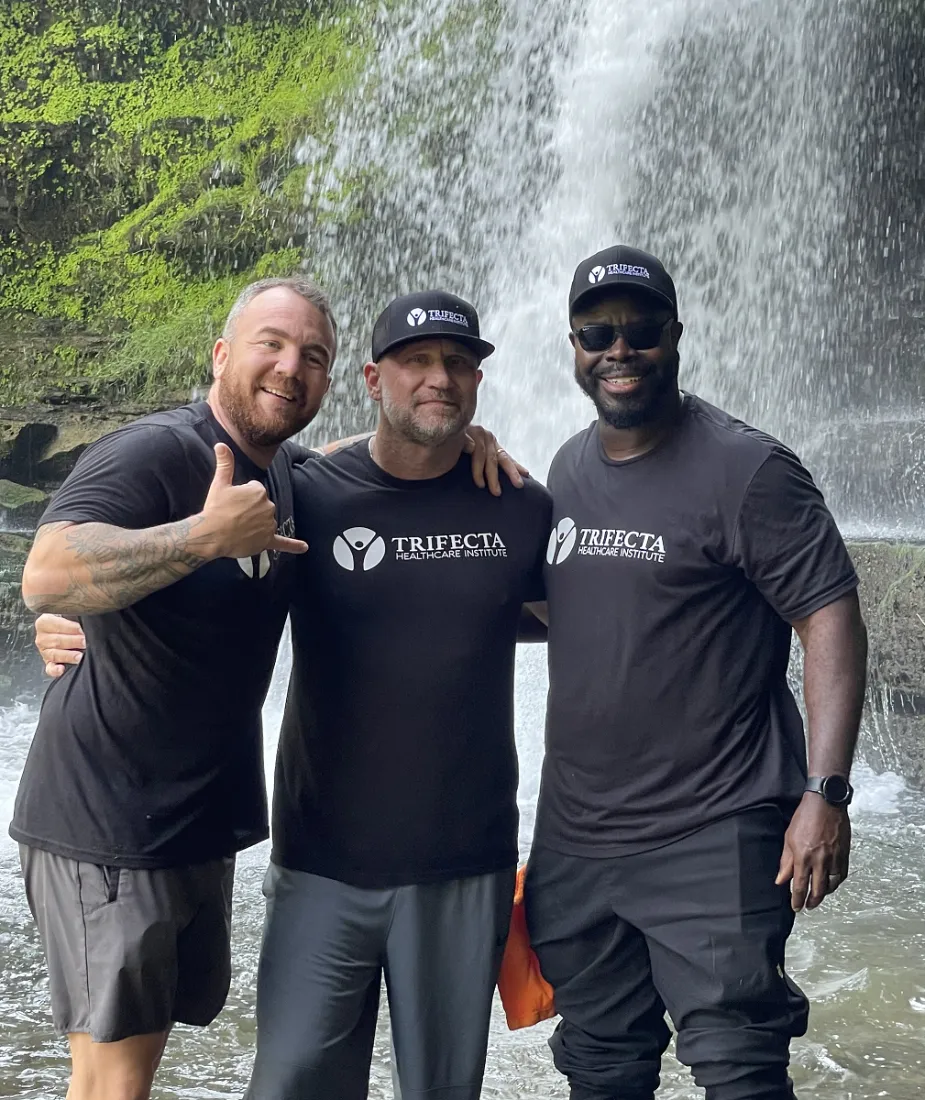
The men in your cohort at Trifecta are not just fellow patients in the same facility. They are people who trained beside you, struggled beside you, and chose the same hard thing you chose. That bond doesn't expire at discharge. Our alumni network, peer support structure, and ongoing community are built to keep it alive.
The data on social recovery capital is clear. We designed the entire culture of this program around it.
What You're Actually Building Here
Treatment that works gives men a life they want to stay sober for — not just sobriety for its own sake.
That means physical capability. Genuine relationships. A body and brain that know how to generate reward, calm, and connection without alcohol. A sense of purpose built on something more than surviving each day.
Recovery is hard. It is also, at its best, the beginning of the most meaningful period of a man's life. We have watched that happen here. We built this program to make it possible.
Insurance & Cost of Alcohol Rehab in Tennessee
The cost of alcohol addiction treatment should not be the reason a man doesn't get help. We work with most major insurance carriers and our admissions team will verify your benefits before you make any decisions.
In-network insurance providers include:
.jpg)
Begin Alcohol Addiction Treatment in Nashville or Knoxville
Trifecta Healthcare Institute operates two Tennessee locations, both offering the full continuum of alcohol addiction treatment for men.
Nashville / Spring Hill [1025 Nashville Hwy Columbia TN 38401]
Knoxville [2017 Ailor Ave, Knoxville, TN 37921]
Admissions calls are free, confidential, and available 24 hours a day. You don't have to have everything figured out before you call — that's what we're here for.
With fellow men at your side, we can all stand stronger together.
Frequently Asked Questions About Alcohol Addiction Treatment
How long does alcohol addiction treatment take?
Treatment length depends on clinical need, not a fixed program calendar. Medically supervised detox typically takes 3–7 days. Residential treatment commonly runs 30 to 90 days. From there, men step down to PHP and IOP as they stabilize. The full continuum — from detox through outpatient — ensures no one is discharged before they're ready to hold their recovery in the real world.
Is alcohol withdrawal dangerous?
Yes. Alcohol is one of the few substances where withdrawal can be medically life-threatening, carrying risks of seizures and delirium tremens, particularly in men with long-term or heavy use. Attempting to detox from alcohol at home without medical supervision is not safe. Our medical detox program provides 24/7 monitoring and physician-supervised care to manage withdrawal safely.
Does insurance cover alcohol rehab in Tennessee?
Most major insurance plans cover alcohol addiction treatment under the Mental Health Parity and Addiction Equity Act.
We are in-network with Blue Cross Blue Shield, Aetna, Cigna, United Healthcare, Humana, and other major carriers. Contact our admissions team for a free, confidential benefits verification — no commitment required.
Why choose a men-only program for alcohol addiction?
Men's-only treatment removes social and relational dynamics that often interfere with honest engagement in therapy and group work.
It also allows us to directly address the gender-specific drivers of alcohol misuse — including stigma, emotional suppression, and trauma patterns more common in men. The brotherhood environment we've built at Trifecta has a measurable impact on engagement, accountability, and long-term outcomes.
What therapies are used in alcohol addiction treatment at Trifecta?
Our program uses Cognitive Behavioral Therapy (CBT), Dialectical Behavioral Therapy (DBT), Motivational Interviewing (MI), EMDR, trauma-informed care, group and individual therapy, and structured physical programming designed to restore neurochemical balance. Every treatment plan is individualized — no two men receive exactly the same program.
Can I detox from alcohol at home?
For moderate to severe alcohol dependence, home detox is not medically advisable. The risk of seizure and other serious complications is real, and it escalates with the severity of dependence. If you or someone you care about is considering stopping heavy alcohol use, please call us before attempting to stop without medical support.