
Opioid & Heroin Addiction Treatment for Men in Tennessee
Medical Detox. Medication-Assisted Treatment. A Program Built for Men Who Are Ready to Fight Back.
Opioid use disorder is a medical condition, not a failure of character, willpower, or worth.
At Trifecta Healthcare Institute, we provide men's-only opioid and heroin addiction treatment across two Tennessee locations: Spring Hill (Nashville area) and Knoxville. Our program includes medically supervised detox, Medication-Assisted Treatment (MAT), evidence-based behavioral therapy, and integrated dual diagnosis care for co-occurring mental health conditions.
If you or someone you love is in crisis — don't wait for things to get worse. Our admissions team is available 24 hours a day. Every call is confidential and free.

Understanding Opioid Addiction: From Prescription Painkillers to Heroin
Opioids are a class of drugs that bind to receptors in the brain and body to reduce pain and produce feelings of euphoria. They include prescription medications — oxycodone, hydrocodone, codeine, morphine, and fentanyl — as well as illicit substances like heroin.
Opioid use disorder develops when the brain's reward and regulatory systems are reshaped by repeated opioid exposure. Tolerance builds, meaning more of the substance is needed to achieve the same effect.
Dependence follows, where the absence of the drug triggers a painful and destabilizing withdrawal. At that point, use is no longer a choice in any meaningful sense; it is a medical condition that requires clinical care.
Breaking the Stigma Around Opioid Use Disorder Treatment
One of the most common and least-discussed pathways into opioid use disorder and needing painkiller addiction treatment Nashville is specifically tied to the healthcare system.
Many of the men we treat first encountered opioids through a legitimate prescription — for a back injury, a surgery, a sports injury, chronic pain. When the prescription ran out, some discovered that heroin was cheaper, more available, and produced the same effect.
This is not a story of weakness. It is a predictable consequence of neurological dependency that can happen to anyone.Tennessee continues to be among the states most severely impacted by the opioid crisis. The presence of illicit fentanyl in the drug supply has made any opioid use — including what a person believes to be a pill or powder of a different substance — a potential overdose situation.
Treatment is not just important. In many cases, it is critical.
.avif)
Addiction Isolates.
Recovery Reconnects.

Signs of Opioid Use Disorder in Men
Recognizing opioid use disorder — in yourself or someone you care about — is often harder than it sounds. Men are more likely to minimize symptoms, attribute them to something else, and delay reaching out for painkiller addiction treatment Nashville men can trust. These are some of the signs worth taking seriously.
Behavioral Signs:
- Running out of prescriptions early or seeking multiple prescribers
- Withdrawing from family, friends, and activities that once mattered
- Financial problems without a clear explanation
- Lying or being secretive about whereabouts, activities, or substance use
- Continuing to use despite significant consequences at work, home, or legally
Physical Signs:
- Pinpoint pupils, even in low light
- Frequent drowsiness or "nodding off" mid-conversation
- Significant weight loss and neglect of physical health
- Constipation, nausea, and flu-like symptoms when not using
- Track marks or bruising at injection sites (for intravenous use)
- Paraphernalia — needles, spoons, foil, small bags
Withdrawal Signs (What Happens When Opioids Are Stopped):
- Intense muscle aches and cramping
- Sweating, chills, and fever
- Severe anxiety, irritability, and restlessness
- Nausea, vomiting, and diarrhea
- Insomnia and profound fatigue
Unlike alcohol, opioid withdrawal is rarely life-threatening, but it is severe enough that most men relapse within hours without medical support.
This is not a lack of determination. It is what opioid dependence does to the body and why medically managed detox exists.
Medical Detox for Opioids: A Critical First Step
Medical detox is where recovery begins, not where it ends.
At Trifecta, our medically supervised detox program is designed to manage opioid withdrawal as safely and comfortably as possible while preparing every man for the treatment that follows.
The acute phase of opioid withdrawal typically begins 6–24 hours after the last use (longer for longer-acting opioids like methadone) and peaks around 48–72 hours. Physical symptoms — sweating, cramps, vomiting, insomnia — are at their most intense during this window.
Post-acute symptoms, including mood instability, sleep disruption, and cravings, can persist for weeks to months.
.webp)
Medication-Assisted Treatment (MAT) for Opioid Addiction
Medication-Assisted Treatment is one of the most evidence-backed, life-saving interventions in addiction medicine, and one of the most misunderstood.MAT combines FDA-approved medications with behavioral counseling and therapy to treat opioid use disorder as the chronic medical condition it is. It reduces cravings, prevents relapse, and dramatically lowers overdose mortality. The research is not ambiguous: MAT saves lives.
The medications used in MAT for opioid use disorder include:
Buprenorphine (Suboxone)
Naltrexone (Vivitrol)
Available as a monthly extended-release injection, Vivitrol is particularly appropriate for men who have completed detox and want a medication-supported path through early recovery without the daily adherence required by buprenorphine.
Methadone
MAT for Opioid Addiction: The Truth
A person taking buprenorphine under physician supervision is not experiencing the compulsive, chaotic drug-seeking behavior of active addiction. They are treating a medical condition.
MAT in combination with therapy and behavioral support gives men the stability to engage meaningfully in recovery work — which is when real transformation happens.
Therapy and Behavioral Treatment
Medication is one part of the picture. The other is understanding why, and building a different life.
Every man in our program engages in a structured behavioral treatment plan that runs alongside his medical care. No two plans are identical, because no two men arrive with the same history, the same pain, or the same goals.
What they share is the need to understand the roots of their opioid use and build the skills and support systems to sustain recovery long-term.
What to Expect in Opioid and Heroin Rehab Tennessee
Core therapeutic modalities used in opioid addiction treatment at Trifecta include:
- Cognitive Behavioral Therapy (CBT) — identifying and changing the thought patterns and triggers that drive opioid use
- Dialectical Behavioral Therapy (DBT) — building distress tolerance, emotional regulation, and interpersonal effectiveness
- Motivational Interviewing (MI) — connecting recovery to personal values, goals, and purpose
- Trauma-Informed Care — opioid use disorder and trauma have an extremely high co-occurrence rate; treating one without addressing the other rarely produces lasting results
- EMDR — targeted processing of traumatic memory at a neurological level
- Group Therapy — peer accountability, shared experience, and the beginning of the brotherhood that sustains recovery beyond treatment
- Individual Therapy — one-on-one sessions that go deep, at the pace each man requires
- Family Therapy — rebuilding relationships and establishing healthy support structures
.webp)
Movement That Rewires the Brain
Most treatment programs offer the minimum: a detox bed, group sessions, a workbook, a discharge plan. That approach treats the symptom. We go after the root.
Here's the truth most programs aren't built to say out loud: substances aren't the problem. They're an unhealthy solution — one that worked, for a while, to manage pain, trauma, anxiety, disconnection, or something a man didn't have another language for yet. Recovery isn't about stripping that solution away and leaving nothing in its place. It's about replacing it with something better.
At Trifecta, "something better" looks like this:
Movement That Rewires the Brain
Decades of peer-reviewed research — published in journals including JAMA Psychiatry and Frontiers in Psychiatry — document what our clinical team builds programming around: structured physical activity directly stimulates dopaminergic reward pathways, increases serotonin and GABA production, and reduces craving intensity in men recovering from opioid use disorder.
In plain terms: the same brain chemistry opioids hijacked, exercise restores. Not metaphorically. Biologically.
Movement in Recovery
Our physical programming is not recreation. It is pharmacology without a pill:
- Boxing and gym training — high-intensity movement that spikes dopamine and serotonin, the same systems opioids deplete. Builds impulse regulation and emotional resilience through controlled physical exertion.
- Jiu-jitsu — a neuromuscular discipline requiring presence, problem-solving, and discipline. Activates GABA (the brain's calming system) and builds self-esteem through earned competence.
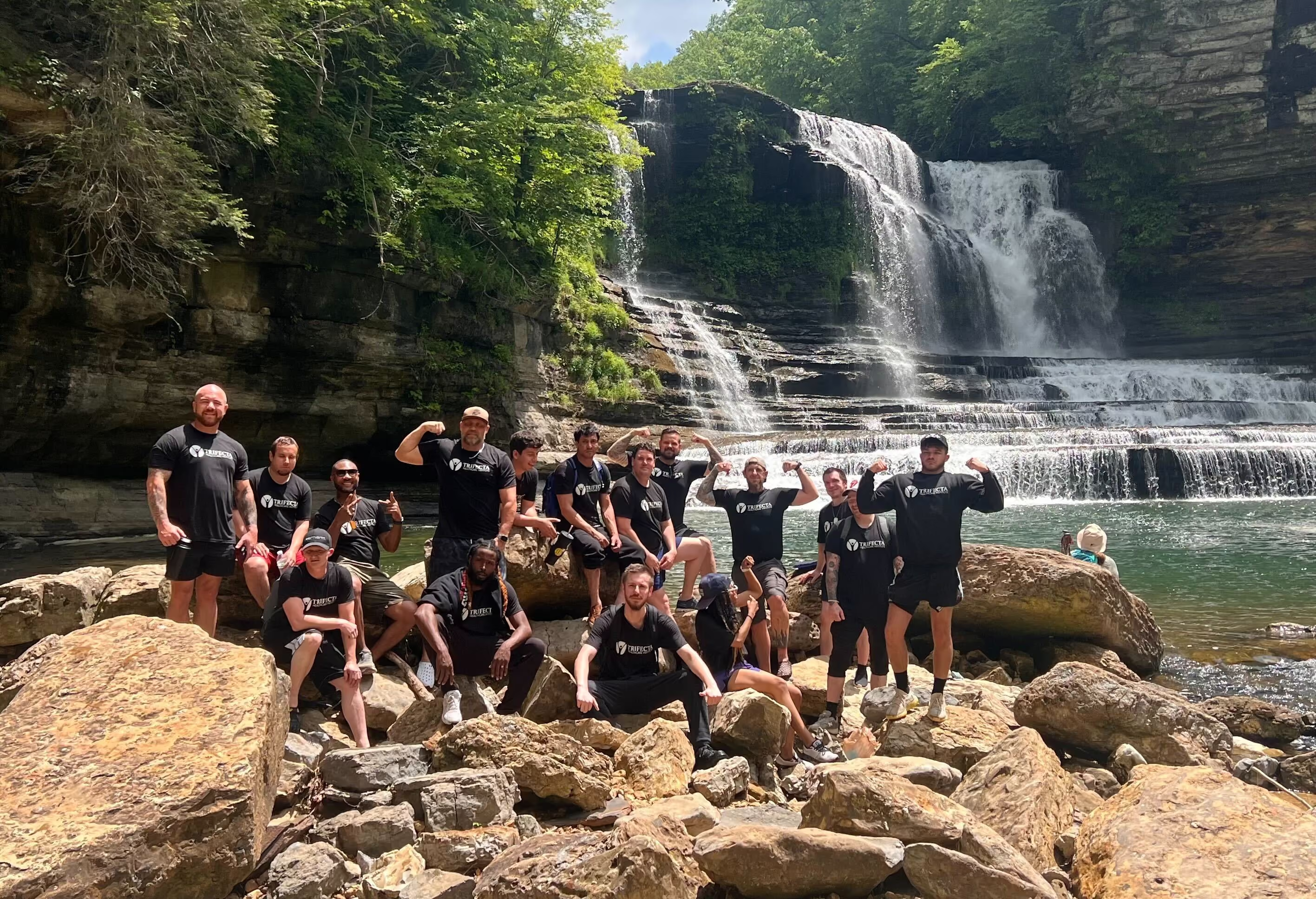
- Hiking and outdoor adventure — nature exposure and sustained movement restore serotonin baselines while offering a physical experience of the landscapes opioids took men away from.
- Ice baths — cold immersion has been shown in clinical literature to increase dopamine production by up to 250% and reduce anxiety through norepinephrine release. Hard. Effective. Worth it.
- White-water rafting, ropes courses, team activities — high-stakes, shared experiences that activate oxytocin — the brain's bonding and trust neurochemical. The same one that makes the brotherhood real.
Brotherhood That Holds
Recovery doesn't happen alone. The research on social connection and relapse prevention is as consistent as anything in addiction medicine: isolation is a primary driver of relapse, and genuine peer accountability is one of the strongest protective factors in sustained recovery.
At Trifecta, the men in your cohort aren't just fellow patients. They are the program. The bond built while training together, struggling together, and rebuilding lives side by side — that's not a therapeutic exercise. It's the point.
A Life Worth Staying Sober For
Treatment that's nothing but clinical hours and protocol is treatment designed to get men through the door and out the other side. That's the bare minimum. We set a different bar.
What we're actually building is a life that's better than the one opioids were solving for. One with physical capability, genuine connection, daily purpose, and a body and brain that know how to feel good on their own again.
Recovery can be hard. It can also be something you want to wake up for.


Fentanyl and the Modern Opioid Crisis
No honest conversation about opioid addiction in 2025 can avoid fentanyl.
Illicit fentanyl — a synthetic opioid 50 to 100 times more potent than morphine — now contaminates most of the street drug supply in Tennessee and across the country. It is found in heroin, in counterfeit prescription pills, and increasingly in substances that have nothing to do with opioids.
A person using what they believe to be a Percocet or Xanax may unknowingly be using fentanyl.
This dramatically changes the risk calculus. Tolerance built on heroin does not translate to fentanyl — and what feels like a familiar dose can be a fatal one. The overdose death statistics in Tennessee reflect this reality directly.
For men already in opioid use disorder, fentanyl exposure means higher tolerance, more complex detox protocols, and a more urgent clinical picture overall.
A Note On Naloxone (Narcan)
Every person leaving treatment — and every family member of someone with opioid use disorder — should have naloxone on hand and know how to use it. Naloxone rapidly reverses opioid overdose and can be the difference between life and death in the minutes before emergency services arrive.
Tennessee's standing order allows naloxone to be obtained at most pharmacies without a prescription. We include naloxone education and distribution as part of our discharge planning.
Dual Diagnosis: When Opioids and Mental Health Collide
Most men who come to us for opioid addiction treatment are managing more than one thing. Depression, anxiety, PTSD, and chronic pain are among the most common co-occurring conditions — and in many cases, opioid use began as an attempt to manage one of them.
This is particularly true for men dealing with chronic physical pain. The prescription-to-disorder pathway frequently runs through legitimate pain management, and when that system fails to address the underlying issue — or when opioids are the only tool offered — dependence develops.
Treating the opioid use disorder without addressing the pain or the psychological condition beneath it produces incomplete recovery.
Opioid Addiction Treatment for Men: Treating More than Just the Symptoms
Every client is assessed at admission, monitored throughout treatment, and discharged with a plan that addresses both conditions.
Common Co-occurring Conditions Treated Alongside Opioid Use Disorder
- Depression and major depressive disorder
- Anxiety disorders
- PTSD and complex trauma
- Bipolar disorder
- Chronic pain syndromes
- Grief and loss
Our Mission, Your Recovery






Insurance & Admissions
Getting help should not require navigating a financial maze alone. Our admissions team handles insurance verification quickly, clearly, and at no cost to you. before you make any decisions.
In-network insurance providers include:
- Blue Cross Blue Shield
- Aetna
- Cigna / Evernorth
- United Healthcare
- Humana
- Ambetter
- Magellan Healthcare
- Tricare East (Humana Military)
- And others — contact us to verify your specific plan
Under the Mental Health Parity and Addiction Equity Act, most major insurance plans are federally required to cover opioid addiction treatment at the same level as other medical conditions. We will tell you exactly what your plan covers — same day, no pressure, no obligation.
Healing That Extends Past the Individual
Under the Mental Health Parity and Addiction Equity Act, most major For families: if you are calling on behalf of someone else, we can walk you through the process, discuss options, and help you understand what a conversation with your loved one might look like. You don't have to figure this out alone.

Begin Opioid Addiction Treatment in Nashville or Knoxville
Trifecta Healthcare Institute serves men across Tennessee at two locations, both offering the full continuum of care for opioid and heroin addiction.
Nashville / Spring Hill [1025 Nashville Hwy Columbia TN 38401]
Knoxville [2017 Ailor Ave, Knoxville, TN 37921]
Admissions calls are free, confidential, and available 24 hours a day. You don't have to have everything figured out before you call — that's what we're here for.
With fellow men at your side, we can all stand stronger – together.
Frequently Asked Questions About Opioid & Heroin Addiction Treatment
Is opioid withdrawal dangerous?
Opioid withdrawal is rarely life-threatening, but it is medically significant and severe enough that the vast majority of men relapse without clinical support. Muscle cramps, vomiting, insomnia, and intense anxiety can make withdrawal feel unsurvivable — and that experience is a primary driver of continued use.
Our medical detox program manages withdrawal with physician oversight and medication support so men can get through the acute phase safely and move into treatment.
How does Suboxone (buprenorphine) work for heroin addiction?
Buprenorphine is a partial opioid agonist — it binds to the same receptors as heroin and prescription opioids, reducing cravings and preventing withdrawal without producing a significant euphoric effect.
It is FDA-approved, evidence-based, and widely recognized as one of the most effective tools available for opioid use disorder. At Trifecta, it is used as part of a comprehensive treatment plan that includes therapy, peer support, and structured programming — not as a standalone solution.
What can I expect from painkiller addiction treatment in Nashville?
Painkiller addiction treatment in Nashville is designed to help individuals safely stop their dependence to prescription opioids while building the skills and support needed for long-term recovery. Depending on your needs, treatment may include medical detox, individual counseling, group therapy, medication-assisted treatment (MAT), and relapse prevention planning.
Through evidence-based care, accountability, and a supportive recovery community, painkiller addiction treatment can help you regain control, rebuild confidence, and create a healthier future free from opioid misuse.
Is MAT just replacing one addiction with another?
No — and this is one of the most important misconceptions to address directly. There is a meaningful clinical difference between physical dependence on a prescribed, physician-monitored medication and addiction.
A man stabilized on buprenorphine is not experiencing compulsive drug-seeking behavior — he is treating a medical condition in a way that gives him the stability to engage in real recovery work. MAT is associated with significant reductions in overdose mortality and treatment dropout. The evidence is clear.
What's the difference between heroin and prescription opioids?
Pharmacologically, both act on the same opioid receptors in the brain. The primary differences are dose control, purity, and route of administration. Street heroin and counterfeit pills carry extreme overdose risk due to fentanyl contamination — you cannot know what you are actually taking.
Prescription opioids, when used outside of legitimate medical supervision, carry the same addiction risk as illicit opioids. Treatment for both follows the same clinical model.
What happens after opioid detox — can I just go home?
Completing detox is the necessary beginning of treatment, not the end of it. In fact, one of the highest-risk periods for overdose death occurs immediately after detox — tolerance drops during the detox period, meaning a return to previous doses can be fatal.
Direct transition from detox into residential treatment is the clinical standard and what we provide. Going home after detox alone, without continued treatment, significantly increases the likelihood of relapse.
Does insurance cover opioid addiction treatment?
Most major insurance plans cover opioid addiction treatment under the Mental Health Parity and Addiction Equity Act. We are in-network with Blue Cross Blue Shield, Aetna, Cigna, United Healthcare, Humana, and other major carriers.
Contact our admissions team for a free benefits verification — we'll tell you exactly what your plan covers.
How long is opioid addiction treatment?
Detox typically takes 5–10 days for most opioids. Residential treatment commonly runs 30–90 days, depending on clinical need. MAT may continue for months to years after residential treatment, as clinically indicated — and research consistently shows that longer duration of MAT improves long-term outcomes. The goal is not to get through treatment as quickly as possible; it is to build a recovery that holds.