
Prescription Drug Addiction Treatment for Men in Tennessee
It Started With a Prescription — It Doesn’t Have to End There
Most men who come to us for prescription drug addiction treatment weren't chasing a high.
They were managing pain. Or anxiety. Or they couldn't sleep. A doctor wrote a prescription, it worked, and then somewhere along the way — through tolerance, through dependence, through a prescription system that didn't account for what comes next — it became something they couldn't control or stop on their own.
This is one of the most common and least-discussed paths into addiction. And it is one that carries a particular weight of confusion and shame, because it started in a doctor's office, not on a street corner.
Men’s-Only Prescription Drug Abuse Treatment in Nashville & Knoxville
At Trifecta Healthcare Institute, we provide confidential prescription medication rehab in Tennessee for men at two locations: Spring Hill (Nashville area) and Knoxville.
Our program covers the full range of prescription drug addiction — opioid painkillers, benzodiazepines, prescription stimulants, and sleep medications — with individualized treatment plans, medical detox or supervised tapering, and integrated dual diagnosis care for the underlying conditions that most prescription addictions are built on top of.
However you got here, we're not here to judge it. We're here to help you find the way out.
The Core Values That Drive Us



How Prescription Drug Addiction Develops
Understanding how prescription addiction happens is the first step to removing the shame that keeps men from seeking help.
Every prescription medication that carries addiction risk works by interacting with the brain's reward, pain, or regulatory systems.
Take that medication regularly, and the brain adapts; it recalibrates around the drug's presence. Tolerance develops, meaning the same dose produces less effect. Dependence follows, meaning the absence of the drug now produces symptoms of its own.
And at some point, the medication a man was taking to manage a legitimate medical condition becomes the thing he can't function without.
Removing the Stigma Surrounding Substance Misuse
This is not a failure of willpower. It is a predictable neurological consequence of how these medications work in the human brain, a consequence the prescribing system does not always adequately prepare patients for.
Common pathways into prescription drug addiction include:
- Chronic pain management — opioid painkillers prescribed for back injuries, post-surgical recovery, or long-term conditions that escalate into dependence
- Anxiety and insomnia — benzodiazepines prescribed for short-term management that become a long-term need the body can't relinquish
- ADHD treatment — prescription stimulants taken as directed that cross into misuse as tolerance builds
- Post-surgical use — opioids or sedatives given during recovery that continue past clinical necessity
- Performance and productivity — prescription stimulants used off-label or without a prescription to manage professional or academic demands
In many cases, men combine prescription medications — opioids and benzos, for instance — which raises the medical complexity and the risk profile significantly. Our admissions assessment evaluates the full picture, not just the primary substance.
.webp)
Addiction Isolates.
Recovery Reconnects.
Prescription Opioids: Oxycodone, Hydrocodone, and Fentanyl
Prescription opioid painkillers remain the most commonly misused category of prescription medications in Tennessee and across the country.
They include oxycodone (OxyContin, Percocet), hydrocodone (Vicodin, Norco), morphine, and pharmaceutical fentanyl — all of which are medications that are genuinely effective for pain management and that carry a genuine risk of dependence with sustained use.
Understanding the Prescription-to-Dependence Pathway
Some men transition to heroin or illicit fentanyl when prescription access becomes limited — not because they chose that path, but because the dependence their body has developed demands it.
Prescription Drug Addiction Treatment: What to Expect

Prescription Benzodiazepines: Xanax, Klonopin, and Ativan
Benzodiazepines are prescribed for anxiety, panic disorder, insomnia, and seizure management. They work fast and they work well — which is exactly why they carry such a high risk of dependence.
Xanax (alprazolam), Klonopin (clonazepam), and Ativan (lorazepam) are among the most commonly prescribed and most commonly misused medications in this category.
The Risk of Physical Dependence, Even When You Do Everything “Right”
Physical dependence on prescription benzodiazepines can develop within weeks of regular use — even at prescribed doses.
Many men who reach out for rehab for prescription pills in the benzodiazepine category are not behaviorally addicted in the conventional sense; they are physically dependent on a medication their doctor prescribed and are now unable to stop safely without medical supervision.
This distinction matters. And it doesn't change what's needed: a medically supervised taper, conducted slowly and carefully, alongside treatment for the anxiety or sleep disorder that the benzo was originally managing.
Benzo withdrawal is one of the few prescription drug withdrawal syndromes that can be life-threatening. Do not attempt to stop benzodiazepines abruptly without medical guidance.
Prescription Stimulants: Adderall, Ritalin, and Vyvanse
Prescription stimulants — Adderall, Ritalin, Vyvanse, Concerta — are amphetamines. They are pharmacologically in the same class as methamphetamine, and they carry the same risk of tolerance, dependence, and substance use disorder when misused.
Men misuse prescription stimulants in several distinct patterns.
Some take more than prescribed as their ADHD tolerance builds. Some use stimulants recreationally — for the euphoric or performance-enhancing effects — without a prescription. Others use them as a weight management tool or to manage the demands of high-pressure careers, not realizing the neurological cost accumulating underneath.
Stimulant Addiction — Painting a Broader Picture
Prescription stimulant addiction is frequently underreported because it doesn't look like what most people picture when they imagine addiction.
Men who are struggling with Adderall addiction help needs often appear highly functional — productive, driven, successful — right up until the system breaks down.
Treatment is behavioral therapy-centered, includes evaluation for underlying ADHD that may require continued management through safer approaches, and addresses the performance and identity pressures that frequently fuel stimulant misuse in men.

Signs of Prescription Drug Addiction in Men
Because prescription drug addiction begins in a medical context, the warning signs are often rationalized differently than those of illicit drug use. A man might tell himself — or be told by those around him — that he's just managing a medical condition. Sometimes that's true.
Often, by the time certain patterns emerge, it isn't.
Behavioral signs:
- Running out of a prescription before the refill date — consistently
- Visiting multiple providers or pharmacies to obtain the same medication
- Taking more than the prescribed dose, or more frequently than directed
- Stockpiling medication out of fear of running out
- Combining prescription medications with alcohol to amplify or extend the effect
- Significant changes in mood, reliability, or behavior tied to medication availability
Physical signs:
- Drowsiness and cognitive slowing — opioids and benzodiazepines
- Stimulation, weight loss, sleep disruption — prescription stimulants
- Physical discomfort or withdrawal symptoms when a dose is missed or delayed
Psychological signs:
- Anxiety or agitation when the supply is low or a prescription is delayed
- Defensiveness or anger when the medication use is questioned
- Preoccupation with the next dose that outweighs normal daily concerns
- Minimizing the extent of use — to oneself, to family, to providers
A man may recognize several of these in himself and still not think of it as addiction. That's an understandable response to a situation that started legitimately.
What matters now is whether he can stop safely and comfortably on his own — and if the answer is no, that's the clinical signal that professional support is needed.
Our Prescription Drug Addiction Treatment Approach
Prescription medication rehab in Tennessee at Trifecta is built around one core principle: individualized care that addresses the full picture — the substance, the underlying medical condition, the co-occurring mental health factors, and the life that needs to be rebuilt around recovery.
.webp)
Medical Detox and Supervised Tapering
The medical approach depends on the substance. Opioid addiction treatment typically begins with medically supervised detox, often incorporating buprenorphine or naltrexone as part of a MAT approach.
Benzodiazepine addiction requires a slow, supervised taper, never abrupt cessation. Prescription stimulant withdrawal is managed through psychiatric stabilization and structured residential support during the crash phase.
Evidence-Based Behavioral Therapy
The core of every prescription drug treatment plan at Trifecta:
- Cognitive Behavioral Therapy (CBT) — identifying the triggers, thought patterns, and coping strategies that sustain prescription misuse
- Dialectical Behavioral Therapy (DBT) — emotional regulation and distress tolerance that reduces the need for chemical management of difficult feelings
- Motivational Interviewing (MI) — connecting recovery to a man's own values and purpose, not an external agenda
- Group Therapy — peer accountability and shared experience in a men's-only environment
- Individual Therapy — the one-on-one work that goes as far as each man's story requires
Brotherhood, Movement, and Purpose
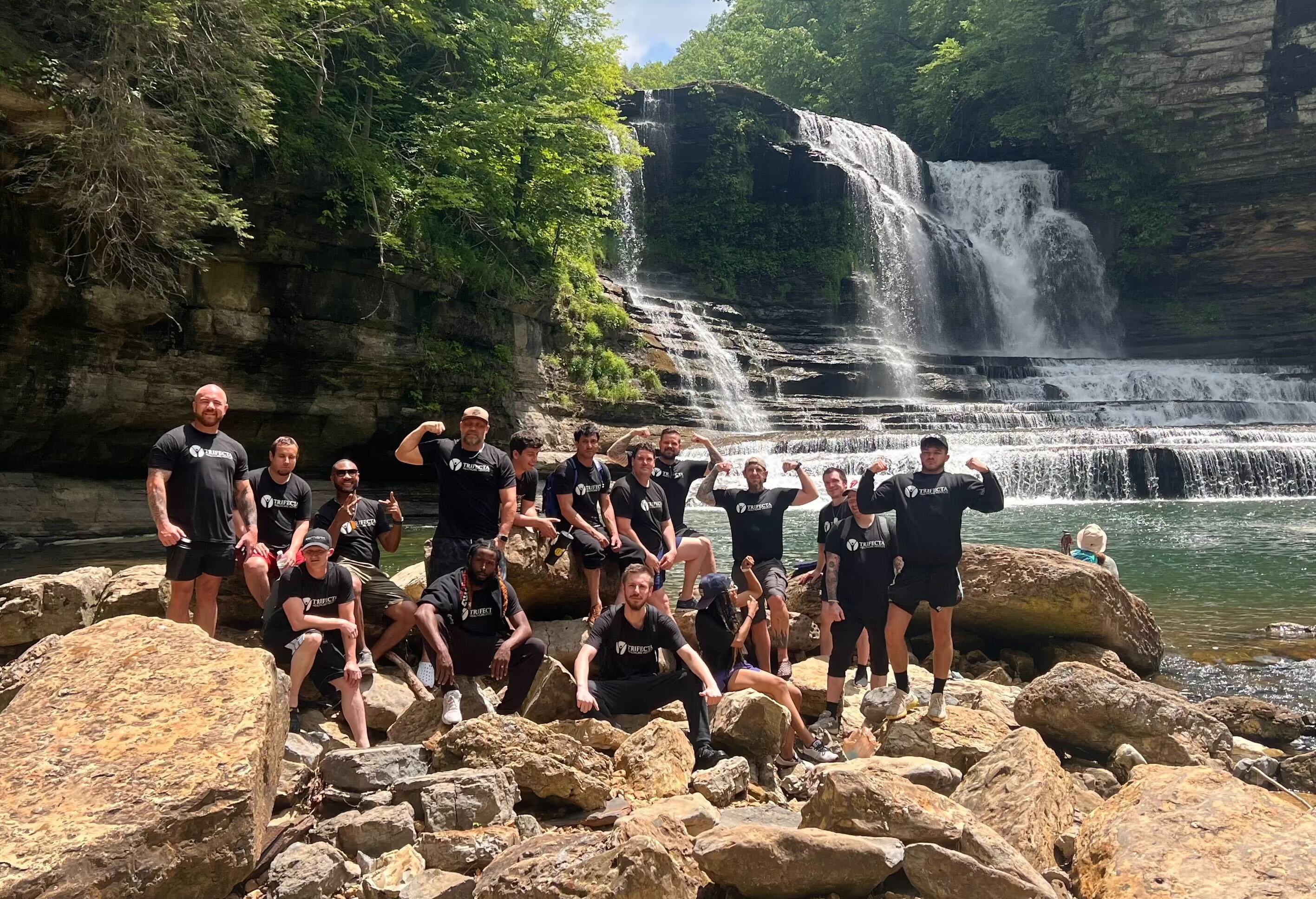
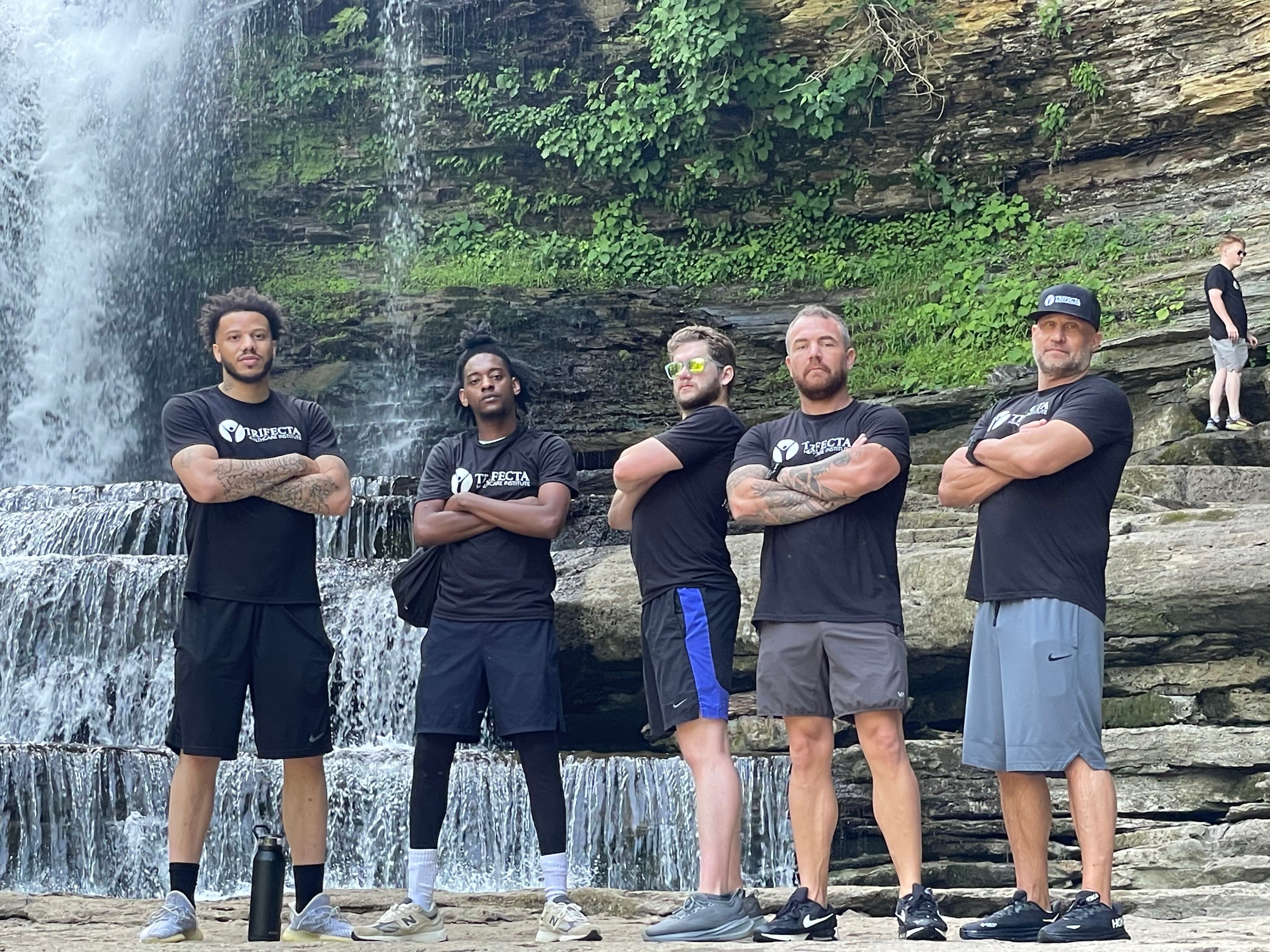
At Trifecta, men recover alongside other men who understand the challenges they're facing: men who started in the same place, with the same confusion and the same shame about how a prescription became something they couldn't control.
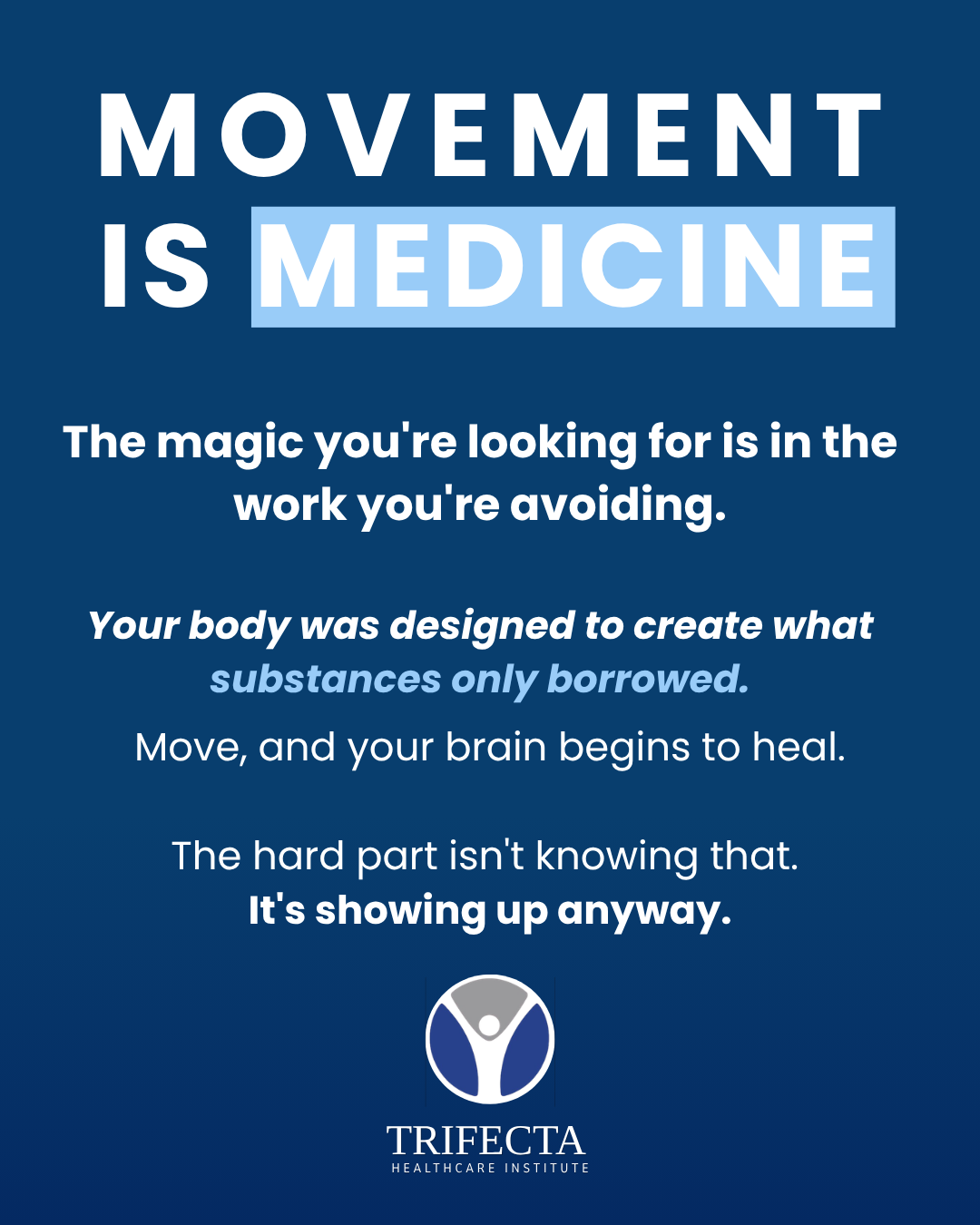
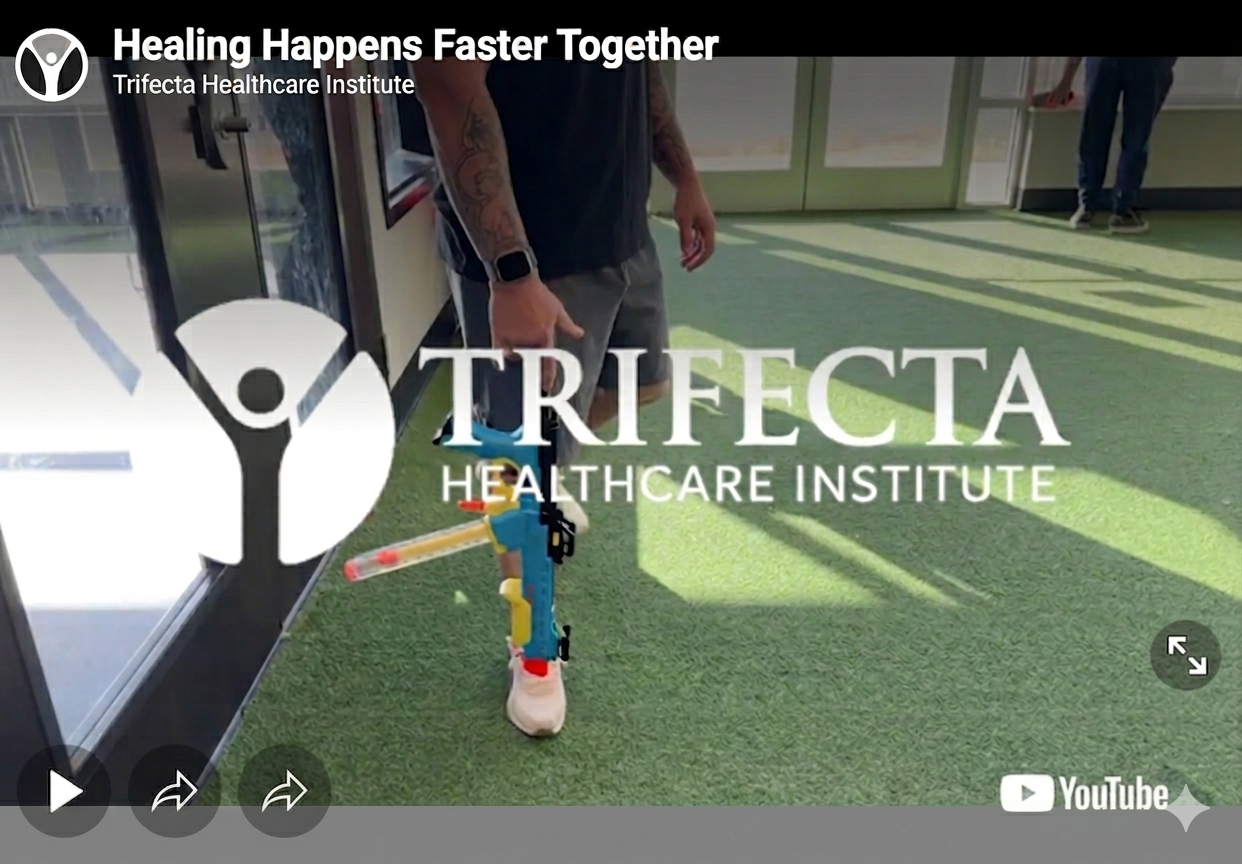
The physical programming — gym, boxing, jiu-jitsu, hiking, ice baths, ropes courses — is not a schedule item between therapy sessions. It is therapy.
Across every category of prescription drug addiction, the neurological target is the same: a prefrontal cortex that dependence has compromised, and a reward system that has been recalibrated around a chemical. Exercise addresses both directly and measurably.
Recovery that replaces what the prescription was solving is the only kind that holds. Brotherhood, movement, and purpose are how we build it.
Dual Diagnosis Care
The majority of men in prescription drug treatment are managing an underlying condition — chronic pain, anxiety, ADHD, depression, or trauma — that needs to be treated directly, not just subtracted from the treatment plan.
At Trifecta, addiction and mental health care are coordinated by a single clinical team, operating as one integrated program.
Your Privacy, Protected
Prescription drug addiction treatment is protected health information under HIPAA. For professionals concerned about employer awareness, licensing boards, or other professional consequences, our admissions team can discuss your specific situation confidentially before any commitment is made.
You Deserve More Than Getting Off the Medication
The goal of prescription drug addiction treatment isn't just discontinuation.
Every man who comes to us was taking something that worked — for pain, for anxiety, for sleep, for focus — and the path forward isn't simply removing that solution and leaving nothing in its place. It's building a life and a brain that don't need it.
Here's what that requires, and what we're built to provide.

What Prescription Drug Dependence Does to the Brain
Across all categories of prescription drugs — opioids, benzodiazepines, stimulants — the neurological common ground is the prefrontal cortex.
This is the brain's center for decision-making, impulse control, planning, and executive function. It is the region that prescription dependence most consistently compromises, and the region most directly responsible for a man's ability to choose differently.
Prescription drugs don't just create chemical dependence. They alter the brain's architecture in ways that make recovery harder than willpower alone can address. The impulse to use isn't a character flaw; it's a prefrontal cortex that dependence has restructured around a substance.
Understanding this changes what treatment needs to do. It's not enough to manage withdrawal and teach coping skills. Recovery requires actively rebuilding the brain that prescription dependence altered.
The Science of Movement in Prescription Drug Recovery
Physical exercise is one of the most rigorously documented non-pharmacological tools for doing exactly that.
Research using neuroimaging has demonstrated that exercise-induced neuroplasticity in the prefrontal cortex improves executive function and decreases compulsive behavior in individuals with substance use disorders, directly targeting the region prescription dependence most compromises. Aerobic fitness is associated with greater cortical thickness in the dorsolateral prefrontal cortex and increased hippocampal volume over time — structural brain changes that support sustained recovery.
Perhaps most importantly for men coming off prescription drugs: exercise has been shown to restore activation of natural reward pathways — the brain's ability to experience motivation, pleasure, and reward from ordinary life — to levels comparable to those without substance dependence.
That is the neurological definition of what recovery is supposed to feel like. And it is measurably achievable through structured physical activity.
A 2025 review of 50 studies found that moderate and intense physical activity programs significantly increase abstinence rates while reducing psychological withdrawal symptoms — irritability, insomnia, anxiety — across substance use disorder categories.


How We Apply Science-Backed Movement as Medicine
Our programming:
- Boxing and gym training — high-intensity aerobic exercise that directly restores dopamine and serotonin function, builds physical identity, and provides the kind of earned achievement that prescription dependence erases.
- Jiu-jitsu — rebuilds the executive function and impulse regulation that all prescription drug dependence degrades, through a discipline that demands presence, strategy, and controlled response under pressure.
- Hiking and outdoor programming — sustained moderate aerobic activity that supports cortisol regulation, serotonin restoration, and the experience of physical capability in environments that have nothing to do with a prescription.
- Ice baths — controlled stress exposure that trains the nervous system to activate, tolerate discomfort, and recover — replacing the chemical regulation men have been relying on with a biological one they own.
- Ropes courses and team activities — shared physical challenge that builds the oxytocin-driven trust and social bonding that prescription isolation erodes.
Substances Aren't the Problem, They're an Unhealthy Solution
Every prescription drug addiction started as an attempt to solve something real. Pain. Anxiety. Inability to function. The prescription worked, for a while, in the way that unhealthy solutions sometimes do.
Recovery isn't about pretending that need didn't exist. It's about building healthier, more sustainable solutions to the same problems — solutions that don't compromise the prefrontal cortex, don't build tolerance, and don't require escalating doses to maintain function.
That's what this program builds. A nervous system that regulates itself. A body that generates its own reward. A community of men who chose the same hard thing and came out the other side of it.
Recovery from prescription drug addiction can be the beginning of the most physically capable, mentally clear, genuinely connected period of a man's life. We've watched it happen here. We built this program to make it possible.

Insurance & Admissions
Prescription drug addiction treatment is covered by most major insurance plans under the Mental Health Parity and Addiction Equity Act. Our admissions team verifies benefits quickly, confidentially, and at no cost — before you commit to anything.
In-network insurance providers include:
- Blue Cross Blue Shield
- Aetna
- Cigna / Evernorth
- United Healthcare
- Humana
- Ambetter
- Magellan Healthcare
- Tricare East (Humana Military)
- And others — contact us to verify your specific plan
Begin Prescription Drug Addiction Treatment in Nashville or Knoxville
Trifecta Healthcare Institute provides men's-only prescription medication rehab in Tennessee at two locations — both offering the full continuum of care from medical detox through residential treatment, PHP, and IOP.
Nashville / Spring Hill [1025 Nashville Hwy Columbia TN 38401]
Knoxville [2017 Ailor Ave, Knoxville, TN 37921]
Every call is confidential. There is no obligation. Our admissions team is straightforward — they will tell you exactly what we offer, what your insurance covers, and what the first step looks like. The conversation costs nothing and commits you to nothing.
Frequently Asked Questions About Prescription Drug Addiction Treatment
Is being dependent on my prescription the same as being addicted?
Not necessarily — and this distinction matters clinically. Physical dependence means your body has adapted to the medication and will produce withdrawal symptoms if it's stopped. It can develop at prescribed doses with no loss of control whatsoever.
Addiction involves compulsive use despite significant consequences. Both conditions may require medical support to discontinue safely, but they are different clinical pictures. Our intake assessment sorts this out — you don't need to arrive with a self-diagnosis.
Can I get treatment without my employer finding out?
Yes. Addiction treatment records are protected health information under HIPAA and carry stronger confidentiality protections than general medical records. The Family and Medical Leave Act (FMLA) and Americans with Disabilities Act (ADA) may also offer additional workplace protections.
For professionals with specific concerns about licensing boards, professional certifications, or employer policies, our admissions team can discuss your situation privately before you make any decisions.
What are the most commonly misused prescription drugs?
Opioid painkillers — oxycodone, hydrocodone, fentanyl — represent the largest category of prescription drug misuse, followed by benzodiazepines like Xanax and Klonopin, and prescription stimulants like Adderall and Vyvanse.
Polysubstance use — particularly combinations of opioids and benzos — is common and increases both the medical complexity and the urgency of treatment.
Will I lose access to my pain or anxiety medication permanently?
Not necessarily. Our goal is not to remove every medication from a man's life — it is to address misuse, manage dependence safely, and establish long-term care for the underlying condition through approaches that are medically sustainable.
Some men continue medically indicated medications under appropriate supervision post-treatment. Others find that non-pharmacological approaches manage their underlying condition effectively. Every plan is individualized.
How is prescription drug addiction treatment different from street drug treatment?
Medically, the treatment framework is largely the same — the same continuum of care, the same evidence-based therapies, the same dual diagnosis evaluation.
The differences are usually in the clinical entry point (the underlying medical condition being managed), the family and professional dynamics involved, and sometimes in how a man frames his own situation.
We've worked with men across the full spectrum, and the quality of care doesn't change based on where the substance came from.
Does insurance cover prescription drug addiction treatment?
Most major insurance plans cover prescription drug addiction treatment under the Mental Health Parity and Addiction Equity Act. We are in-network with Blue Cross Blue Shield, Aetna, Cigna, United Healthcare, Humana, and other major carriers. Contact our admissions team for a free, same-day benefits verification — no commitment required.