
Fentanyl Addiction Treatment for Men in Tennessee
Fentanyl doesn't give second chances the way other substances sometimes do.
It is the leading driver of overdose deaths in Tennessee and across the country, and it now contaminates most of the street drug supply, meaning men who believe they're using something else may be using fentanyl without knowing it.
.jpg)
What Is Fentanyl and Why Is It So Dangerous?
Fentanyl is a synthetic opioid — 50 to 100 times more potent than morphine — originally developed for managing severe surgical and cancer-related pain.
In controlled, pharmaceutical doses, it has legitimate medical applications. What's flooding the streets of Tennessee is a different story entirely.
Illicit fentanyl is manufactured without any dose controls, mixed into other substances, and pressed into counterfeit pills designed to look like Percocet, Xanax, or Adderall. A single pill can contain a fatal dose. A single line of powder can too. And because fentanyl is odorless and invisible, there is no way for a person using street drugs to know it's there.
The Rising Need for Fentanyl Detox for Men in Tennessee
The result is a crisis unlike anything addiction medicine has seen before.
In Tennessee, fentanyl is now involved in the majority of overdose deaths. Men are dying not because they used recklessly, but because the substance they thought they were using had been replaced with something exponentially more lethal.
Understanding this isn't meant to create fear. It's meant to establish something important: fentanyl addiction is a serious, complex, and urgent medical condition.
It requires care that matches that complexity, and our fentanyl addiction help Nashville men can rely on is here to give you the help you need.
How Fentanyl Addiction Develops
No man sets out to become dependent on fentanyl. The paths that lead there are more varied — and more ordinary — than most people expect.
Some men are introduced to fentanyl through the healthcare system: prescribed for post-surgical pain or chronic conditions, and then unable to stop when the prescription runs out.
Others transition from heroin or prescription opioids after their tolerance escalates and fentanyl becomes the only thing that keeps withdrawal away. And increasingly, men develop fentanyl dependence without ever intentionally using it, because it was already in whatever they were taking.
Understanding the Risks and Need for Support
What makes fentanyl uniquely dangerous in terms of addiction is its pharmacology. It binds to opioid receptors with extreme potency and speed, producing an intense but short-lived euphoria.
That rapid onset and short duration accelerates the cycle of use. Tolerance builds fast. Dependence follows close behind. And once dependence is established, stopping feels physically impossible without help — because without proper medical support, it functionally is.

Signs of Fentanyl Use and Overdose
Awareness saves lives. Here’s what you need to know.
Signs of Active Fentanyl Use:
- Extreme drowsiness or "nodding out" mid-conversation
- Pinpoint pupils regardless of lighting
- Slurred speech, slowed movement, poor coordination
- Dramatic weight loss and physical decline
- Social withdrawal, financial problems, secretiveness
- Paraphernalia — foil, small bags, smoking devices, blue residue on surfaces
Signs of Fentanyl Overdose — Call 911 Immediately:
- Blue or grey lips, fingertips, or fingernails
- Breathing that is very slow, shallow, or stopped
- Choking, gurgling, or rattling sounds
- Unresponsive to voice or physical stimulation
- Limp body, pale or clammy skin
Fentanyl overdose requires immediate emergency response. Administer naloxone (Narcan) if available — fentanyl overdoses frequently require multiple doses because of the drug's potency. Do not leave the person alone. Stay on the line with 911.
Tennessee's Good Samaritan Law provides legal protection to anyone who calls for help during an overdose. Saving a life is what matters.
Addiction Isolates.
Recovery Reconnects.

Medical Detox for Fentanyl: Why It's Different
Not all opioid detox is the same, and fentanyl detox is in a category of its own. This is one of the reasons why the clinical team you choose matters.
Men coming off fentanyl typically have significantly higher opioid tolerance than those coming off heroin or prescription painkillers.
That high tolerance creates a specific medical challenge: standard buprenorphine induction protocols used in conventional opioid detox can trigger precipitated withdrawal in fentanyl-dependent patients — a sudden, severe crash that most men experience as one of the worst things that has ever happened to them.
Finding Fentanyl Addiction Help Nashville & Knoxville
Our team is trained in fentanyl-specific induction protocols — including low-dose and microdose buprenorphine approaches — that account for fentanyl's unique receptor binding and its tendency to store in fatty tissue, which extends the withdrawal timeline compared to other opioids.
What men in fentanyl detox can expect:
- 24/7 physician and nursing oversight throughout the acute withdrawal period
- Individualized medication management — buprenorphine taper, clonidine, antiemetics, sleep support, and anticonvulsants where indicated
- Withdrawal monitoring designed to catch and respond to complications before they escalate
- Honest communication throughout — our team will tell you exactly what to expect and when
.webp)
The Core Values That Drive Us






Medication-Assisted Treatment for Fentanyl Addiction
MAT is not a shortcut during any fentanyl addiction help Nashville program. It is one of the most evidence-supported interventions in addiction medicine — and for fentanyl specifically, it is often what keeps men alive long enough to rebuild their lives.
Buprenorphine (Suboxone)
Naltrexone (Vivitrol)
A Word on MAT and Recovery
We understand that concern, and we take it seriously. What the research shows — consistently — is that MAT saves lives, reduces overdose deaths, and improves long-term outcomes when combined with therapy.
We don't push any medication on any man. We explain the evidence, lay out the options, and help each person make the decision that is right for him.
Therapy and Long-Term Recovery
Getting through detox is a victory. Building a life that makes recovery worth holding onto — that's the work.
Every man in our program builds an individualized treatment plan that goes far beyond managing the immediate crisis.
We address the roots: the pain underneath the use, the patterns that developed before fentanyl was ever in the picture, and the skills and support systems needed to sustain recovery when life stops being structured.
.webp)
Rewiring the Brain Through Recovery
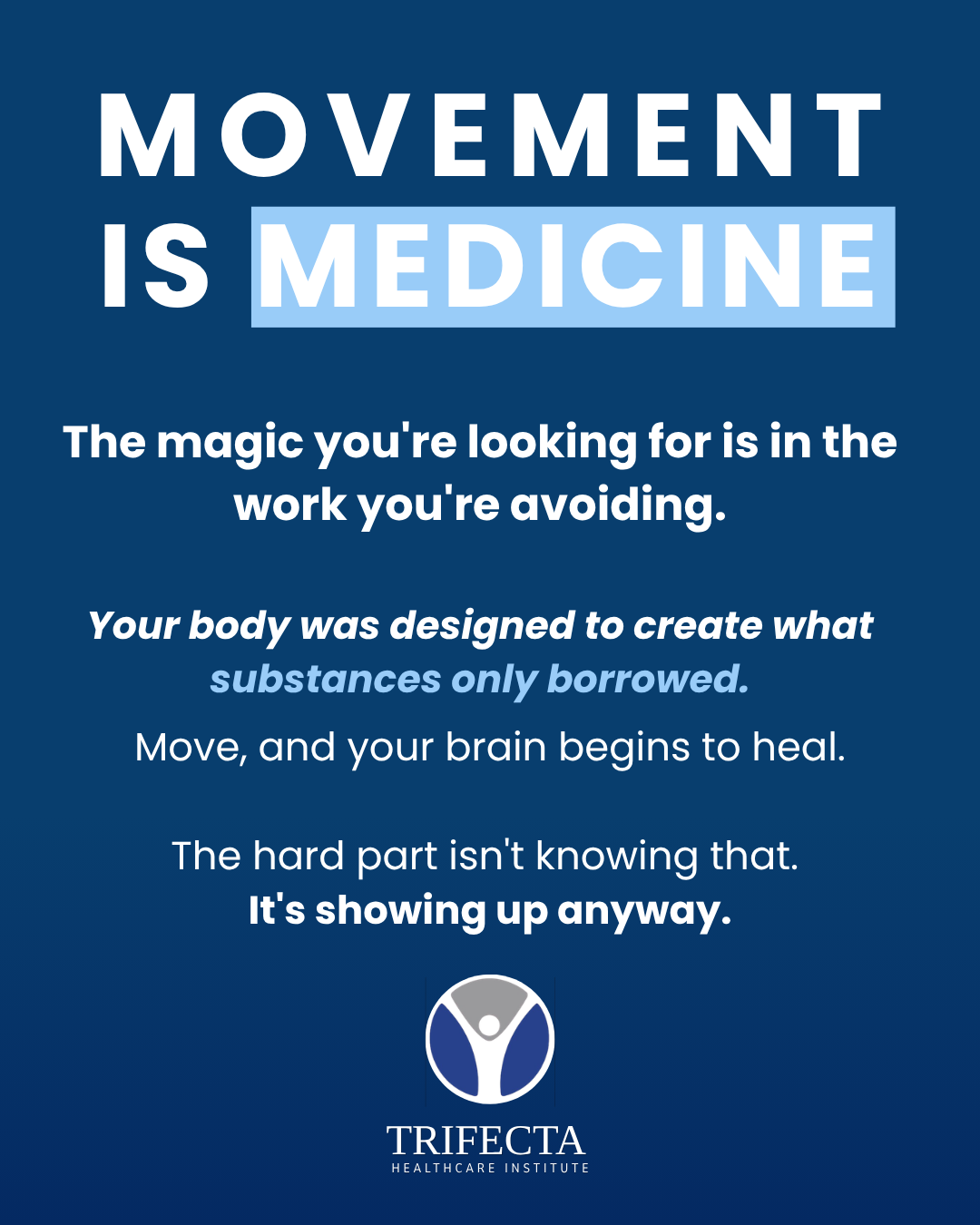
Fentanyl hijacks the brain's dopamine reward system at extreme potency, flooding the nucleus accumbens with dopamine during use and leaving it severely depleted during withdrawal.
depletion — the anhedonia, the inability to feel anything good — is one of the most powerful drivers of relapse. Exercise directly engages the same reward circuitry, stimulating endogenous opioid release, increasing BDNF production to support neuroplasticity, and rebuilding the brain's capacity to generate reward without a substance.
Fentanyl rewires the brain. So does recovery, if the recovery program is built to do it.
Recovery That Goes Beyond Survival
Getting men through fentanyl detox alive is the first goal. It is not the only one.
Fentanyl doesn't just create physical dependence; it systematically dismantles the brain's ability to experience reward, motivation, and connection without it.
Men who make it through detox are often left with a neurochemical deficit that makes everything feel flat, joyless, and impossible to sustain without a substance. That deficit is one of the primary biological reasons relapse rates are high, and why detox alone — without a program designed to rebuild what fentanyl took — rarely holds.
At Trifecta, we build the recovery that comes after survival.

The Science Behind Movement as Treatment
Here's the reality that most treatment programs don't design around: fentanyl's damage to the brain's reward circuitry doesn't reverse on its own. The dopamine system that fentanyl exploited, and depleted, needs active rehabilitation, not just abstinence.
Exercise is one of the most well-documented non-pharmacological tools for doing exactly that. Research consistently shows that physical activity in opioid use disorder recovery modifies the brain's reward, inhibition, and stress circuits — improving emotional regulation and reducing relapse risk.
Aerobic exercise also stimulates endogenous opioid release in the central nervous system, producing the natural mood elevation that fentanyl chemically mimicked, without the dependency. (PMC/NIH)
Perhaps most critically: exercise increases BDNF — brain-derived neurotrophic factor — the protein most directly tied to neuroplasticity, neuron repair, and the brain's ability to build new, healthier patterns. The same circuits fentanyl damaged are the ones exercise begins to rebuild.
Raising the Standard, Because You Deserve a Better Life
Men in recovery who incorporated structured exercise reported better symptom management, replacement of destructive behaviors with meaningful ones, and measurable gains in physical health and personal strength.
That is not a side effect of our programming. That is the point of it.
- Boxing and gym training — high-intensity movement that directly stimulates dopamine and serotonin production. Rebuilds physical identity, impulse regulation, and the sense of earned capability that fentanyl erased.
- Jiu-jitsu — present-moment discipline under pressure. Builds patience, resilience, and self-trust through physical problem-solving rather than avoidance.
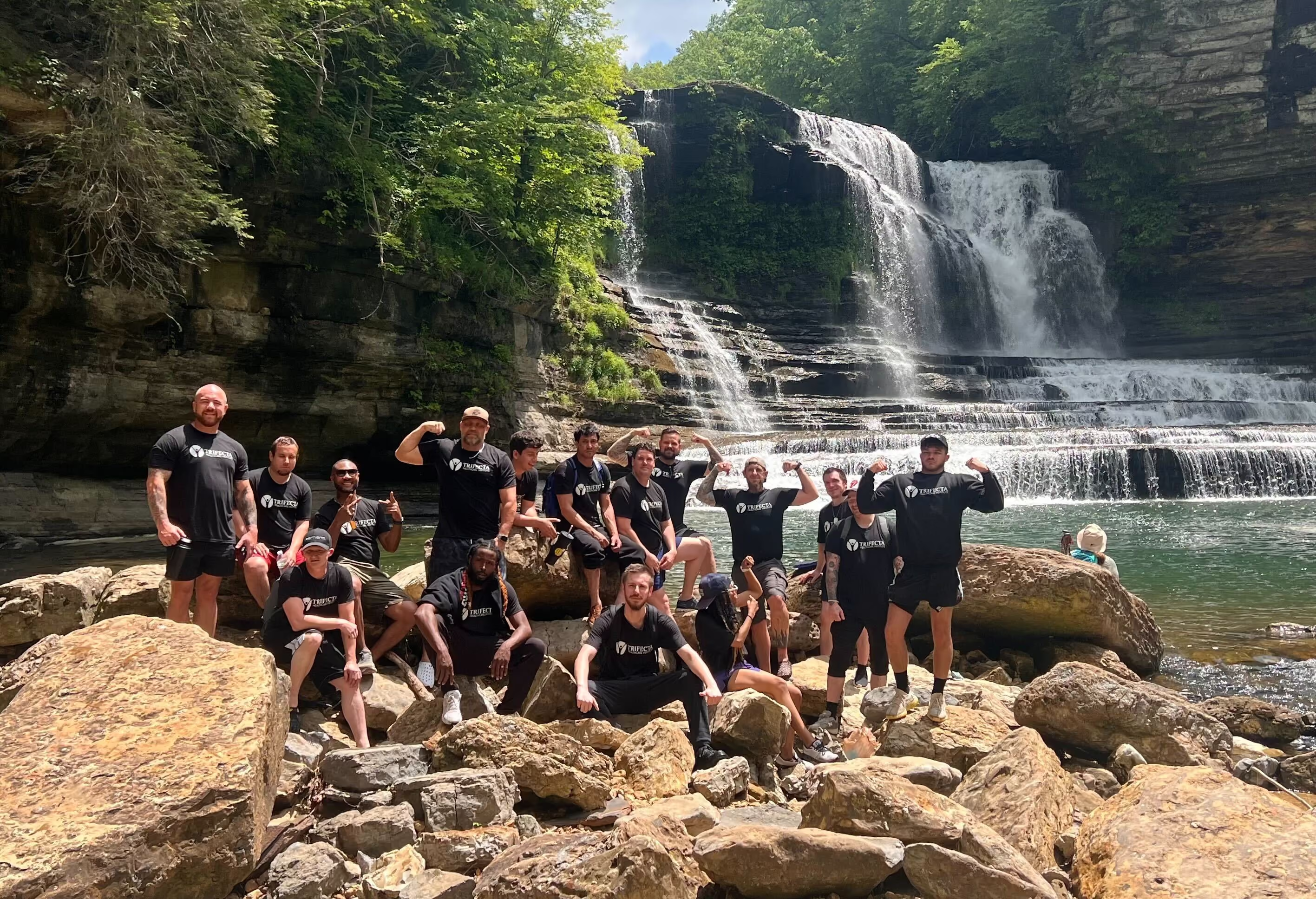
- Hiking and outdoor programming — sustained movement in Tennessee's natural landscapes restores serotonin baselines and provides men with physical experiences that are genuinely worth staying sober for.
- Ice baths — cold immersion triggers norepinephrine release, reducing anxiety and improving mood through a biological pathway that has nothing to do with a substance.
- Ropes courses, white-water rafting, team activities — shared high-stakes experiences build the oxytocin-driven trust and social bonding that make the brotherhood real and durable.
.avif)

The Brotherhood That Holds After Discharge
Fentanyl addiction is profoundly isolating. The life it produces — the secrecy, the shame, the narrowing of everything down to the next dose — leaves men cut off from the relationships and community that sustain recovery. Rebuilding that is not optional. It is clinical.
The men who go through Trifecta's program train together, struggle together, and build something together that doesn't end at discharge.
Our alumni network and peer support structure are designed to extend that bond into the life men are building after treatment, because recovery from fentanyl isn't something you hold alone.
A Life Worth Staying Sober For
Fentanyl took something from every man who became dependent on it. The goal of treatment is not just to stop the bleeding; it is to build something that makes going back unthinkable.
That means physical capability. Real relationships. A brain that can feel good again. A daily life with meaning and momentum.
Recovery from fentanyl is hard. It is also possible. And at its best, it is the beginning of something men could not have imagined from the other side of it.
Naloxone, Harm Reduction, and Aftercare
Every man who leaves our program leaves with a naloxone kit and the knowledge of how to use it. Every family member of a man in our program is encouraged to have one too.
Naloxone (Narcan) rapidly reverses opioid overdose. Because of fentanyl's potency, a single dose is often not enough — multiple doses may be required.
Tennessee's standing order allows naloxone to be purchased at most pharmacies without a prescription. We consider this education a non-negotiable part of discharge planning.
Continuing Recovery After Fentanyl Withdrawal Treatment
Aftercare structure:
Intensive Outpatient Program (IOP)
Alumni Community and Peer Support
MAT Continuation as Clinically Indicated
Sober Living Referrals
Recovery isn't a moment. It's a practice. Our aftercare infrastructure is built to keep men connected long after formal treatment ends.
The Most Dangerous Opioid Requires the Most Prepared Team
At Trifecta Healthcare Institute, we provide specialized fentanyl addiction treatment for men at two Tennessee locations — Spring Hill (Nashville area) and Knoxville.
Our program is built for the clinical complexity fentanyl actually demands: medically supervised detox with fentanyl-specific protocols, Medication-Assisted Treatment, evidence-based behavioral therapy, and integrated dual diagnosis care.If someone you love is in crisis right now, call us. Our admissions team is available 24 hours a day. Every call is confidential.
.avif)
Begin Fentanyl Addiction Treatment in Nashville or Knoxville
Trifecta Healthcare Institute operates two Tennessee locations, both equipped for the full clinical complexity of fentanyl addiction treatment.
Nashville / Spring Hill [1025 Nashville Hwy Columbia TN 38401]
Knoxville [2017 Ailor Ave, Knoxville, TN 37921]
Fentanyl cases are often emergencies. Our admissions team can facilitate same-day and next-day admission for men in acute crisis. Call us directly; we move as fast as the situation requires.
Every call is confidential. No obligation. Our job is to help you understand your options and take the next right step.
Frequently Asked Questions About Fentanyl Addiction Treatment
How is fentanyl detox different from other opioid detox?
Fentanyl creates significantly higher opioid tolerance than most other opioids, which changes the entire detox equation. Standard buprenorphine induction protocols can trigger precipitated withdrawal in fentanyl-dependent patients — a sudden, severe crash.
Our team uses fentanyl-specific induction approaches, including microdose buprenorphine protocols, to navigate this safely. Fentanyl also stores in fatty tissue, which can extend the withdrawal timeline. Medical supervision isn't just recommended — it's what makes this process survivable.
Can you recover from fentanyl addiction?
Yes — and men do, every day. Recovery from fentanyl addiction is achievable with the right clinical support: medically supervised detox, MAT where appropriate, evidence-based therapy, and a community built to sustain it. It is not easy. But the men who come through our program carry proof that it's possible.
How long does fentanyl stay in your system?
Fentanyl is typically detectable in urine for 1–3 days after last use. However, because fentanyl stores in fatty tissue, withdrawal symptoms and neurochemical effects can persist longer than other opioids — which is one reason why fentanyl-specific detox protocols matter and why post-acute withdrawal support is a critical part of the program.
What is the role of naloxone in fentanyl addiction?
Naloxone (Narcan) is an opioid antagonist that rapidly reverses overdose by blocking opioid receptors. Because fentanyl is so potent, a single dose of naloxone is often insufficient — multiple doses are frequently required. Every man leaving our program receives naloxone education and access, and we strongly encourage the same for their families.
Does insurance cover fentanyl addiction treatment?
Most major insurance plans cover fentanyl addiction treatment under the Mental Health Parity and Addiction Equity Act.
We are in-network with Blue Cross Blue Shield, Aetna, Cigna, United Healthcare, Humana, and other major carriers. Contact our admissions team for a free, confidential benefits verification.
Can you become addicted to fentanyl quickly?
Yes. Fentanyl's potency and rapid onset make it one of the fastest substances to produce physical dependence.
Regular use — even over a short period — can establish tolerance and dependence that makes stopping feel impossible without help. And for men who were unknowingly exposed through contaminated substances, dependence can develop before they even realize what they're dealing with.