


How to Choose a Dual Diagnosis Partial Hospitalization Program
Use this checklist to assess a dual diagnosis partial hospitalization program, including integrated care, medication support, Tennessee licensure, PHP fit, a...
Read More
Compare medically monitored detox options, blood pressure medication protocols, withdrawal care, and TennCare coverage to plan a safer first step in Nashville.
Start Your Journey NowWritten and reviewed by the clinical team at Trifecta Healthcare Institute, a men’s-only treatment center in Tennessee specializing in substance use, mental health, and dual diagnosis care.
For adults with high blood pressure, the best Nashville, TN detox is a 24/7 medically monitored program with physician-approved withdrawal protocols, continuous vital-sign checks, and active management of home blood-pressure medications. The right question is not which facility has the nicest lobby. It is whether a man's body can safely weather withdrawal without a nurse watching his heart rate every few hours.
Hypertension raises the stakes because withdrawal itself is a cardiovascular event. Sudden cessation after heavy drinking can push pulse and blood pressure up and bring on seizures or withdrawal delirium 6. Alcohol withdrawal produces adrenergic hyperactivity that can swing blood pressure to extremes and drive significant tachycardia 9. Benzodiazepine withdrawal can trigger seizures and delirium when the medication stops abruptly 5. Opioid withdrawal is rarely life-threatening on its own, but the clonidine often used to ease it needs close vital-sign monitoring in a supervised setting 2.
Add a pre-existing hypertension diagnosis, and the margin for error narrows. A home antihypertensive skipped during a chaotic weekend can create rebound effects that look and feel like withdrawal, muddying the clinical picture 10. That is why the real screening question for a man in Nashville or Columbia is not where to detox, but what level of medical oversight his heart and blood vessels actually need before any therapy work begins.
"Medically monitored detox" describes a specific clinical standard, not a marketing phrase. It refers to 24/7 residential withdrawal management staffed by nurses and overseen by physicians who use written, protocol-driven orders. For a man with high blood pressure, that staffing model is the whole point: someone is checking his pulse, blood pressure, and withdrawal symptoms on a schedule, not waiting for him to feel bad enough to call for help.
A good program moves through four predictable phases:
That last handoff matters. Detox is a stabilization step for the heart and nervous system, not a cure for the condition that brought him in.
Withdrawal is not just an emotional ordeal. It is a chemical event that reaches into the heart and blood vessels, and for a man who already runs high on the monitor, it can turn a stressful week into a medical emergency. Two mechanisms do most of the damage: an adrenergic surge driven by the brain and nervous system coming out from under a depressant, and the rebound effects that show up when daily blood-pressure medications get skipped during the chaos of a withdrawal week.
Understanding both is what separates a safe medically monitored stay from a weekend that ends in the Vanderbilt or TriStar emergency department. The subsections below break down what is actually happening inside the body during those first days.
Heavy, regular drinking quiets the central nervous system. When alcohol is suddenly removed, the system rebounds the other direction, and the sympathetic ("fight or flight") branch runs hot. Clinicians call this adrenergic hyperactivity, and in hospitalized patients it has been described as capable of producing significant tachycardia and extremes of blood pressure 9.
In practical terms, a man whose resting blood pressure is already elevated can see it rise sharply in the first days of stopping. Pulse races. Tremor sets in. The NIAAA clinician guide notes that sudden withdrawal from heavy drinking can bring on elevated pulse and blood pressure, seizures, and withdrawal delirium 6. For someone with existing hypertension, that surge stacks on top of a cardiovascular system that is already working too hard. This is why continuous vital-sign monitoring and benzodiazepine-first treatment are standard in a medically monitored setting, with adjunctive medications reserved for cases where blood pressure and heart rate remain refractory 9.
The second danger is quieter and easier to miss. When a man stops drinking at home, his daily routine falls apart. The morning lisinopril gets skipped. The evening metoprolol gets skipped. By day two, he is not only in withdrawal, he is also in rebound from the medications that were keeping his pressure in check.
That overlap matters for care decisions. A beta blocker stopped cold can send pulse and blood pressure higher than withdrawal alone would explain. A clinician who assumes every spike is withdrawal may dose benzodiazepines without restarting the home medication the patient actually needs. In a medically monitored program, the admitting team reconciles the full medication list on day one and continues or adjusts antihypertensives on a schedule rather than letting them fall through the cracks. That single step prevents a lot of the cardiovascular drama that lands people in the ER during an attempted home detox.
Not every withdrawal looks the same on the monitor. Alcohol, benzodiazepines, and opioids each push blood pressure and heart rate in different ways, respond to different medications, and demand different levels of oversight. For a man with hypertension, the choice between a hospital bed, a 24/7 medically monitored detox unit, and an outpatient taper depends on which substance is involved and how his cardiovascular system has been running going in.
The three subsections below walk through the risk picture for each class so a reader can match his situation to the right level of care.
Alcohol is the withdrawal syndrome most likely to put a man with high blood pressure in the hospital. Sudden cessation after heavy, regular drinking can produce elevated pulse and blood pressure, seizures, and withdrawal delirium 6. In hospitalized patients, adrenergic hyperactivity has been described as capable of generating significant tachycardia and extremes of blood pressure 9.
Treatment in a medically monitored setting is benzodiazepine-first, with adjunctive agents like clonidine reserved for cases where blood pressure and heart rate stay refractory despite adequate sedation 9. Dosing is usually symptom-triggered, scored on a validated withdrawal scale rather than given on a fixed clock, which lets nurses respond to what the body is actually doing hour by hour 8. Vital signs get checked frequently, because elevated heart rate, blood pressure, or temperature during this window can signal either active withdrawal, a missed home medication, or both 10. For a man already carrying a hypertension diagnosis, that layered monitoring is what keeps a bad night from becoming a cardiac event.
Benzodiazepines are the class where the instinct to "just stop" causes the most trouble. The FDA's updated boxed warning is direct: serious withdrawal reactions can include seizures and delirium tremens, and the agency recommends a gradual, patient-specific taper with monitoring rather than abrupt discontinuation 5. World Health Organization guidance echoes the point, calling gradual dose reduction the safest approach because it eases symptoms and lowers seizure risk 4.
For a man with high blood pressure, benzodiazepine withdrawal brings the same autonomic surge that complicates alcohol withdrawal: elevated pulse, rising blood pressure, tremor, and sometimes delirium. A medically monitored program builds a taper schedule around the specific benzodiazepine, dose, and duration of use, then layers in vital-sign checks and continues home antihypertensives through the process. There is no universal taper that fits every person, which is why a published internet schedule is not a substitute for a physician's plan 4, 5.
Opioid withdrawal is less likely to kill a healthy adult than alcohol or benzodiazepine withdrawal, but "less likely" is not the same as safe for someone with hypertension. The NIDA-hosted ASAM guideline recommends medication for opioid withdrawal management over abrupt cessation, and notes that methadone-based withdrawal management should occur in an inpatient setting or opioid-treatment program 3. Clonidine, often used to blunt opioid-withdrawal symptoms, is best given where vital signs and side effects can be monitored closely, since the drug directly lowers blood pressure and can cause problems if a home antihypertensive is still on board 2.
The second half of the opioid picture matters even more. CDC guidance is explicit that detoxification alone, without ongoing medication for opioid use disorder, is not recommended because of elevated risks of resumed use, overdose, and overdose death; buprenorphine, methadone, and naltrexone are the FDA-approved options for continuation 11. A Nashville detox stay that discharges a man with no medication plan is not a complete treatment.
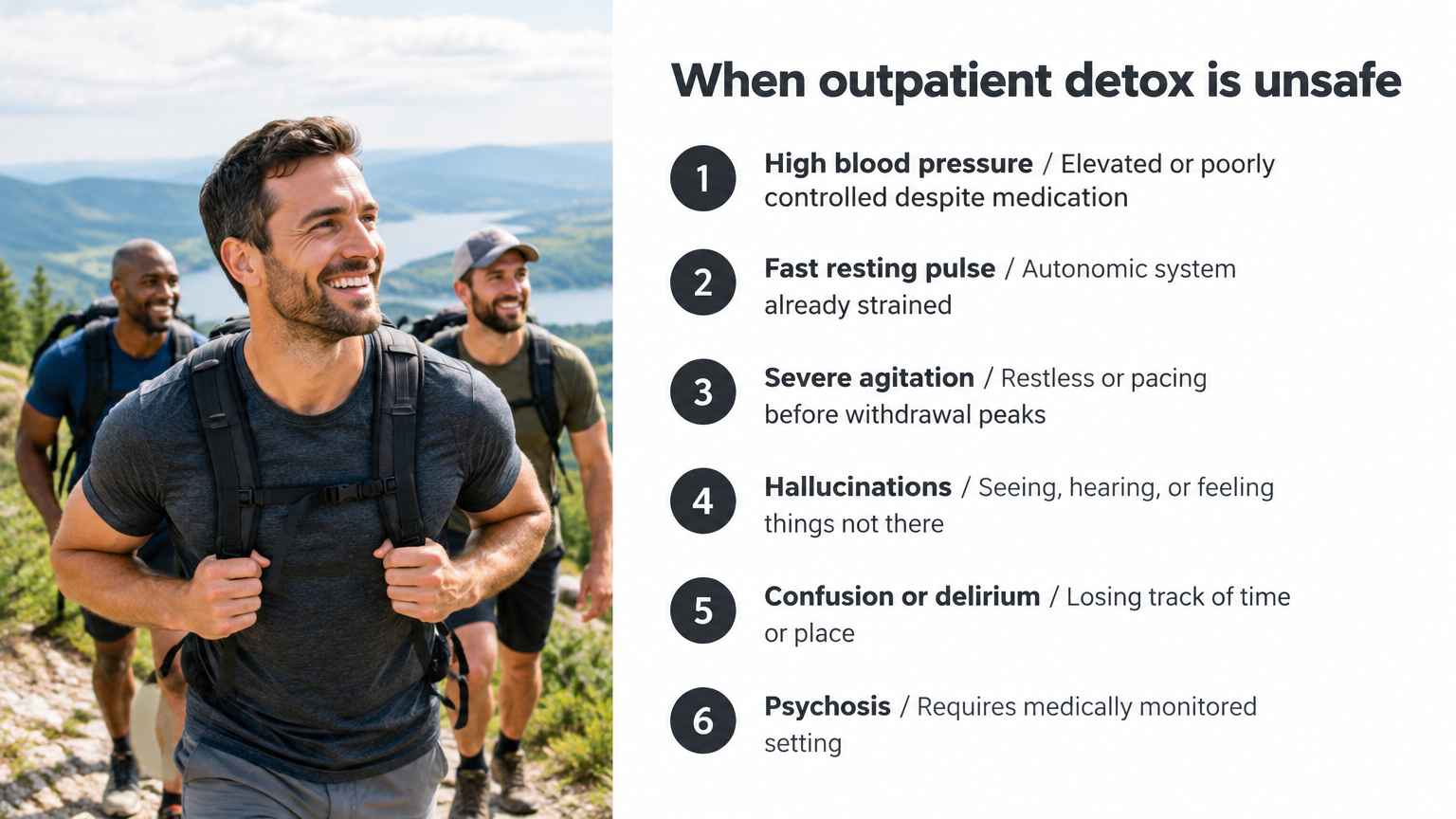
Not every withdrawal needs a hospital bed, but some clearly do. A peer-reviewed review of ambulatory detoxification identifies a specific set of findings that disqualify a person from safe outpatient care: extreme hypertension, tachycardia, agitation, psychosis, hallucinations, or delirium 7. Any one of these means the body or mind has crossed a line that an outpatient clinic is not equipped to hold.
For a man already carrying a hypertension diagnosis, that first disqualifier does a lot of work. If his blood pressure is already running high on a quiet afternoon, the adrenergic surge of early withdrawal can push it well past what a once-a-day outpatient visit can safely track. The same is true for a resting pulse that will not come down.
A simple self-screen before calling any Nashville-area program:
Nashville has no shortage of programs that use the word "detox" on their website. For a man with high blood pressure, three things separate a program that can actually hold him safely from one that cannot: written medical protocols with real nursing coverage, a clear plan for his home blood-pressure medications on the day he walks in, and an honest answer about what happens the morning he is discharged. The three subsections below give a reader the specific questions to ask before signing an admission packet, whether he is looking in Davidson County, down in Columbia, or anywhere in between.
The first question is simple: who writes the orders, and who is in the building at 3 a.m. when his blood pressure spikes? A medically monitored program runs on physician-approved withdrawal protocols executed by nurses around the clock, not on a counselor's good instincts. For alcohol withdrawal, that means symptom-triggered dosing scored on a validated withdrawal scale rather than a fixed schedule 8. For a man whose pressure already runs high, it also means frequent vital-sign checks, because elevated heart rate, blood pressure, or temperature can signal withdrawal, a missed home medication, or both 10.
Ask what the intake nurse does with the pill bottles. A strong program reconciles every home medication on day one, including each antihypertensive, and either continues it on schedule or adjusts it with the physician's input. The reason is specific: stopping antihypertensive medicines, particularly beta blockers, can produce rebound symptoms that overlap with withdrawal and distort the clinical picture 10. A program that cannot explain, in plain language, how it will handle a daily lisinopril or metoprolol is not ready to detox someone with hypertension.
Detox is a doorway, not a destination. Before admission, a man should know what the discharge plan looks like: a bed in a partial hospitalization or intensive outpatient program, a scheduled therapy start date, and, for opioid use disorder, continuation on buprenorphine, methadone, or naltrexone rather than a cold handoff 11. A program that cannot name the next step on day one is a program that treats detox as the finish line.
A short phone call separates programs that can safely hold a man with high blood pressure from programs that are hoping nothing goes wrong. Before signing an admission packet in Davidson or Maury County, work through this list with whoever answers the intake line.
If the person on the phone cannot answer plainly, keep calling.
Cost is the second question most families ask after safety, and in Tennessee the answer depends on which insurance card is in the wallet. TennCare's member page states plainly that withdrawal management and treatment are covered for eligible adults at inpatient, residential, and outpatient levels of care 1. That is the floor: a man who qualifies for TennCare has a path to medically monitored detox without paying out of pocket for the stay itself.
Coverage on paper is not the same as a bed in a specific building, though. TennCare operates through managed-care organizations, and every program has its own list of in-network plans. A facility can be excellent at managing hypertension during withdrawal and still be out-of-network for a particular TennCare plan or commercial carrier. Before admission, call the intake line with the member ID in hand and ask three questions: Is this program in-network for my plan? What level of care has been authorized? What will I owe at discharge?
Commercial insurance works the same way. Aetna, Anthem, BCBS of Tennessee, Cigna, United Healthcare, and Tricare each have their own authorization rules for inpatient withdrawal management. A short verification call before admission prevents an avoidable bill after it. [Verify your insurance]
Once vital signs have settled and the withdrawal scale has quieted down, the work changes shape. The nurse station steps back, and the daily schedule starts to look less like a hospital and more like a program a man actually has to show up for. This is where continuing care begins.
For opioid use disorder, continuing care is not optional. CDC guidance is explicit that detoxification alone, without ongoing medication, is not recommended because of elevated risks of resumed use, overdose, and overdose death; buprenorphine, methadone, and naltrexone are the FDA-approved continuation options 11. A stabilization stay that does not hand a man off to one of those medications is an incomplete course of care.
At Trifecta Healthcare Institute's Columbia, TN campus, the next phase pairs clinical work with group therapy and peer accountability so men stand together through the first months of recovery rather than facing them alone. Hypertension does not disqualify a man from this programming; it just means the medical team keeps checking the numbers while he does the work.
A note for the family members reading this: if a man you love is drinking heavily, taking daily benzodiazepines, or using opioids, and he also carries a hypertension diagnosis, the home-detox conversation is not a lifestyle debate. It is a cardiovascular safety question.
Sudden alcohol cessation can bring on elevated pulse and blood pressure, seizures, and withdrawal delirium 6. Abruptly stopping prescribed benzodiazepines can produce serious withdrawal reactions, including seizures and delirium tremens, which is why the FDA recommends a gradual, patient-specific taper under medical supervision 5. He does not need a lecture. He needs a vital-sign cuff, a nurse, and a physician-written protocol in a 24/7 setting.
Three practical steps help more than persuasion:
[Call Trifecta] when he is ready, or when you need to understand his options before the conversation happens.
Usually not, especially for alcohol or benzodiazepine withdrawal. Sudden cessation after heavy drinking can cause elevated pulse and blood pressure, seizures, and withdrawal delirium 6. A peer-reviewed review of ambulatory detoxification lists extreme hypertension, tachycardia, agitation, hallucinations, or delirium as reasons a person no longer meets criteria for outpatient care 7. An existing hypertension diagnosis makes those thresholds easier to cross, which is why 24/7 medically monitored detox is the safer starting point.
Do not stop antihypertensives on your own. Stopping blood-pressure medicines, particularly beta blockers, can create rebound symptoms that overlap with withdrawal and distort the clinical picture 10. In a medically monitored program, the admitting physician reconciles every home medication on day one and either continues it on schedule or adjusts it with frequent vital-sign checks. Bring the actual pill bottles to intake so dose, timing, and prescriber information are clear to the nursing team.
Length varies by substance and severity, driven by how quickly vital signs stabilize. Alcohol withdrawal is typically scored with a validated withdrawal scale, and dosing is symptom-triggered rather than tied to a fixed clock 8. Benzodiazepine tapers often take longer because gradual dose reduction is the safer path 4. The discharge date is a clinical call, not a package deal.
Yes, for eligible adults. TennCare's member page states that withdrawal management and treatment are covered at inpatient, residential, and outpatient levels of care 1. Coverage does not guarantee that a specific Nashville or Columbia facility is in-network for a given TennCare managed-care plan, though. Before admission, call the intake line with the member ID and ask whether the program is in-network, what level of care has been authorized, and what will be owed at discharge.
Because both can go wrong fast, in different ways. The FDA warns that abrupt benzodiazepine discontinuation can produce serious withdrawal reactions, including seizures and delirium tremens, and recommends a gradual, patient-specific taper with monitoring 5. For opioids, the ASAM/NIDA guideline recommends medication for opioid withdrawal management over abrupt cessation 3, and CDC guidance notes that detoxification alone, without ongoing buprenorphine, methadone, or naltrexone, is not recommended because of elevated risks of resumed use and overdose death 11.
After the acute phase, men step down into continuing care at Trifecta Healthcare Institute's Columbia, TN campus, with therapy running alongside the clinical plan once vital signs have steadied. For opioid use disorder, continuation on buprenorphine, methadone, or naltrexone is part of the plan rather than an afterthought 11.
Between facility size limits, waivers, and state-by-state rules, figuring out your Medicaid or private insurance benefits can feel like its own full-time job. Our admissions team will verify your coverage in minutes and walk you through exactly what's available — no guesswork required.
Verify Insurance Benefits →No commitment required. Confidential & HIPAA-protected.
Whether it's you or someone you love, our team can help you figure out the next step — what treatment looks like, what's covered, or just someone to talk to.
Talk to Our TeamConfidential. No commitment required.


