


How to Choose a Dual Diagnosis Partial Hospitalization Program
Use this checklist to assess a dual diagnosis partial hospitalization program, including integrated care, medication support, Tennessee licensure, PHP fit, a...
Read More
Learn which drug detox symptoms may signal dangerous withdrawal, when to call 911, and why medical assessment and ongoing care can support safer recovery.
Start Your Journey NowWritten and reviewed by the clinical team at Trifecta Healthcare Institute, a men’s-only treatment center in Tennessee specializing in substance use, mental health, and dual diagnosis care.
Drug detox symptoms are the body's response to losing a substance it has adapted to. When regular use stops or drops sharply, the nervous system swings in the opposite direction of the drug's effect, which is why withdrawal from a depressant like alcohol brings tremors, racing heart, and anxiety, while withdrawal from a stimulant like methamphetamine brings exhaustion, flat mood, and heavy sleep.1, 13 The symptoms vary by substance, but the pattern is predictable enough that clinicians can plan around it.
Common experiences cut across most substances: sweating, nausea, poor sleep, irritability, muscle aches, restlessness, and strong cravings.1, 16 What changes is the risk. Alcohol, benzodiazepines, and other sedatives can produce seizures and delirium that are genuinely dangerous.8, 12 Opioid withdrawal is rarely fatal on its own, but it drives relapse and, because tolerance drops quickly, raises the odds of a fatal overdose if someone returns to a previous dose.2, 6 Stimulant, cannabis, and nicotine withdrawal are mostly psychological, and that is exactly why they can get dismissed when they should not be.13, 14, 15
If you are reading this trying to tough it out, the honest answer is that willpower is not the variable that matters most. The substance is. The next sections sort the risk so you know what you are actually dealing with.
If you have been drinking heavily every day, taking a prescribed benzodiazepine like Xanax, Klonopin, or Valium for months, or using other sedatives, your withdrawal belongs in the top risk tier. These substances calm an over-firing nervous system. When they leave, the nervous system rebounds hard, and that rebound can produce seizures, dangerous changes in heart rate and blood pressure, and in alcohol's case, delirium tremens.3, 8, 12
Alcohol withdrawal can escalate from shakes and anxiety on day one to hallucinations, seizures, or delirium tremens between 48 and 72 hours after the last drink.10 Benzodiazepines carry an FDA boxed warning specifically because stopping cold or cutting the dose too fast can trigger life-threatening seizures; the taper has to be individualized and medically supervised.12 Tier 1 is not a willpower problem. It is a medical one, and the right setting is a clinic or hospital, not a bedroom.
Opioid withdrawal from heroin, fentanyl, oxycodone, or prescribed pain medication feels miserable but, in a healthy adult, usually is not fatal by itself. The symptom cluster is distinctive: sweating, chills, gooseflesh, runny nose, tearing eyes, dilated pupils, muscle and joint aches, abdominal cramping, nausea, diarrhea, poor sleep, yawning, restlessness, anxiety, and irritability.16
The real danger shows up after. Tolerance drops within days of abstinence, so if a person returns to the amount they used before, their system cannot handle it, and the overdose risk climbs sharply.2 That is why the CDC does not recommend opioid detoxification without medications for opioid use disorder — buprenorphine, methadone, or naltrexone — to protect against resumed use and fatal overdose.6 The symptoms do not kill you. The gap afterward can.
Methamphetamine, cocaine, cannabis, and nicotine withdrawal tend to spare the body the kind of acute medical crisis that alcohol or benzodiazepines can trigger. What they hit instead is the mind. Methamphetamine withdrawal brings depression, anxiety, irritability, body pain, heavy sleep, and strong cravings that can peak two to three days after last use and leave low mood and cravings running for months.13 Cannabis withdrawal in heavy users shows up as irritability, anxiety, restlessness, depressed mood, sleep problems, appetite changes, sweating, and tremor.14 Nicotine withdrawal looks similar in miniature: cravings, irritability, restlessness, sleep trouble, hunger, anxiety, and sadness.15
Tier 3 gets dismissed because nothing visible is breaking. The quiet risk is that depression, suicidal thinking, and co-occurring anxiety or trauma get louder in early abstinence and need clinical attention.18 Primarily psychological is not the same as safe to ignore.
Alcohol withdrawal generally begins 24 to 48 hours after your blood alcohol level drops, and in heavier or longer-term drinking, the full course can run 5 to 7 days.3 The first wave tends to look like shakiness, anxiety, sweating, nausea, racing heart, and poor sleep.8 For some men, that is where it stops. For others, it escalates.
A clinical review describes progression markers in the cited literature: hallucinations approximately 12 to 24 hours after the last drink, seizures around 12 to 48 hours, and delirium tremens near 72 hours — timing can vary from person to person, so initial symptoms sometimes appear earlier than the typical onset window.11 Delirium tremens itself typically shows up 48 to 72 hours out and can last anywhere from one to eight days, with confusion, disorientation, hallucinations, tremors, agitation, and unstable vital signs.10 It is a medical emergency.
Benzodiazepines like Xanax, Klonopin, Ativan, and Valium quiet an overactive nervous system. When you take them regularly for weeks or months, your brain adapts. Stop suddenly or cut the dose too fast and the rebound can include severe anxiety, insomnia, tremor, sweating, and seizures that can be life-threatening.12
The FDA's updated boxed warning is direct about this: no single tapering schedule works for every patient, and the taper has to be individualized and monitored by a clinician.12 Other sedatives, including barbiturates, carry a similar warning pattern.1 If you have been using a benzodiazepine daily, do not quit on your own and do not let a well-meaning family member set the schedule. The dose has to come down on a medical plan.
Opioid withdrawal from heroin, fentanyl, oxycodone, hydrocodone, or morphine has a recognizable fingerprint. NIDA groups the symptoms into clusters:
It feels, as many men describe it, like the worst flu of your life stacked on top of panic. In a healthy adult, uncomplicated opioid withdrawal is usually not fatal on its own.5 The medication piece changes the picture. Buprenorphine and methadone can reduce acute withdrawal symptoms and cravings, naltrexone supports longer-term treatment after stabilization, and lofexidine is FDA-approved specifically to ease acute opioid withdrawal.17 CDC guidance is clear that detox without medications for opioid use disorder is not recommended because of the overdose risk afterward.6
Stimulant withdrawal does not come with the dramatic physical crisis of alcohol or benzodiazepines, but it is not gentle. After heavy methamphetamine use, the body swings into exhaustion, heavy sleep, increased appetite, body pain, trouble concentrating, depression, anxiety, irritability, and strong cravings.13 Acute symptoms often peak 2 to 3 days after last use and ease over roughly a week.
The long tail is where men get caught off guard. Low mood, anxiety, and cravings can run for months after the acute phase settles.13 That stretch is when depression and suicidal thinking need honest clinical attention, not willpower.18 Cocaine withdrawal follows a similar psychological pattern, even without the same physical shutdown.
Cannabis withdrawal is real, even in men who would not call their use a problem. NIDA lists irritability, anxiety, restlessness, depressed mood, sleep problems, appetite changes, sweating, abdominal pain, and tremor after heavy or long-term use, with one cited study estimating withdrawal symptoms in 12.1% of people who use cannabis frequently.14
Nicotine withdrawal looks like a smaller version of the same pattern: cravings, irritability, restlessness, sleep trouble, increased hunger, anxiety, and a dip in mood as the brain adjusts to the absence of nicotine.15 Neither syndrome is likely to send you to an emergency room on its own. Both can drive a return to use, worsen underlying depression or anxiety, and make early recovery feel harder than it has to be. Reading them side by side with alcohol and opioid timelines makes the pattern obvious: onset, peak, duration, and risk level all shift by substance, which is why a one-size approach to detox does not work.

Most withdrawal symptoms feel awful without being dangerous. A short list crosses the line, and when they show up, the response is not a cold shower or a glass of water. It is a 911 call.
Call emergency services right away if a person withdrawing from alcohol, benzodiazepines, or another sedative develops:
Delirium tremens, which can appear 48 to 72 hours after the last drink, falls squarely in this category and is a medical emergency.10
Suicidal thoughts during any withdrawal are also an emergency. Detox is a known risk window, which is why clinical guidelines call for suicide-risk screening at intake.5 If someone is talking about ending their life, call 911 or 988.
Opioid overdose has its own warning signs: pinpoint pupils, loss of consciousness, limp body, slow or shallow breathing, and choking or gurgling sounds. Call 911, give naloxone if it is on hand, place the person on their side, and stay with them until paramedics arrive.19 Overdose risk climbs after even a short stretch of abstinence because tolerance drops fast.2
The setting matters as much as the symptoms. A man with mild nicotine withdrawal can ride it out at home with a plan. A man who has been drinking a fifth of liquor every night for two years, or taking a benzodiazepine daily for a year, cannot. The hard part is that the line between those two cases is not always obvious from the outside, and self-scoring at home does not close the gap.
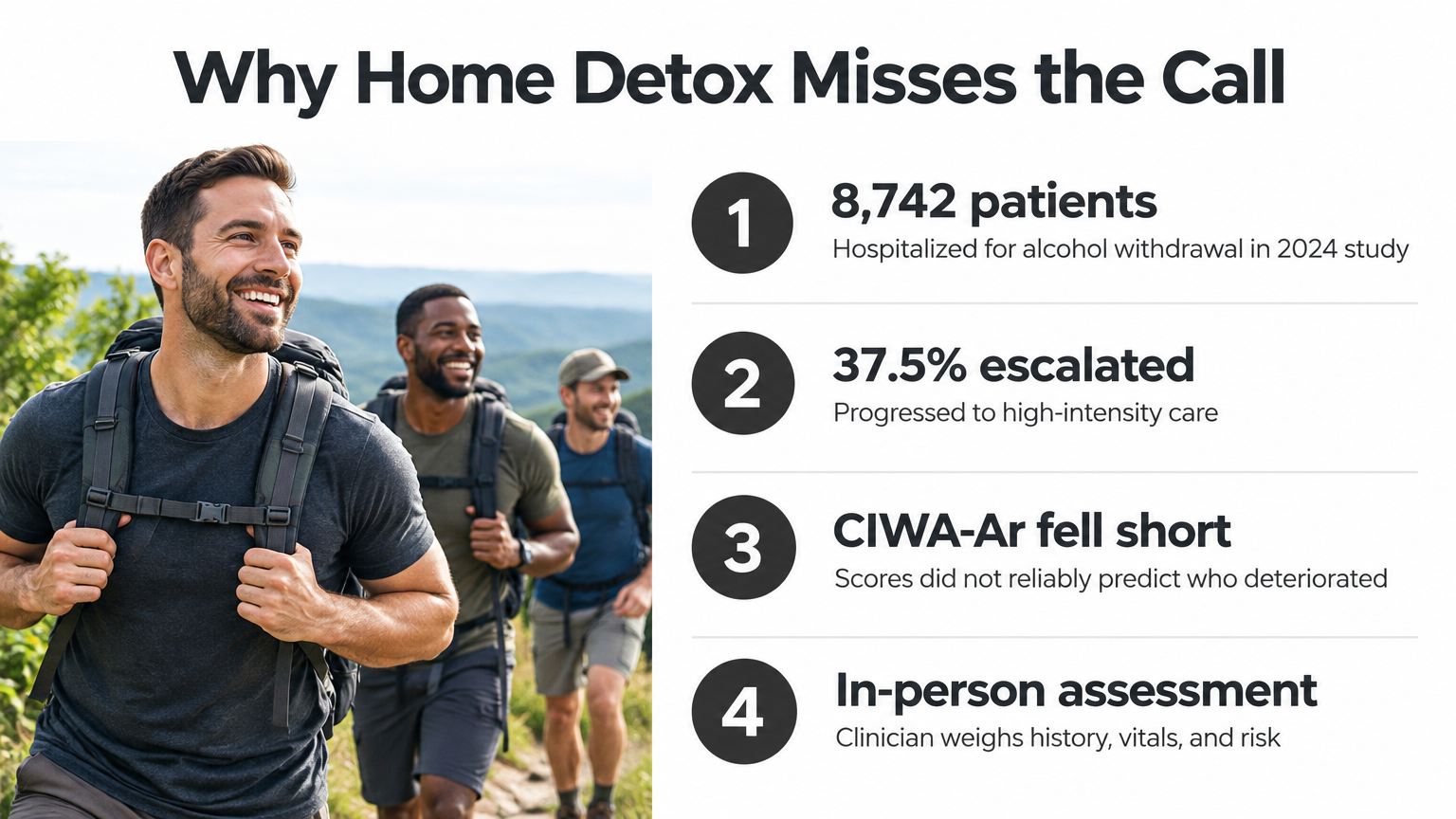
A 2024 study of 8,742 patients hospitalized for alcohol withdrawal found that 37.5% progressed to high-intensity care, and that CIWA-Ar scores and medication-dose cutoffs did not reliably predict which patients would need it — the authors note this reflects a hospitalized population specifically, and that risk should be assessed individually rather than inferred from a single statistic.21 CIWA-Ar is the standard clinician-administered alcohol-withdrawal severity scale. If a validated tool used by trained staff in a hospital cannot cleanly sort who will deteriorate, a man checking symptoms against a web page in his kitchen is not going to do better.
In-person medical assessment is what makes the call. A clinician looks at how much and how long you have been using, prior withdrawal episodes (including any history of seizures or delirium tremens), other medical conditions, mental health history, suicide risk, and current vital signs.5 From there, the right level of care gets matched to the actual risk: inpatient medical detox for alcohol, benzodiazepines, or sedatives when the history warrants it; medication-supported outpatient care for many opioid cases.6 The decision is not about toughness. It is about getting the setting right the first time.
A medically supervised detox is less dramatic than most men expect. It starts with an intake assessment: a clinician asks what you have been using, how much, how long, what has happened in past withdrawal episodes, what other medications or medical conditions you carry, and how your mental health has been, including any thoughts of suicide.5 That conversation sets the plan.
From there, the work is stabilization. Vital signs get checked on a schedule. For alcohol withdrawal, benzodiazepines have the strongest evidence base in treatment, followed by anticonvulsants.9 For benzodiazepine dependence, a slow, individualized taper replaces the cold stop that the FDA warns against.12 For opioid withdrawal, medications like buprenorphine, methadone, or lofexidine ease symptoms and cravings, with a plan to continue medication for opioid use disorder after acute symptoms settle.17, 6 Hydration, sleep support, nausea control, and nutrition round out the physical side.
The quieter part is screening. Suicide risk and co-occurring anxiety, depression, or trauma get assessed during detox, not deferred, so the handoff to ongoing care actually matches what you are dealing with.5, 18
Most men who put off detox are not in denial about their use. They are doing math. Can I miss a week of work? What will my boss think? Will my wife look at me differently? Can I handle the pain? Those questions are reasonable. The answers usually point toward getting help sooner, not later.
The fear of pain is the one most worth naming directly. A medically supervised detox is designed to shorten and soften withdrawal, not stretch it out. Benzodiazepines have the strongest evidence base in treatment of alcohol withdrawal.9 Buprenorphine, methadone, and lofexidine can cut the acute misery of opioid withdrawal.17 Nausea, sleep, and hydration all get managed on a plan instead of improvised at 3 a.m. White-knuckling a kitchen detox tends to produce more suffering, not less, and in alcohol or benzodiazepine cases it can produce a seizure.12
The fear of looking weak is the other one. Walking into an intake because you understand your own risk is not weakness. Reading the research and still trying to do it alone, when the evidence says you should not, is the harder thing to defend.
Once the sweating, shaking, and nausea pass, most men expect to feel like themselves again. That is rarely how it goes. After the acute phase, a quieter set of symptoms tends to settle in: low mood, flat energy, broken sleep, and cravings that come in waves rather than a constant signal. NIDA notes that after methamphetamine use, low mood, anxiety, and cravings can run for months beyond the acute week.13 The pattern shows up with other substances too, including opioids, where restlessness and sleeplessness can linger well after the physical symptoms settle.2
This is the stretch where men quietly return to use because the acute phase is over and the help feels like it should be too. It usually should not be.
Substances mute things. When they come off, the volume comes back up. Anxiety, depression, PTSD symptoms, grief, anger, and sleep problems that a man had been drinking or using to quiet often get louder in the first weeks after detox, not softer. SAMHSA recommends that anyone presenting for substance use care also be screened for mental health conditions, including suicide risk, and that the two be treated together rather than one at a time.18, 5
That matters because what feels like "withdrawal that will not end" is often an underlying condition surfacing without its usual cover. An integrated plan treats both. Trying to white-knuckle an untreated depression or trauma response is one of the most common reasons early recovery falls apart.
Detox stabilizes the body. It does not teach you how to live without the substance, repair the relationships that frayed around it, or treat the anxiety, depression, or trauma underneath it. SAMHSA and NIDA both make the same point: detox is a first step, not a treatment plan, and the handoff to ongoing care is where recovery actually begins.1, 2
For most men, that handoff looks like a Partial Hospitalization Program (PHP) for structured daytime care in the first weeks, stepping down into an Intensive Outpatient Program (IOP) as stability grows, and eventually standard outpatient support. In practice, that means something concrete in East Tennessee: once medical detox is complete through a hospital or detox provider, Trifecta's PHP, IOP, and outpatient care in Knoxville and in Columbia, TN for the Nashville area pair evidence-based therapy with movement, peer connection, and co-occurring mental health support alongside substance use treatment.
This section speaks to wives, partners, parents, and adult siblings of a man going through withdrawal. The instinct is to manage it at home with soup, water, and patience. For alcohol and benzodiazepines, that instinct can be dangerous. If he has been drinking heavily every day or taking a prescribed benzodiazepine for months, do not help him stop cold. Call a clinician or a 24/7 referral line first and ask what setting is safe.12, 3
Watch for the signs that mean 911: a seizure, hallucinations, severe confusion, fever above 100.4°F, chest pain, an irregular heartbeat, or talk of suicide.4, 8 For opioids, learn the overdose signs and keep naloxone in the house, especially after any stretch of abstinence.19 Say what you see without arguing about what it means.
The most useful thing families often do is make the call he is avoiding and go with him to the intake. Detox is where the body stabilizes; ongoing care is where the two of you rebuild.1, 2
If you are in Tennessee and trying to figure out where to start, two numbers belong in your phone right now. The Tennessee REDLINE is a free, confidential, 24/7 referral line for substance use treatment at 800-889-9789 — you can call or text.7 For a mental health emergency, including suicidal thoughts during withdrawal, call or text 988.7 For an active overdose or any symptom on the 911 list, call 911.
A specific next step for men in East Tennessee or the Nashville area: after medical detox through a hospital or detox provider, ask about Trifecta's PHP, IOP, and outpatient care in Knoxville or in Columbia, TN for the Nashville area, with co-occurring mental health support alongside substance use care. [Verify your insurance] or [Call Trifecta] to talk through what the first 72 hours could look like. The hardest part is the first call. The next part is easier than you think.
It depends on the substance. Alcohol withdrawal usually runs 5 to 7 days, with the hardest stretch between 48 and 72 hours.3, 10 Opioid withdrawal is often worst in the first few days and eases over roughly a week.16 Methamphetamine withdrawal peaks 2 to 3 days after last use, with low mood and cravings sometimes lasting months.13
Not always. Alcohol, benzodiazepine, and other sedative withdrawal can produce seizures and delirium that are genuinely dangerous, and the FDA warns against stopping benzodiazepines cold.3, 8, 12 Opioid withdrawal is rarely fatal on its own, but detox without medications for opioid use disorder raises overdose risk afterward.6 Get a medical evaluation before deciding where to detox.
Call 911 for a seizure, hallucinations, severe confusion or disorientation, a fever above 100.4°F, chest pain, an irregular heartbeat, gastrointestinal bleeding, or suicidal thoughts during withdrawal.4, 8 For a suspected opioid overdose, watch for pinpoint pupils, limpness, slow or shallow breathing, and gurgling sounds — call 911, give naloxone if available, and stay with the person.19
No. Detox stabilizes the body as a substance leaves the system. It does not address the behavioral, psychological, and social sides of substance use disorder, and by itself it is not sufficient for recovery.1, 2 The handoff into ongoing care — therapy, medication when appropriate, peer support, and co-occurring mental health treatment — is where lasting change starts.2, 18
Most major plans cover medically necessary detox and the levels of care that follow, but benefits vary by policy, diagnosis, and setting. The quickest way to get a clear answer is to have the admissions team run a verification of benefits against your specific plan before admission. [Verify your insurance] to see what your coverage includes.
After stabilization, most men step into a Partial Hospitalization Program (PHP) for structured daytime care, then an Intensive Outpatient Program (IOP), and finally standard outpatient support. In East Tennessee that means PHP and IOP in Knoxville; in the Nashville area, programming runs out of Columbia, TN. Co-occurring mental health support is built in alongside substance use care.18
Between facility size limits, waivers, and state-by-state rules, figuring out your Medicaid or private insurance benefits can feel like its own full-time job. Our admissions team will verify your coverage in minutes and walk you through exactly what's available — no guesswork required.
Verify Insurance Benefits →No commitment required. Confidential & HIPAA-protected.
Whether it's you or someone you love, our team can help you figure out the next step — what treatment looks like, what's covered, or just someone to talk to.
Talk to Our TeamConfidential. No commitment required.


