



How to Vet and Choose a Rehab for Alcoholics Near Me
Learn how to evaluate a rehab for alcoholics near me by checking licensure, accreditation, therapies, medication use, and long-term care quality.
Read More
Learn how to choose evening iop programs that fit your work schedule, offer flexible telehealth options, and provide quality, evidence-based care.
Start Your Journey NowWritten and reviewed by the clinical team at Trifecta Healthcare Institute, a men’s-only treatment center in Tennessee specializing in substance use, mental health, and dual diagnosis care.
As a driven professional, you manage heavy responsibilities every day. If you are looking for structured addiction treatment, evening IOP programs offer a practical path forward. You do not have to choose between your career and your health. This guide addresses the specific considerations for professionals seeking intensive outpatient programs that accommodate demanding schedules. By choosing an evening program, you can maintain your career momentum while accessing comprehensive, life-changing care.
For professionals in Tennessee, understanding how movement-based programming integrates into evening IOPs can make the difference between treatment that feels sustainable and treatment that creates additional stress. At Trifecta Healthcare Institute, we focus on a brotherhood approach to long-term healing, ensuring you are supported by peers who understand your unique pressures.
An employment-compatible intensive outpatient program (IOP) is structured to support professionals who need to maintain career responsibilities while addressing substance use or co-occurring mental health challenges. Please note that Trifecta does not offer primary mental healthcare—we specialize exclusively in co-occurring mental health treatment alongside substance use disorder support. These programs are defined by several core features: flexible scheduling, confidential participation, evidence-based clinical approaches, and the integration of telehealth options.

Evening IOP programs are specifically designed to accommodate workday commitments by offering sessions after standard business hours, often starting at 5:00 or 6:00 p.m. and running several nights per week. This structure allows you to engage in therapy and group support without disrupting your daytime work roles, reducing the risk of career setbacks or unwanted disclosure.
"Recovery is not a break from your life; it is the foundation that makes your professional success sustainable."
A key attribute of employment-compatible IOPs is their focus on minimizing barriers to access. Research highlights that rigid or inflexible programs often result in missed sessions and lower treatment completion rates among working adults7. Programs that incorporate telehealth delivery, hybrid in-person and virtual formats, and individualized scheduling have been shown to boost engagement and help more professionals complete their course of treatment7.
The Department of Labor’s Recovery Ready Workplace initiative encourages employers to adopt scheduling accommodations so that employees can attend evening IOP sessions without penalty2. Confidentiality and non-judgmental care are also fundamental. More than 30% of providers report discomfort treating substance use disorders, so programs that address provider stigma and commit to privacy are especially important for professionals9.
The Americans with Disabilities Act (ADA) provides important legal protections for professionals seeking recovery support while staying active in their careers. Under the ADA, individuals with substance use disorders who are in or seeking treatment are entitled to reasonable accommodations at work. This includes modified schedules or protected leave time to participate in medical care, such as evening IOP programs, without fear of discrimination or job loss2.
These accommodations can be especially vital for those whose treatment needs extend beyond standard business hours, enabling them to access care discreetly and maintain workplace responsibilities. Employers are increasingly adopting flexible attendance and leave policies in line with ADA guidelines and best practices recommended by the Department of Labor’s Recovery Ready Workplace initiative2.
To navigate these protections effectively, keep the following in mind:
Before evaluating any intensive outpatient program, take an honest inventory of your current commitments and treatment requirements. This self-assessment forms the foundation for finding a program that genuinely fits your life rather than forcing you to abandon professional responsibilities or personal obligations. Start by mapping your weekly schedule in detail. Identify non-negotiable time blocks—client meetings, court appearances, surgery schedules, project deadlines, or family commitments that cannot be rescheduled.
To protect your time, block your calendar for treatment just like you would for a critical client meeting. You can use a simple keyboard shortcut like Ctrl + E (or Cmd + E on Mac) to create a new event in most calendar apps. If you use automated scheduling, you might use a code snippet to block recurring time:
BEGIN:VCALENDAR BEGIN:VEVENT SUMMARY:Private Appointment RRULE:FREQ=WEEKLY;BYDAY=MO,WE,TH END:VEVENT END:VCALENDARMost IOPs require 9-12 hours of weekly programming, typically structured as three-hour sessions three to four days per week. Evening programs generally run from 5:30 PM to 8:30 PM or 6:00 PM to 9:00 PM, allowing professionals to handle core business hours before treatment. For those considering a Nashville rehab or a Knoxville rehab for men, evening sessions can accommodate commutes from surrounding areas without disrupting daytime productivity.
Next, evaluate the clinical intensity you need. If you're transitioning from a partial hospitalization program or residential treatment, you'll require a robust IOP with comprehensive programming and strong clinical oversight. Consider whether you need specialized interventions—trauma therapy like EMDR, clinically proven modalities such as CBT or DBT, or psychiatric support with medication management.
Assess your need for discretion and peer environment. Men-only programs often provide the accountability and direct communication style that resonates with professionals who prefer straightforward dialogue over conventional group dynamics. Consider whether you'd benefit from programming that integrates physical activity—boxing, jiu-jitsu, outdoor adventure therapy, or ice baths—alongside traditional therapeutic approaches. Movement-based programming scheduled around evening IOP sessions can provide active stress relief after demanding workdays while supporting neurochemical restoration.
Once you've clarified your schedule parameters and treatment needs, examine how specific programs structure their evening IOP offerings. Not all evening programs provide equivalent clinical rigor or flexibility, and understanding these distinctions helps identify which programs can genuinely support your recovery while respecting professional demands.
Hybrid and telehealth delivery models have become central to the flexibility of evening IOP programs for working professionals. These models offer a blend of in-person sessions and secure virtual meetings, giving professionals the freedom to choose the format that best fits their work routines and personal responsibilities. For those with unpredictable hours, frequent travel, or family obligations, hybrid programs minimize missed sessions by allowing remote participation when needed.
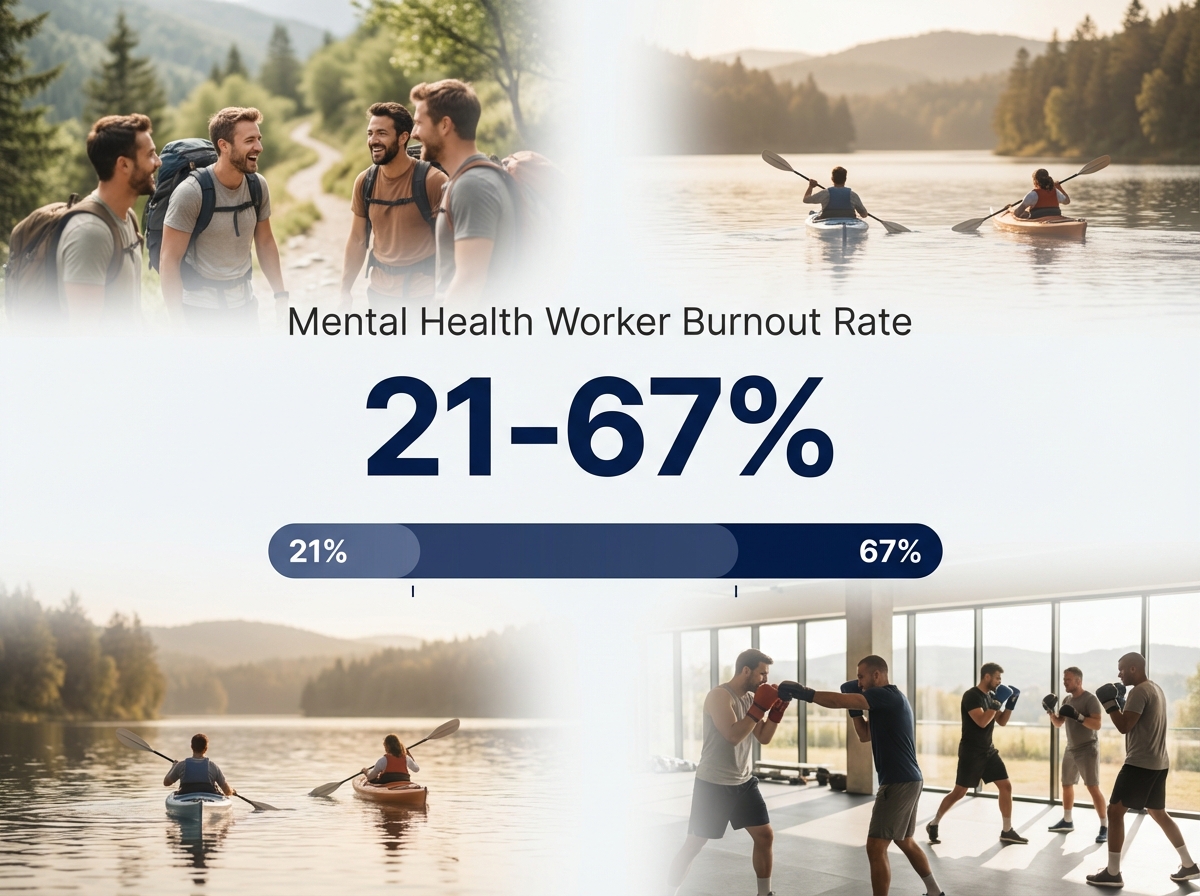
Recent advances in telehealth have made it possible for group therapy, individual counseling, and even wellness activities to be delivered through secure online platforms. According to national data, 68.4% of those who used telehealth services in April 2023 did so for mental health needs, illustrating the rapid growth and acceptance of virtual care options among working adults7.
With these models, professionals can participate in evening sessions from home or other private locations, reducing commute times and avoiding the stress of navigating traffic after a long workday. Hybrid evening IOP programs also support continuity of care when professional obligations change. For example, a professional who travels for business can still log into a scheduled group or individual session from a hotel room, ensuring that treatment remains consistent even during busy periods.
For working professionals, confidentiality is often the most pressing concern when considering evening IOP programs. A thoughtfully designed schedule can help protect privacy, reduce stigma, and support steady participation. Programs that cluster sessions in the late evening—after 6:00 p.m.—make it possible for professionals to attend without drawing attention to schedule changes during the standard workday.
Some evening IOP programs offer staggered start times or rotating group schedules, allowing participants to select session slots that best align with their specific needs. These flexible arrangements make it less likely for colleagues or supervisors to notice patterns that could reveal treatment participation. In addition, certain programs incorporate anonymous sign-in protocols or use virtual waiting rooms, providing another layer of discretion for those joining remotely.
Research has shown that concerns about workplace stigma and fear of disclosure remain persistent barriers to treatment for professionals, with over 30% of providers expressing discomfort treating substance use disorders—emphasizing the need for confidential program design9.
The table below summarizes how specific scheduling formats can impact confidentiality for professionals:
| Scheduling Format | Confidentiality Benefit |
|---|---|
| Late Evening Sessions | Less overlap with standard work hours. |
| Rotating/Customizable Slots | Harder for others to detect attendance patterns. |
| Virtual Anonymous Sign-Ins | Increased privacy and reduced stigma. |
| Discrete Group Assignments | Limits exposure to non-peer professionals. |
Prioritizing programs that offer these scheduling protections encourages greater engagement and allows professionals to focus on recovery without risking their career standing. Next, it’s essential to verify that the program’s clinical quality meets your expectations for evidence-based care.
Between facility size limits, waivers, and state-by-state rules, figuring out your Medicaid or private insurance benefits can feel like its own full-time job. Our admissions team will verify your coverage in minutes and walk you through exactly what's available — no guesswork required.
Verify Insurance Benefits →No commitment required. Confidential & HIPAA-protected.
Once you've confirmed that a program's evening schedule aligns with your professional commitments, the next critical step involves verifying the clinical quality and outcomes that will determine whether your time investment delivers meaningful results. Clinical quality represents the foundation of effective intensive outpatient programming—particularly for professionals who need evidence-based interventions that work efficiently within compressed timeframes.

Start by reviewing accreditation from recognized bodies like The Joint Commission or CARF International. These certifications indicate that a program meets rigorous standards for clinical protocols, staff qualifications, and patient safety measures. Accredited programs undergo regular audits and must demonstrate continuous quality improvement—critical factors when balancing treatment with professional responsibilities.
Investigate the clinical team's credentials and experience. Quality evening IOPs employ licensed therapists, certified addiction counselors, and psychiatric professionals who specialize in substance use disorders and co-occurring mental health conditions. Programs that integrate multiple therapeutic modalities—such as Cognitive Behavioral Therapy, Dialectical Behavior Therapy, and EMDR—offer more comprehensive treatment than single-approach programs.
Consider whether the program's clinical philosophy aligns with your needs as a professional. Some evening IOPs focus exclusively on traditional talk therapy, while others integrate innovative approaches that address both mental and physical health. Movement-based therapies—including boxing, jiu-jitsu, hiking, and other neuroscience-backed physical activities—represent clinical innovation particularly relevant for professionals who spend their days in cognitive work.
Programs like Trifecta Healthcare Institute's Nashville and Knoxville locations incorporate these active, experiential interventions as therapeutic tools rather than recreational add-ons. Engaging different neural pathways offers professionals more dynamic alternatives to sitting in another chair after a full workday. This integration of evidence-based talk therapy with movement-based recovery programming tends to engage different learning styles and can be particularly effective for men seeking results-oriented treatment approaches.
Evaluate the program's approach to medication management if you're currently taking or may need psychiatric medications. Quality evening IOPs should either provide psychiatric support on-site or coordinate closely with prescribing providers to ensure integrated care. Finally, examine how the program handles treatment planning and individualization. Look for programs that conduct comprehensive assessments, develop personalized treatment plans, and adjust interventions based on your progress.
Once you understand the clinical components that drive successful recovery, the next step is identifying Tennessee programs that deliver these evidence-based approaches within evening scheduling frameworks. The state's treatment landscape includes facilities that have adapted intensive outpatient programming specifically for working professionals, though quality and clinical rigor vary significantly across providers.
If you are driving to a Nashville rehab or a Knoxville rehab for men, factor in rush-hour traffic. Choose a facility that is easy to reach from your office to reduce stress, or opt for a hybrid model that allows you to attend virtually on days when traffic is exceptionally heavy.
When evaluating Nashville rehab facilities that specialize in evening programming or Knoxville rehab centers offering flexible scheduling, prioritize those that publish outcome data, maintain proper accreditation, and employ licensed clinicians. Trifecta Healthcare Institute exemplifies this evidence-based, movement-integrated approach, with locations in both Nashville and Knoxville offering evening IOP that incorporates the brotherhood model and physical activity components.
The most effective Tennessee programs demonstrate measurable results through transparent reporting of client retention rates, completion statistics, and long-term recovery outcomes. Look specifically for facilities that can articulate how their evening IOP structure differs from standard programming—not just shifted hours, but intentional design that addresses the unique needs of professionals managing career responsibilities alongside recovery.
Selecting the right evening IOP comes down to a clear evaluation framework: assess whether scheduling genuinely accommodates professional commitments, verify that clinical programming incorporates evidence-based modalities with fidelity, and confirm that the treatment environment aligns with individual recovery needs. These three considerations separate programs that deliver sustainable outcomes from those that simply offer convenient hours.
The right evening intensive outpatient program allows professionals to address treatment needs without sacrificing career momentum. When clinical rigor meets flexible scheduling, recovery becomes an integrated part of life rather than an interruption to it. Programs that combine research-supported therapies with innovative approaches—whether through movement-based programming, specialized men's treatment models, or trauma-informed care—create engagement that extends beyond required attendance hours.
Trifecta Healthcare Institute's Nashville and Knoxville locations exemplify this integration of flexibility, clinical excellence, and innovative programming. The combination of evidence-based therapies with movement-based recovery activities and brotherhood-focused peer support reflects a comprehensive approach designed specifically for men balancing professional responsibilities with recovery goals. Evening IOP sessions accommodate work schedules while delivering the same clinical intensity found in traditional daytime programming.
Pursuing treatment represents a strategic professional decision—one that addresses challenges before they compound into larger consequences. Tennessee's evening IOP options provide the structure and support necessary for sustainable recovery while respecting the realities of professional life. The next step involves evaluating specific programs against individual needs, priorities, and treatment goals to identify the approach most likely to deliver lasting results.
Virtual evening IOPs have demonstrated effectiveness on par with traditional in-person programs for many professionals seeking to maintain recovery. Recent research indicates that flexible telehealth delivery improves attendance and completion rates, particularly for those managing career, family, and travel obligations 7. Since 2023, virtual evening IOPs have expanded rapidly and now offer secure group therapy, individual counseling, and wellness activities through online platforms, providing a level of clinical quality and peer interaction similar to in-person care 6. For many, the ability to attend sessions privately and avoid commute-related barriers helps support ongoing engagement and reduces dropout risk. Still, some professionals may prefer the structure or social connection of in-person groups, so the best choice often comes down to personal preference and specific recovery needs.
If your employer does not offer recovery-friendly workplace policies, you may still have legal rights under the Americans with Disabilities Act (ADA) to request reasonable accommodations, such as schedule adjustments to attend evening IOP programs 2. While some organizations lead by example with flexible leave and support, others may not be as proactive. In these cases, professionals often find it helpful to approach human resources with clear documentation of their medical need and a proposed schedule that minimizes workplace disruption. If accommodations are denied, seeking external guidance from a legal advisor or advocacy group can clarify your options. The growth of telehealth and hybrid evening IOP formats also makes it possible to access treatment confidentially, even in less supportive work environments 7.
Group therapy in evening IOP programs is designed to bring together peers with similar recovery and professional experiences, making it highly adaptable for individuals from a wide range of fields. Studies show that group-based formats can be as effective, or even more so, than individual sessions for substance use disorder treatment, and this holds true for professionals as well 6. Many evening IOPs organize groups based on shared demographics, such as career stage or professional background, which helps foster trust and relevance. If you’re concerned about the fit, consider asking about the group composition and whether specialized groups are available for professionals. This approach increases the likelihood of finding a cohort that understands your work-related pressures and confidentiality needs.
Insurance coverage for telehealth evening IOP sessions often depends on your specific plan and the regulations in your state, but many insurers now reimburse virtual sessions at the same rate as in-person treatment. Since 2023, there has been a significant expansion in telehealth parity laws and coverage policies, driven by the proven effectiveness of virtual care for mental health and substance use disorder treatment 7. However, some disparities remain between insurers, and not all plans treat telehealth and in-person sessions identically—especially outside major employer networks or in states with limited parity requirements 10. It's important to verify coverage details with your insurance provider and ask the program directly how claims are processed for telehealth evening IOP programs. This ensures you avoid unexpected costs and can confidently participate in sessions that fit your professional schedule.
Experiencing a setback during treatment while balancing a career is not uncommon. Many professionals face increased stress, long hours, or unexpected work demands that can contribute to recurrence. The most effective evening IOP programs encourage open dialogue about setbacks and provide rapid support through group or individual sessions, helping participants address what led to the slip and recommit to their recovery plan. Research shows that flexible scheduling and access to telehealth can reduce missed sessions and support better engagement after a setback, which is especially important for those with demanding jobs 7. Remember, experiencing a setback does not define your recovery—it indicates an opportunity to adjust your strategies with support.
Addressing provider stigma begins with recognizing that over 30% of healthcare providers report discomfort working with patients with substance use disorders, which can impact your experience in evening IOP programs 9. If you encounter dismissive attitudes or feel judged, consider seeking programs that emphasize trauma-informed and person-centered care. Many professionals have found that directly addressing concerns about confidentiality and stigma during intake helps set expectations for respectful treatment. It can also be helpful to request information on staff training in non-stigmatizing practices or peer-led support options, which are increasingly offered in high-quality evening IOP programs 7. If stigma persists, do not hesitate to advocate for yourself by requesting a different clinician or exploring alternative programs known for professional-friendly, nonjudgmental care.
Whether it's you or someone you love, our team can help you figure out the next step — what treatment looks like, what's covered, or just someone to talk to.
Talk to Our TeamConfidential. No commitment required.



July 30, 2026